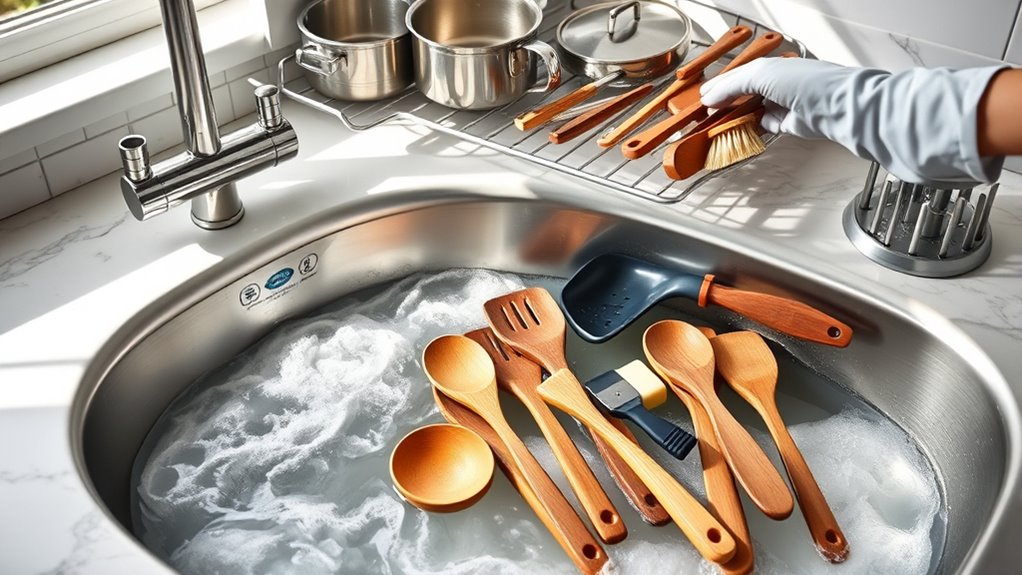

To keep your utensils and equipment clean and organized, wash them thoroughly after each use with hot, soapy water, rinse well, and dry promptly to prevent rust and mold. Sanitize items like cutting boards periodically and inspect for damage. Store utensils in dry, designated spots using racks, hooks, or drawer dividers, and keep everything in a clean, pest-free environment. For tips on maintaining a safe, efficient kitchen, continue exploring how proper cleaning and storage can make a difference.

Get garden gear delivered free with Prime
- Fast, free delivery on millions of items
- Prime Video, Amazon Music and more included
- Member-only deals all year
Key Takeaways
- Wash utensils thoroughly with hot, soapy water after each use and rinse well to remove residues.
- Sanitize items like cutting boards and utensils periodically to eliminate bacteria and prevent cross-contamination.
- Dry utensils promptly using a clean towel or air dry in well-ventilated areas to prevent rust and mold.
- Use organized storage solutions such as drawer dividers, hooks, and labeled containers for easy access and protection.
- Regularly inspect utensils and equipment for damage or mold, and store in a clean, dry place away from moisture and pests.

Keeping your cooking utensils and equipment clean and properly stored is essential for maintaining their longevity and ensuring food safety. When you prioritize cleanliness, you reduce the risk of cross-contamination and the growth of harmful bacteria. Proper storage solutions not only keep your kitchen organized but also help protect your tools from damage and dirt, making them safer to use every time. It’s important to develop a routine for cleaning and storing that fits your cooking habits and kitchen space.
Maintaining clean and well-organized utensils ensures safety, longevity, and efficient kitchen workflows.
Start by washing your utensils and equipment thoroughly after each use. Use hot, soapy water to remove food residues and grease, then rinse well to eliminate any soap traces. For items like cutting boards and utensils that come into contact with raw meat or produce, consider sanitizing them periodically with a solution of diluted bleach or a commercial sanitizer. This extra step helps ensure food safety by killing bacteria that might be lurking. Remember that some tools, such as wooden spoons and cutting boards, require special care—hand wash them and avoid soaking for too long, as this can cause warping or cracking. Additionally, using proper cleaning techniques can significantly enhance the effectiveness of your sanitation efforts.
Once your utensils are clean, drying them promptly is essential to prevent rust and mold. Use a clean towel or air dry in a well-ventilated area. When it comes to storage, think about the layout of your kitchen and what makes sense for your workflow. For example, hanging pots and pans on a rack keeps them accessible and prevents clutter in drawers. Utilizing storage solutions like drawer organizers, hooks, or labeled containers can help you maintain an orderly kitchen and quickly locate the tools you need. Proper storage not only protects your utensils from damage, but also minimizes the risk of cross-contamination by keeping raw ingredients separated from cooked foods.
Invest in storage solutions that suit the size and type of your utensils. For small items like spatulas and whisks, use drawer dividers or small jars. For larger equipment, consider wall-mounted racks or dedicated shelves. Keep sharp knives in a knife block or on a magnetic strip to prevent accidents and keep blades sharp. Always store utensils in a clean, dry place away from moisture and extreme temperatures. Regularly inspecting your storage areas ensures that you’re not harboring mold or pests, which could compromise your food safety.
As an affiliate, we earn on qualifying purchases.
Frequently Asked Questions
How Often Should I Replace Old or Worn-Out Utensils?
You should replace old or worn-out utensils based on their utensil lifespan and your replacement schedule. Typically, you need to swap out plastic or wooden utensils every 1-2 years, especially if they show cracks or splinters. Metal utensils can last longer but should be replaced if they become rusted or damaged. Regularly inspect your tools to guarantee safety and efficiency, and adhere to a consistent replacement schedule to maintain a well-equipped kitchen.
Can I Use Abrasive Cleaners on Non-Stick Cookware?
You shouldn’t use abrasive cleaners on non-stick cookware because they can damage the non-stick surface, reducing its effectiveness. For proper non-stick surface maintenance, stick to gentle scrubbers and mild detergents. Abrasive cleaner risks include scratching and peeling, which can lead to food sticking and potential health concerns. Always follow the manufacturer’s instructions to prolong your cookware’s lifespan and keep it safe for everyday use.
What Is the Best Way to Organize Utensils in a Small Kitchen?
To organize utensils in a small kitchen, use drawer dividers to separate and neatly store tools like spatulas and spoons. Additionally, install wall-mounted racks to free up counter space and keep frequently used utensils within easy reach. You can also hang utensils on hooks or rails for quick access. This combination maximizes space, keeps your kitchen tidy, and makes cooking more efficient.
Are There Eco-Friendly Cleaning Options for Kitchen Equipment?
Yes, there are eco-friendly cleaning options for your kitchen equipment. You can use biodegradable detergents that break down naturally and are safe for the environment. Natural cleaning methods, like using vinegar, baking soda, and lemon, are also effective and chemical-free. These options help you clean thoroughly while reducing your ecological impact, making your kitchen greener and healthier for you and the planet.
How Do I Prevent Rust on Metal Utensils During Storage?
To prevent rust on your metal utensils during storage, guarantee proper rust prevention by thoroughly drying them after washing. Store your utensils in a dry, well-ventilated area to avoid moisture buildup. Regularly inspect and apply a light coat of mineral oil or food-safe oil for metal utensil care. Avoid storing them in damp environments, and consider using utensil racks or drawer organizers that keep moisture away from the metal surfaces.
As an affiliate, we earn on qualifying purchases.
Conclusion
Think of your utensils and equipment as the heroes of your kitchen story. When you clean and store them properly, you’re giving each hero a well-deserved rest, ready for the next adventure. Neglect them, and chaos takes over, turning your kitchen into a battleground. By caring for your tools, you’re ensuring they stay strong and ready to serve you. Treat your utensils like loyal allies, and your cooking will always be victorious.
As an affiliate, we earn on qualifying purchases.
As an affiliate, we earn on qualifying purchases.
Halloween Picks
halloween
As an affiliate, we earn on qualifying purchases.