
To prevent rust on metal surfaces, apply high-quality, rust-inhibiting paint or protective coatings that create a strong barrier against moisture and oxygen. Regularly inspect and maintain your metal items, sanding off tiny spots and reapplying coatings or oils as needed. Use oils that penetrate crevices to repel water and keep surfaces dry. Cover or store items in sheltered areas to limit exposure. Keep exploring for more expert tips and product suggestions to extend your metal’s lifespan.
Key Takeaways
- Apply high-quality rust-inhibiting paint with multiple coats for durable, long-term protection.
- Use protective oils regularly to penetrate crevices and form water-resistant barriers.
- Conduct routine inspections and promptly address early rust spots through cleaning and re-coating.
- Keep surfaces dry and store metal items in sheltered areas to minimize exposure to moisture.
- Consider additional treatments like galvanization for high-exposure items to enhance corrosion resistance.

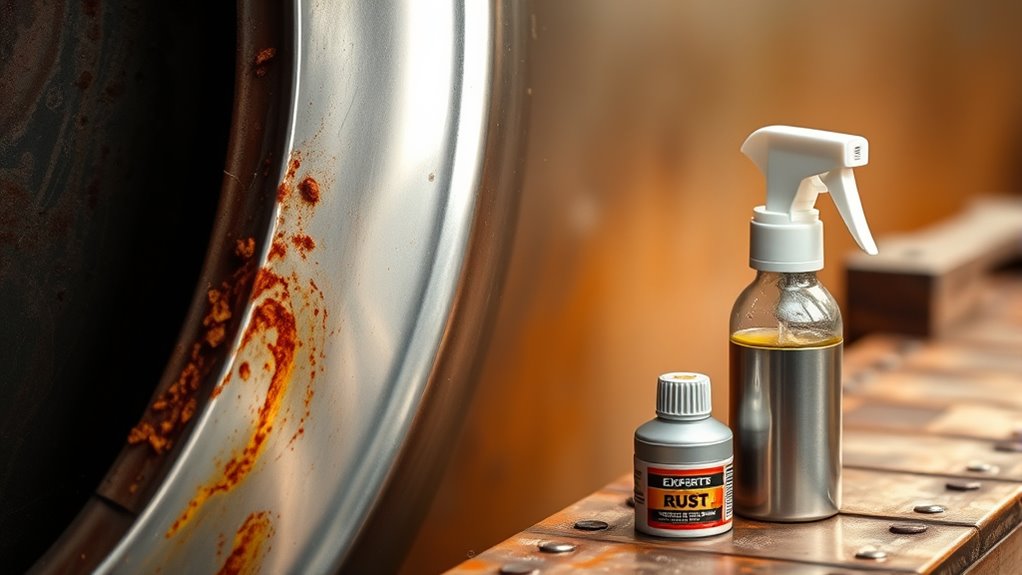
Rust can quickly damage metal surfaces if you don’t take proper precautions. It’s a common problem that can weaken the integrity of your metal items and make them look unsightly. Luckily, you have several effective strategies to prevent rust from forming in the first place. One of the most reliable methods is applying paint coatings designed specifically for metal. These coatings create a barrier that shields the surface from moisture and oxygen, which are essential for rust development. When you choose a good quality paint, make sure it’s formulated for metal and offers rust-inhibiting properties. Applying multiple coats ensures better coverage and longevity, especially in areas exposed to harsh weather conditions.
In addition to paint coatings, protective oils are a simple yet powerful way to keep rust at bay. Protective oils penetrate the tiny crevices on metal surfaces, forming a thin, water-resistant layer that prevents moisture from making direct contact with the metal. You should regularly apply these oils, especially if you notice the metal is exposed to high humidity or frequent contact with water. When you use protective oils, make sure the surface is clean and dry beforehand. This helps the oil adhere better and provides a more effective barrier against rust. Some oils also contain corrosion inhibitors, which offer extra protection for vulnerable spots.
Maintaining your metal surfaces is just as important as applying coatings or oils. Regular inspections allow you to spot early signs of rust or damage. When you see tiny rust spots, you can address them immediately by sanding the area and reapplying protective coatings or oils. Keeping the metal dry is vital, so wipe down surfaces after exposure to rain, snow, or high humidity. In outdoor settings, consider covering your metal items with tarps or storing them in sheltered areas during harsh weather. This minimizes direct contact with moisture and prolongs the life of your protective treatments.
Another effective tip is to avoid using harsh cleaning agents that can strip away protective layers. Instead, use gentle cleaning solutions and dry the surface thoroughly after cleaning. If your metal is part of a larger structure or frequently exposed to elements, think about using galvanization or other corrosion-resistant treatments as an added layer of defense. Ultimately, combining these practices—regular maintenance, proper coatings, and protective oils—gives you the best chance to keep your metal surfaces rust-free for years to come. Taking these precautions not only preserves the appearance but also extends the lifespan of your metal investments. Additionally, understanding corrosion mechanisms can help you select the most effective protective measures for your specific environment.
Frequently Asked Questions
How Long Does Rust Prevention Treatment Typically Last?
Rust prevention treatments usually last between 1 to 5 years, depending on factors like environment and application. If you use a rust converter or apply protective coatings properly, they can extend this durability. Regular maintenance, such as inspecting for damage and reapplying coatings when necessary, helps guarantee long-lasting protection. Keep in mind that harsher conditions may require more frequent touch-ups to maintain your metal’s resistance against rust.
Are There Eco-Friendly Rust Prevention Options?
Yes, there are eco-friendly rust prevention options you can consider. Look for eco-friendly alternatives like biodegradable coatings, which are safe for the environment and effective at preventing rust. These products often contain natural ingredients and avoid harmful chemicals, making them a responsible choice for sustainable maintenance. By choosing biodegradable coatings, you protect your metal surfaces while reducing your environmental footprint, ensuring both durability and eco-consciousness.
Can Rust Be Completely Removed Once It Forms?
Think of rust as a stubborn stain on fabric—sometimes, you can remove it entirely, but often, it leaves a faint mark. Rust can be deeply embedded, so thorough metal cleaning and surface preparation are vital to remove it completely. While some rust is reversible with proper techniques like sanding or chemical treatments, extreme corrosion may require replacing the affected metal, as complete removal isn’t always possible.
What Are the Best Storage Practices to Prevent Rust?
To prevent rust, you should store metal in dry, cool conditions, avoiding humidity and direct contact with water. Keep the surface clean and dry, and consider applying protective coatings like paint, oil, or rust inhibitors. Using airtight containers or desiccants also helps control moisture. Proper storage conditions and protective coatings create a barrier that minimizes exposure to moisture, substantially reducing the risk of rust formation.
How Does Humidity Affect Rust Formation and Prevention?
Humidity increases the corrosion rate by providing moisture that accelerates rust formation. To prevent this, you should control humidity levels in storage areas, keeping them low with dehumidifiers or proper ventilation. When humidity is high, metal surfaces are more prone to rust, so maintaining dry conditions is essential. Effective humidity control markedly reduces rust risk and prolongs the lifespan of your metal items.
Conclusion
By taking simple steps to protect your metal surfaces, you can keep them shining like new and free from rust’s corrosive grip. Imagine your tools and furniture standing strong, their smooth surfaces gleaming in the sunlight, untouched by time’s relentless march. With a little care and the right products, you’ll preserve their beauty and strength, ensuring they remain a lasting part of your life. Don’t let rust steal their sparkle—guard them well, and enjoy their resilience for years to come.