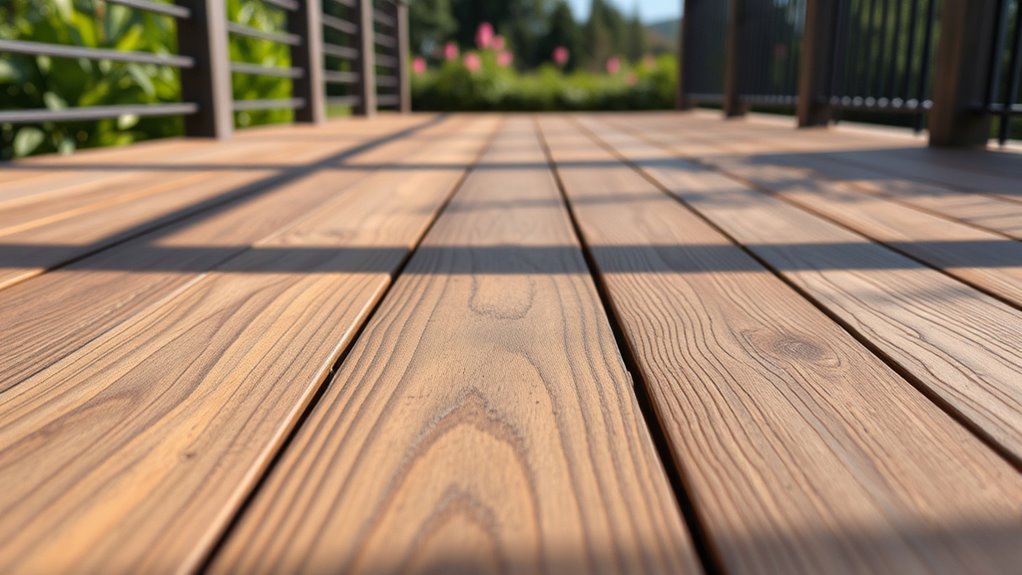

When choosing between composite and natural wood for decking and flooring, consider your priorities. Natural wood offers an authentic look and is renewable but needs regular maintenance to prevent warping, cracking, or rotting. Composite decking is low-maintenance, durable, and made from recycled materials, but manufacturing can be energy-intensive. Both options have environmental benefits, depending on sourcing and lifecycle impacts. To find out which suits your lifestyle best, explore the details further.
Key Takeaways
- Natural wood offers an authentic, traditional look but requires regular maintenance to prevent damage.
- Composite decking provides a low-maintenance, durable alternative with resistance to rot, pests, and scratches.
- Responsibly sourced wood supports sustainability, while recycled composites promote eco-friendly material reuse.
- Natural wood ages gracefully but may warp or crack without proper care; composites maintain their appearance longer.
- Choice depends on aesthetic preference, environmental values, and desired level of upkeep for decking or flooring.
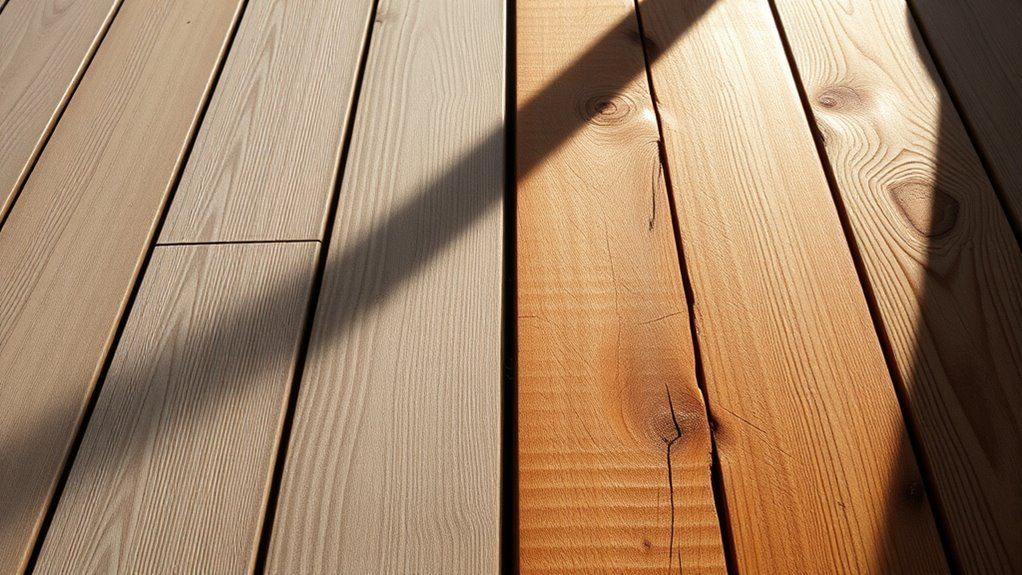
Are you trying to decide between composite and natural wood for your decking or flooring? It’s a common dilemma, and understanding the key differences can help you make the right choice. One major factor to weigh is the sustainability benefits of each material. Natural wood, especially when sourced responsibly, is biodegradable and renewable. If you select FSC-certified or sustainably harvested wood, you’re supporting forest conservation and reducing environmental impact. In contrast, composite decking often incorporates recycled materials, such as plastic and wood fibers, making it a more eco-friendly choice concerning material reuse. However, manufacturing composites can be energy-intensive, so it’s good to evaluate the entire lifecycle.
Natural wood is biodegradable and renewable, while composite decking often uses recycled materials, supporting sustainability.
When it comes to maintenance requirements, natural wood generally demands more attention. It needs regular sealing, staining, or painting to protect against moisture, UV rays, and pests. Without proper upkeep, natural wood can warp, crack, or rot over time, especially in humid or rainy climates. You might find yourself sanding or refinishing your wood deck every few years to keep it looking fresh. On the other hand, composite decking is designed to be low-maintenance. It resists rot, splitting, and insect damage, so you won’t need to stain or seal it regularly. A simple wash with soap and water usually suffices to keep it clean and looking good. This makes composite a more convenient option if you prefer minimal upkeep.
Another aspect to weigh is how each material ages and their overall durability. Natural wood can develop a charming weathered appearance if left untreated, but it’s more prone to scratches and dents. Composite materials tend to be more resistant to everyday wear and tear, maintaining their appearance longer with less effort. Still, composites can fade or develop surface scratches over time, though these issues are often easier to repair than replacing damaged wood planks. Additionally, maintenance requirements can significantly influence the long-term satisfaction and cost of your decking or flooring choice.
Ultimately, your decision may come down to personal preferences regarding appearance, environmental impact, and maintenance. If you love the natural look and are willing to invest time into upkeep, natural wood could be the perfect choice. If you prioritize durability, ease of maintenance, and eco-conscious materials, composite might be better suited for your needs. Both options have their merits, but understanding their sustainability benefits and maintenance requirements helps you choose a material that aligns with your lifestyle and values.
Frequently Asked Questions
How Do Composite and Natural Wood Affect Indoor Air Quality?
You might notice that composite wood releases fewer indoor emissions and VOC concerns compared to natural wood, which can emit volatile organic compounds over time. Composite options are often made from recycled materials and designed to be low-emission, improving indoor air quality. Natural wood, however, may emit odors or VOCs, especially if treated or sealed. Choosing low-emission finishes and proper ventilation helps minimize indoor air quality impacts regardless of your choice.
Are There Eco-Friendly Options Within Composite or Natural Wood Choices?
If you’re seeking eco-friendly options, consider bamboo flooring, which grows rapidly and requires minimal resources, making it a sustainable choice. For composite decking, look for brands emphasizing sustainability considerations and eco-conscious manufacturing practices, such as using recycled materials. These options reduce environmental impact and promote greener living. Choosing responsibly sourced natural woods like FSC-certified hardwoods also supports sustainable forestry, helping you make environmentally mindful decisions for your space.
What Are the Best Maintenance Practices for Long-Term Durability?
You should establish regular cleaning routines to keep your decking or flooring looking great and to prevent buildup of dirt and debris. Apply protective treatments like sealants or stains suitable for your material to guard against moisture and UV damage. Reapply these treatments as recommended by manufacturers, usually annually, to maintain durability. Avoid harsh chemicals, and always follow the manufacturer’s instructions for cleaning and protective treatments to prolong your deck’s lifespan.
Can These Materials Be Recycled or Repurposed After Use?
Imagine you’ve installed composite decking and want to recycle it later. You can participate in recycling processes designed for composite materials, which often involve grinding and repurposing into new products. Natural wood, on the other hand, can be reused as mulch, furniture, or woodworking projects. Both materials support material reuse, reducing waste and environmental impact. Recycling processes vary, but your effort guarantees these materials get a second life instead of ending in landfills.
How Do Climate Conditions Influence the Performance of Each Material?
Climate impact profoundly influences the performance of both materials. You’ll find composite decking more resistant to moisture, UV rays, and temperature fluctuations, boosting durability factors. Natural wood, however, is more vulnerable to climate conditions—expanding, contracting, and rotting if exposed to excessive moisture or extreme heat. To maximize lifespan, you should consider your local climate and choose materials that withstand these factors, ensuring long-lasting, beautiful outdoor spaces.
Conclusion
So, whether you choose composite or natural wood, you’ll end up with a stunning deck or floor—just don’t expect it to be completely carefree. Natural wood’s charm might fade with time, and composites can surprise you with unexpected maintenance needs. Either way, you’re investing in beauty and function, knowing well that nothing’s perfectly perfect. After all, what’s a little irony in the quest for the perfect deck? Happy building!