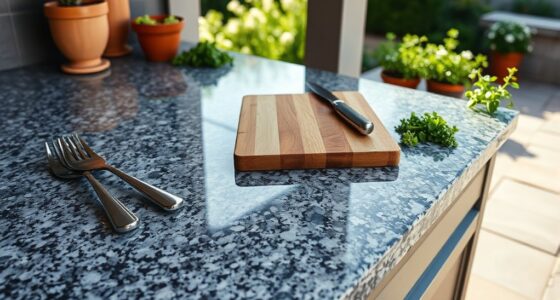

When choosing outdoor countertops, granite and quartzite are excellent for durability and weather resistance, making them practical options. Marble, while elegant, is less suitable because it’s prone to staining and weather damage. Granite and quartzite are easier to maintain with sealing and gentle cleaning, whereas marble requires more upkeep. For long-term resilience, granite or quartzite are generally better investments. To discover which material suits your needs best, keep exploring the details ahead.
Key Takeaways
- Granite and quartzite are highly durable and weather-resistant, ideal for outdoor use, unlike marble which is more porous and susceptible to damage.
- Both granite and quartzite require sealing and maintenance but offer better longevity outdoors compared to marble’s higher vulnerability.
- Granite generally costs less and provides easier, more affordable long-term maintenance than marble and quartzite.
- Quartzite combines beauty and resilience, making it suitable for outdoor environments, while marble is better suited for indoor, high-end aesthetics.
- For outdoor countertops, granite and quartzite are the most practical choices due to their durability, resistance to weather, and lower maintenance needs.
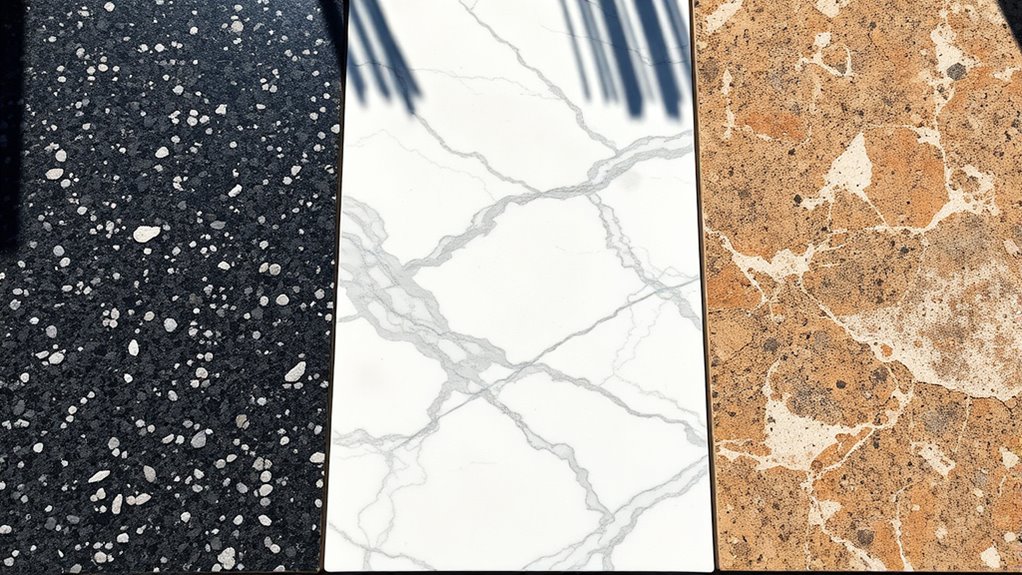
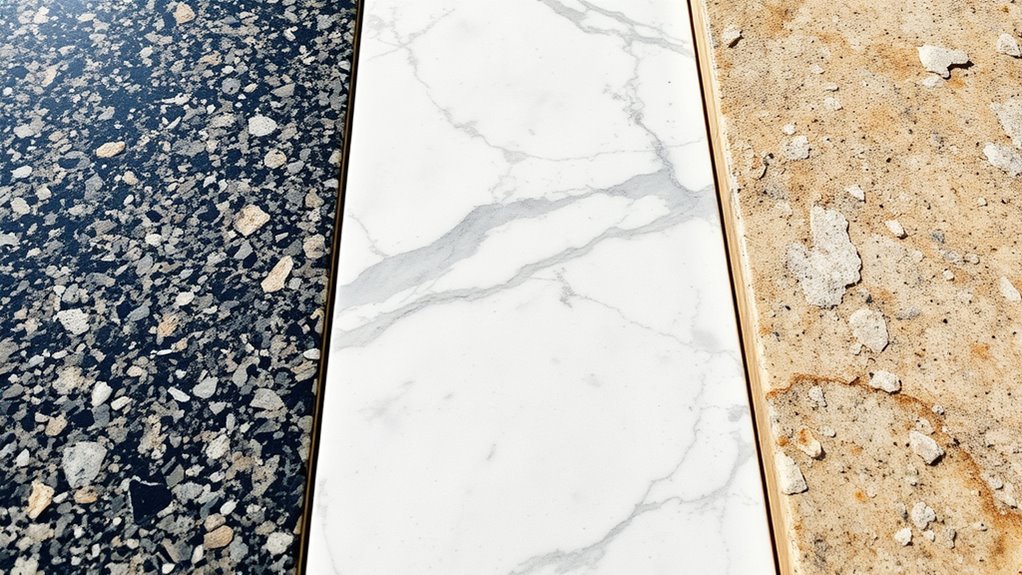
Are you trying to choose the best countertop material for your space? When it comes to outdoor countertops, granite, marble, and quartzite are popular options, but each has its own strengths and considerations. Understanding their maintenance tips and cost comparison can help you make an informed decision that suits your needs and budget.
Starting with granite, it’s renowned for its durability and resistance to the elements, making it a top choice for outdoor use. To keep it looking its best, you’ll want to establish simple maintenance tips: seal the surface annually to prevent staining, clean spills promptly, and avoid harsh chemicals that can dull its finish. Granite’s natural toughness typically means less worry about scratches or heat damage, which is essential outdoors. When it comes to cost comparison, granite tends to be more affordable than quartzite but can vary depending on the rarity and origin of the slab. Its installation costs are moderate, but long-term maintenance is minimal if properly sealed, offering good value over time.
Marble, on the other hand, exudes elegance but is less weather-resistant. Its porous nature makes it prone to staining and etching from acidic substances, so maintenance tips are vital: seal it regularly, ideally every six months, and clean with pH-neutral cleaners to avoid damage. Marble’s susceptibility to weathering means you should consider its environment carefully—prolonged exposure to sun and moisture can accelerate deterioration. In terms of cost comparison, marble generally costs more than granite initially, owing to its luxurious appeal and higher rarity. Its upkeep can add to the overall expense, especially if frequent sealing or repairs are necessary, which makes it less practical for highly exposed outdoor settings.
Quartzite often strikes a balance between granite and marble. It’s a natural stone with a hardness comparable to granite, making it resistant to scratching and heat. Maintenance tips for quartzite include sealing upon installation and resealing periodically, depending on use and exposure. It’s relatively low-maintenance when compared to marble, but regular care ensures its longevity. Cost comparison-wise, quartzite tends to be more expensive than granite but can be comparable or slightly less than marble, depending on the source. Its resilience and aesthetic qualities make it a worthwhile investment, especially if you want a high-end look that withstands outdoor conditions.
Ultimately, your choice depends on your priorities. If you want a durable, low-maintenance surface at a reasonable cost, granite might be your best pick. If you’re after elegance and are willing to invest in upkeep, marble could suit your style. For a middle ground that offers both beauty and resilience, quartzite is worth considering.
Frequently Asked Questions
How Do Weather Conditions Affect Outdoor Granite, Marble, and Quartzite?
Weather conditions considerably impact outdoor granite, marble, and quartzite by affecting their weather durability and causing material expansion. You’ll find granite handles temperature fluctuations well, making it highly durable outdoors. Marble, however, is more sensitive; it can stain and crack with freeze-thaw cycles. Quartzite offers good weather resistance but can still expand or contract slightly with temperature changes. Proper sealing and maintenance help these materials withstand outdoor weather challenges effectively.
Which Material Requires the Least Maintenance Outdoors?
You’ll find quartzite requires the least outdoor maintenance. Its cleaning routines are simple—just soap and water, and it resists stains better than granite or marble. Plus, quartzite typically doesn’t need frequent sealing, unlike granite and marble, which require regular sealing to prevent moisture absorption and staining. This low-maintenance aspect makes quartzite ideal if you want a durable, beautiful outdoor surface with minimal upkeep.
Are There Color Limitations for Each Outdoor Countertop Material?
You’ll find that granite offers the most diverse color options and aesthetic variations, making it easier to match your outdoor space. Marble tends to have limited color choices, often featuring elegant whites and veined patterns, but less variety. Quartzite provides a good range of natural colors, though some shades may be more limited than granite. Overall, your preferred aesthetic and color palette will guide your choice based on these options.
How Resistant Are These Materials to Outdoor Staining and Scratching?
Imagine your outdoor countertops as a vibrant canvas, enduring sun’s glare and accidental spills. Granite and quartzite are highly resistant to staining and scratching, especially with proper sealing. Marble, however, is more delicate and needs frequent sealing to prevent stains. All three materials have good UV resistance, but quartzite and sealed granite hold up best over time. Regular sealing and care keep your surfaces beautiful and resilient against outdoor challenges.
What Is the Typical Lifespan of Each Material in Outdoor Settings?
Granite typically lasts 20-30 years outdoors with proper maintenance, thanks to its high material durability and low porosity. Quartzite can endure similar periods, around 20-25 years, but requires regular sealing to prevent staining. Marble’s lifespan is shorter, usually 10-15 years, as it’s more prone to weathering and scratches. You’ll need to keep up with maintenance requirements for all, especially sealing and cleaning, to maximize their outdoor longevity.
Conclusion
When choosing your outdoor countertop, consider durability, maintenance, and appearance. Granite stands out with its impressive resistance to weather, with over 90% of homeowners citing durability as their top priority. Marble offers stunning elegance but requires more upkeep, while quartzite balances beauty and toughness. Ultimately, selecting the right material depends on your climate and lifestyle, ensuring your outdoor space remains beautiful and functional for years to come.