
To keep your wicker, teak, and metal furniture in great shape, you should follow specific care routines. Wicker needs regular dusting and protection from harsh weather, especially natural rattan. Teak benefits from gentle cleaning and annual oil treatments to maintain its color and prevent cracking. Metal pieces require keeping an eye out for rust, which should be sanded and treated promptly. For detailed tips to extend their lifespan, continue exploring what each material needs.

Get garden gear delivered free with Prime
- Fast, free delivery on millions of items
- Prime Video, Amazon Music and more included
- Member-only deals all year
Key Takeaways
- Wicker furniture offers aesthetic appeal but requires protection from weather; synthetic variants are easier to maintain.
- Teak is highly durable, resistant to rot and insects, and benefits from regular cleaning and oiling.
- Metal furniture, especially wrought iron and steel, needs protective coatings and rust treatment for longevity.
- Proper cleaning with gentle methods and protective sealants extend the lifespan of all three materials.
- Covering or storing furniture indoors during harsh weather conditions helps prevent weather-related damage.

Choosing the right furniture materials is essential for ensuring your pieces last and stay looking their best. When it comes to outdoor furniture, selecting materials like wicker, teak, and metal can make a considerable difference in durability and ease of care. Each material has unique properties, but all require proper cleaning and maintenance to maintain their appearance and longevity.
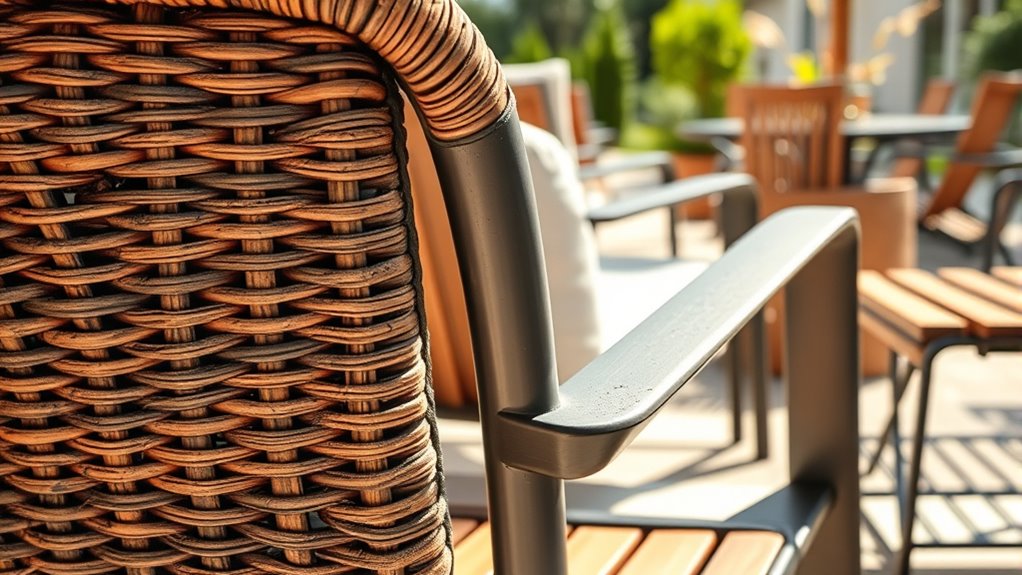
Wicker furniture, often made from natural rattan or synthetic fibers, is popular for its airy, stylish look. If you opt for natural wicker, you’ll need to be vigilant with cleaning and maintenance, especially since it’s more susceptible to weather damage. Regularly dust off your wicker pieces and clean them with a gentle soap solution and water. For synthetic wicker, cleaning is easier; simply wipe it down with a damp cloth and mild detergent. To prevent deterioration, especially if your outdoor furniture is exposed to the elements, consider applying a protective sealant or a water-resistant coating. Covering wicker furniture during harsh weather or bringing it indoors can extend its lifespan considerably.
Teak is renowned for its strength and natural resistance to rot and insects, making it a favorite for outdoor furniture. Its durability means it can withstand various weather conditions, but proper cleaning and maintenance are still crucial. To keep your teak looking its best, clean it periodically with a gentle soap and water or a teak cleaner. Avoid harsh chemicals, as they can strip away the natural oils that protect the wood. Applying a teak oil or sealant once or twice a year helps preserve its rich color and prevents it from drying out and cracking. Regular maintenance also involves inspecting for loose joints or splinters and sanding rough areas to prevent splinters and maintain an attractive appearance.
Metal furniture, often made from aluminum, wrought iron, or steel, is prized for its durability and low maintenance. Aluminum is resistant to rust, but wrought iron and steel require protective coatings or paint to prevent corrosion. To care for metal outdoor furniture, start by cleaning it with a non-abrasive cloth, warm water, and a mild detergent. If you notice rust spots on wrought iron or steel, gently sand them down and apply a rust-inhibiting primer or paint. Regularly inspecting for signs of rust or paint chipping allows you to address issues early. Covering your metal furniture or storing it indoors during winter can prevent unnecessary wear and tear, prolonging its lifespan.
As an affiliate, we earn on qualifying purchases.
Frequently Asked Questions
How Do Weather Conditions Specifically Affect Each Material’s Lifespan?
Weather conditions considerably impact each material’s lifespan. Excessive sun causes material aging, fading, and cracking, especially for wicker and teak. Rain and humidity accelerate deterioration, leading to rust in metal furniture and mold in wicker. Freezing temperatures can cause cracking or warping. You should protect your furniture from harsh weather, using covers or storing it indoors during storms, to reduce weather impact and extend its durability.
Are There Eco-Friendly Treatment Options for Maintaining Wicker, Teak, and Metal Furniture?
Yes, you can use eco-friendly treatment options like biodegradable finishes and natural preservation techniques to maintain your furniture. For wicker, apply plant-based oils or beeswax to protect without harming the environment. Teak benefits from natural oils like tung or linseed oil, which preserve the wood sustainably. Metal furniture can be treated with biodegradable sealants that prevent rust and corrosion while keeping eco-consciousness in mind.
Can These Furniture Materials Be Repaired After Significant Damage?
Yes, you can repair these furniture materials after significant damage. Furniture restoration involves fixing broken or damaged parts, restoring the piece’s appearance and functionality. For material refurbishment, you might sand and refinish teak, replace damaged wicker strands, or weld and repaint metal components. Proper repair techniques depend on the material, but with patience and the right tools, you can extend your furniture’s life and keep it looking great.
How Do Indoor and Outdoor Environments Differently Impact Durability?
Imagine your furniture as a ship steering different seas. Indoors, high humidity can cause swelling or mold, so you need to keep the environment dry and ventilated. Outdoors, exposure to UV rays from the sun can fade finishes and weaken materials over time. You must regularly protect your furniture with covers or treatments to prevent damage, ensuring it stays durable whether it’s inside or outside.
What Are the Best Storage Practices During Off-Season Periods?
During off-season periods, you should protect your furniture by using protective covers and storing it in a dry, sheltered space. Seasonal storage is ideal, so you can bring your pieces indoors or into a garage to prevent weather damage. Make sure to clean and dry your furniture thoroughly before storage. Proper seasonal storage helps prolong the lifespan of your furniture and keeps it looking its best for years to come.
As an affiliate, we earn on qualifying purchases.
Conclusion
Choosing wicker, teak, or metal furniture means embracing durability, style, and ease of care. With proper maintenance, you’ll enjoy their beauty, withstand the elements, and extend their lifespan. Wicker offers charm, teak provides resilience, and metal ensures strength. By cleaning, protecting, and caring regularly, you’ll preserve their appeal and functionality. Invest in quality, care with consistency, and enjoy your furniture’s timeless appeal for years to come.
metal rust remover for furniture
As an affiliate, we earn on qualifying purchases.
As an affiliate, we earn on qualifying purchases.
synthetic wicker patio furniture
As an affiliate, we earn on qualifying purchases.
As an affiliate, we earn on qualifying purchases.
Evergreen bestsellers Picks
bestsellers
As an affiliate, we earn on qualifying purchases.