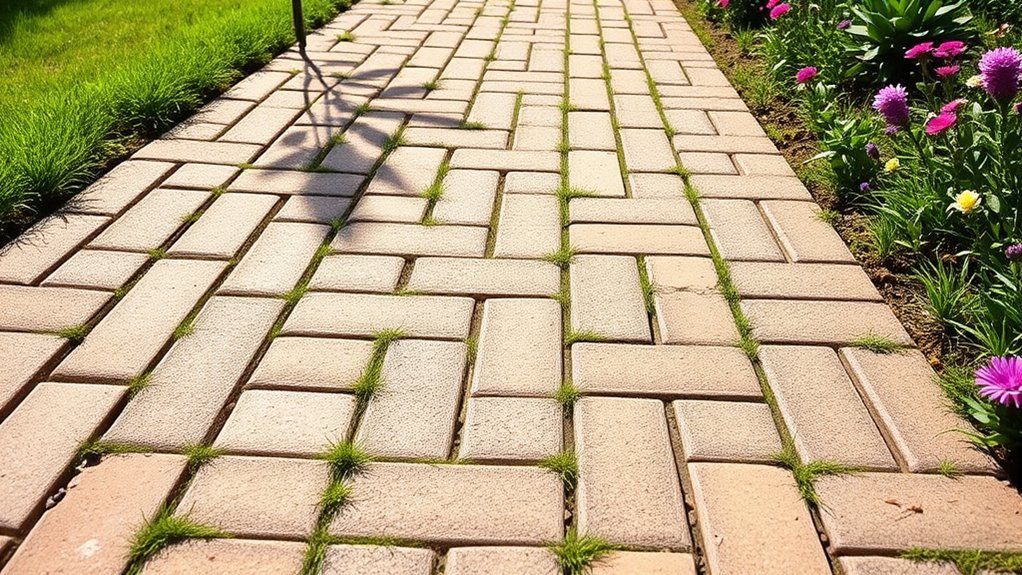

Permeable pavers and stone walkways are great for eco-friendly landscaping and rainwater management. You can choose from materials like porous concrete, interlocking pavers, pervious bricks, or natural stones like flagstone for a rustic look. Installing them involves excavating, laying geotextile fabric, adding stable base layers, and carefully placing your pavers, filling joints for permeability. Keep in mind proper slope and drainage to maximize water flow—continue exploring to discover all the essential techniques.
Key Takeaways
- Use permeable materials like porous concrete, interlocking pavers, or natural stone for effective water flow.
- Excavate and install a well-compacted base layer with geotextile fabric to ensure stability and prevent weed growth.
- Set stones or pavers snugly with consistent gaps, then fill joints with sand or gravel to enhance permeability.
- Create a slight slope during installation to direct water toward drainage zones or garden beds.
- Select durable, eco-friendly materials that support both water management and aesthetic appeal.

Are you looking for a sustainable way to enhance your outdoor space? Permeable pavers and stone walkways offer an excellent solution by combining durability with eco-friendly landscaping principles. These materials are designed to allow rainwater to pass through, effectively managing rainwater runoff and reducing the burden on local stormwater systems. When you choose permeable options, you’re not just improving your yard’s aesthetic; you’re actively contributing to a healthier environment by promoting rainwater management and reducing erosion. This approach helps prevent puddling and flooding after heavy rains, making your landscape more resilient and functional. Incorporating advanced permeable materials can further optimize water flow and durability in your outdoor design.
Installing permeable pavers and stone walkways begins with selecting the right materials. Porous concrete, interlocking pavers, and pervious bricks are popular choices because they provide strength while allowing water to seep through. Natural stones like flagstone or gravel-filled pavers also work well, especially if you prefer a more rustic look. The key is to ensure the surface is properly designed for water permeability, which involves laying a well-graded base and sub-base layers. These layers should be compacted thoroughly to provide stability and prevent shifting over time. When installing, you want to focus on creating a slight slope to encourage water flow toward drainage areas or garden beds, further enhancing your rainwater management efforts.
Selecting the right permeable materials and creating a slight slope ensures effective rainwater management.
The installation process is straightforward but requires attention to detail. First, you excavate the area to a depth that accommodates the base layers, leaving enough space for the permeable material and gravel or sand bedding. Next, you lay down a geotextile fabric to prevent weed growth and soil mixing with the base. Then, you add and compact the base material, ensuring it’s level and stable. Afterward, you set the permeable pavers or stones, fitting them snugly together while maintaining consistent gaps for water flow. Finally, you fill the joints with sand or small gravel to lock the stones in place and improve permeability. Proper installation guarantees longevity and effective rainwater management, helping you create a sustainable outdoor environment.
Choosing permeable pavers and stone walkways aligns with eco-friendly landscaping goals, making your outdoor space both beautiful and environmentally responsible. These materials minimize runoff, promote groundwater recharge, and contribute to a healthier ecosystem. When combined with thoughtful design and proper installation, your walkway becomes a functional feature that supports rainwater management while adding aesthetic appeal. Whether you’re redesigning a small garden path or creating a large patio area, permeable options help you achieve a practical, sustainable landscape that benefits both your property and the planet.

Vodaland Permeable HexPave System – Grass & Gravel Pavers – 100% Recycled PPE Plastic, Handles 27,000 lbs, 1" Depth, 65 s.f / 22 Units
- Eco-Friendly Material: Made from 100% recycled PPE plastic
- High Load Capacity: Supports up to 27,000 lbs
- Complete Set: Includes 22 units covering 65 sq ft
As an affiliate, we earn on qualifying purchases.
As an affiliate, we earn on qualifying purchases.
Frequently Asked Questions
How Long Do Permeable Pavers Typically Last Before Replacement?
Permeable pavers typically last 20 to 30 years before needing replacement, depending on durability expectations and lifespan factors. You can extend their lifespan by proper installation, regular maintenance, and avoiding heavy loads. Factors like material quality, climate, and usage patterns influence how long they stay in good condition. With proper care, you’ll maximize their durability and enjoy a functional, attractive walkway for decades.
Can Permeable Pavers Be Installed on Existing Concrete Surfaces?
Yes, you can install permeable pavers over existing concrete surfaces. You’ll need to prepare the concrete by applying a concrete overlay to even out the surface and guarantee proper surface bonding. This process provides a stable base for the pavers and enhances adhesion. Make sure to clean the existing concrete thoroughly before applying the overlay, and follow manufacturer instructions for ideal results and durability.
What Maintenance Is Required for Permeable Paver Walkways?
You’ll want to perform seasonal cleaning at least twice a year, since studies show that proper maintenance extends paver lifespan by up to 30%. Weed control is essential; remove weeds promptly and consider installing a weed barrier. Regularly sweep your walkway to clear debris, and check for any shifting or settling. Reseal joints if necessary to keep water draining effectively, ensuring your permeable paver walkway stays durable and attractive over time.
Are Permeable Pavers Suitable for Heavy Vehicle Traffic?
Yes, permeable pavers can handle heavy vehicle load if you choose the right materials and design. Opt for thicker pavers and a strong base to guarantee pavement durability. Heavy vehicle traffic increases stress, so proper installation and regular maintenance are essential to prevent shifting or cracking. When properly designed, permeable pavers provide a durable, environmentally friendly surface suitable for parking lots and driveways with heavy vehicles.
How Do Stone Walkways Affect Surrounding Landscape Drainage?
Stone walkways can positively impact your landscape drainage by reducing surface runoff and promoting groundwater recharge. They help prevent landscape erosion by stabilizing soil and directing water flow efficiently. When installed correctly, they allow water to seep through gaps or permeable joints, supporting natural water cycles. This minimizes pooling and erosion while enhancing the health of your landscape, making it more sustainable and resilient against heavy rainfall or irrigation.

TierraVerde Natural Rock Rubber Stepping Stones, 18" x 22", Grey, 4-Pack
- Lightweight and durable: Easy DIY outdoor landscaping solution
- Easy installation: Place directly over grass or base
- Weather-resistant: Withstands harsh weather and frost
As an affiliate, we earn on qualifying purchases.
As an affiliate, we earn on qualifying purchases.
Conclusion
By choosing permeable pavers and stone walkways, you’re not just improving your landscape — you’re transforming your entire property into a fortress against water damage and erosion. These materials are practically invincible, handling storms and heavy foot traffic like superheroes. With their durability and eco-friendly benefits, you’ll wonder how you ever lived without them. Embrace these options today, and watch your outdoor space become an unstoppable, beautiful masterpiece that stands the test of time!

Briwooody 16 x 16 Inch Permeable Pavers Gravel Grid Rv Parking Pad for Outside Walkway Driveway Patio Lawn Grass Shed Base Outdoor DIY(Black,12 Pcs)
- Package Includes: 12 black permeable pavers with snaps
- Paver Size: 16×16 inches each, 21.2 sq ft total
- Easy Installation: Lightweight polypropylene with user-friendly grid
As an affiliate, we earn on qualifying purchases.
As an affiliate, we earn on qualifying purchases.

VEVOR 6FTx100FT Non-Woven Geotextile Heavy Duty 8oz Driveway Underlayment for Gravel, Ground Cover, Garden Weed Barrier, Drainage Fabric, Landscaping, Black
- Heavy Duty Material: 8oz non-woven, 350N tensile strength
- Easy to Install: Simple to roll, cut, and lay down
- Permeable and Soil-Friendly: Ensures water drainage and soil nutrients
As an affiliate, we earn on qualifying purchases.
As an affiliate, we earn on qualifying purchases.