
When planning an ADA-compliant outdoor kitchen, focus on creating clear, unobstructed pathways and accessible work surfaces at adjustable heights to accommodate everyone. Incorporate features like non-slip flooring, well-placed grab bars, and reachable appliances to guarantee safety and ease of use. Good lighting and security measures also enhance safety. Making these adjustments helps guarantee your outdoor kitchen is inclusive for all users—continue to explore how to implement these essential features effectively.
Key Takeaways
- Ensure pathways are wide and unobstructed, at least 36 inches, for wheelchair accessibility.
- Install adjustable-height countertops and work surfaces to accommodate seated and standing users.
- Position appliances and controls within reach, typically 15 to 48 inches from the ground, to ensure easy access.
- Incorporate non-slip flooring and safety features like grab bars and handrails for secure movement.
- Use clear signage, accessible storage, and lighting to enhance usability and safety for all users.

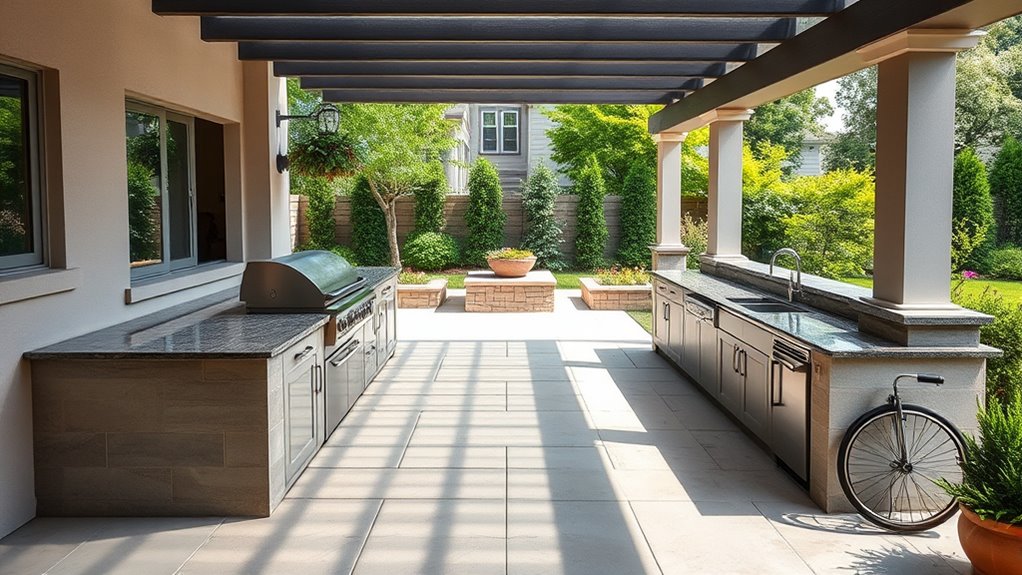
Have you contemplated how outdoor kitchens can be accessible to everyone? When planning your outdoor space, focusing on design considerations is essential to guarantee it’s inclusive and functional for all users. Think about the layout first: you want clear, unobstructed pathways that allow easy movement, especially for those using wheelchairs or mobility aids. The work surfaces should be at a height that accommodates seated and standing users alike—typically, a lower counter height of around 30 inches works well, but adjustable options can provide flexibility. It’s also important to leave enough clearance around appliances and fixtures so users can navigate comfortably without feeling cramped or restricted.
Safety features are a critical part of designing an accessible outdoor kitchen. You must incorporate non-slip flooring materials to prevent slips and falls, especially when surfaces are wet or greasy. Installing well-placed handrails or grab bars near cooking areas and seating can provide additional support, making it safer for everyone to move around. Think about the placement of appliances—gas grills, sinks, and refrigerators should be within easy reach, avoiding the need for excessive stretching or bending. This not only enhances accessibility but also minimizes safety risks when handling hot or sharp items. You should also ensure that electrical outlets are grounded and positioned at accessible heights, with weatherproof covers to prevent accidents or damage.
Lighting plays a vital role in safety and usability. Adequate, evenly distributed lighting ensures visibility during dusk or evening gatherings, reducing the risk of accidents. Use motion-activated or dimmable lights where possible, so you can customize brightness levels based on needs. When it comes to safety features, you need to consider fire safety too. A fire extinguisher should be easily reachable and visible, and you might want to include a fire-resistant surface or barrier between the grill and other elements to prevent accidents. Additionally, incorporating smart technology features can enhance the overall safety and convenience of your outdoor kitchen, allowing remote control of lighting and appliances for added security.
Additionally, think about storage options that are easy to access, so essential tools and supplies are within reach without the need for bending or stretching. Incorporate signage or labels if necessary to guide users, especially if multiple people will share the space. Guaranteeing that your outdoor kitchen is designed with these considerations in mind isn’t just about compliance; it’s about creating an enjoyable, safe environment that everyone can appreciate and use confidently. By thoughtfully integrating design considerations and safety features, you’re making your outdoor space welcoming and functional for all guests, regardless of their mobility or physical ability.
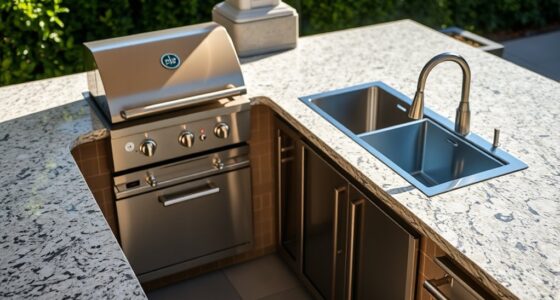
ADA compliant outdoor kitchen countertops
As an affiliate, we earn on qualifying purchases.
As an affiliate, we earn on qualifying purchases.
Frequently Asked Questions
How Do ADA Standards Impact Outdoor Kitchen Design Costs?
ADA standards can increase your outdoor kitchen design costs due to additional features and modifications. You’ll need to take into account cost estimation carefully, as accessible elements like lower countertops and wider pathways may raise expenses. However, these standards also offer design flexibility, allowing you to create a space that’s both functional and compliant. While upfront costs might be higher, investing in accessibility ensures inclusivity and can enhance your outdoor living experience.
What Specific Materials Are Best for Ada-Compliant Outdoor Countertops?
Imagine it’s the 1920s, and you’re designing an outdoor kitchen today. For ADA compliance, choose materials like stainless steel, concrete, or granite for countertops due to their durability and smooth surfaces. Guarantee the countertop height is accessible, typically around 34 inches. These materials withstand weather, are easy to clean, and support mobility devices, making your outdoor space both functional and inclusive.
Are There Any Local Building Codes Influencing ADA Outdoor Kitchen Features?
You should check local building codes, zoning restrictions, and historic preservation rules before designing your ADA-compliant outdoor kitchen. These regulations can influence features like accessible pathways, counter heights, and materials used. Zoning restrictions may limit the size or placement, while historic preservation rules could restrict certain design elements to maintain neighborhood character. Always consult local authorities or a professional to guarantee your outdoor kitchen meets all requirements.
How Can I Make Outdoor Appliances More Accessible for Users With Disabilities?
To make outdoor appliances more accessible for users with disabilities, you should focus on enhancing visual accessibility and simplifying appliance controls. Use high-contrast labels and large, easy-to-read text to improve visual accessibility. Install controls at reachable heights and ensure they are operable with one hand or minimal force. Incorporate tactile or auditory cues where possible, making it easier for everyone to safely and comfortably use your outdoor kitchen.
What Maintenance Considerations Are Unique to Ada-Compliant Outdoor Kitchens?
You should prioritize regular maintenance routines focused on accessibility enhancements, like making sure ramps, pathways, and switches stay clear and functional. Check for wear that could hinder wheelchair access or affect safety features. Keep appliances at accessible heights and inspect for corrosion or damage that could compromise usability. By maintaining these elements diligently, you ensure your outdoor kitchen remains safe, accessible, and compliant with ADA standards, providing an inclusive experience for all users.
As an affiliate, we earn on qualifying purchases.
Conclusion
By designing your outdoor kitchen with ADA compliance in mind, you’re opening the door for everyone to enjoy the space. Think of it as planting seeds of inclusivity that grow into a welcoming oasis for all. When accessibility is built into your plans, you create a backyard masterpiece where every guest can feel at home. Embrace these guidelines, and watch your outdoor space transform into a vibrant, inclusive gathering spot that truly reflects the spirit of community.
As an affiliate, we earn on qualifying purchases.
weatherproof accessible outdoor electrical outlets
As an affiliate, we earn on qualifying purchases.
As an affiliate, we earn on qualifying purchases.