A modular outdoor kitchen lets you build in stages, giving you flexibility to expand over time. Start with essential elements like a grill or prep area to enjoy your outdoor space immediately. As your needs grow, add features like sinks, refrigerators, or bar areas to enhance functionality. Using weatherproof materials guarantees durability, and choosing portable appliances offers extra flexibility. Keep exploring how to customize and expand your outdoor kitchen to suit your lifestyle and budget.

Get garden gear delivered free with Prime
- Fast, free delivery on millions of items
- Prime Video, Amazon Music and more included
- Member-only deals all year
Key Takeaways
- Start with essential features like a grill and prep station to enjoy immediate outdoor cooking.
- Design your kitchen in manageable stages, adding sinks or refrigeration later as needed.
- Use modular, weatherproof materials for easy expansion and durability over time.
- Incorporate portable appliances to increase flexibility without permanent installations.
- Plan your layout with future upgrades in mind, allowing seamless integration of new components.
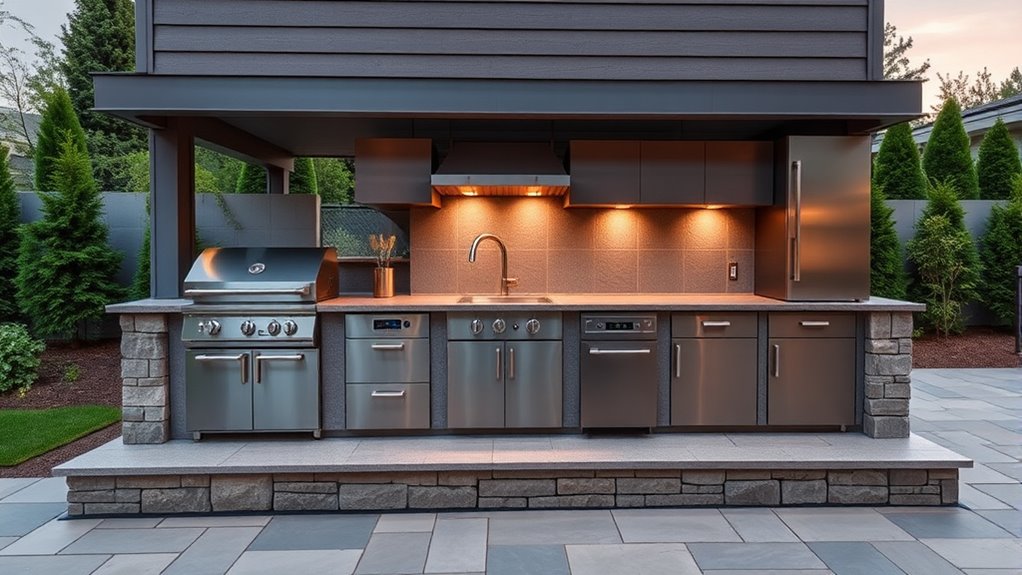
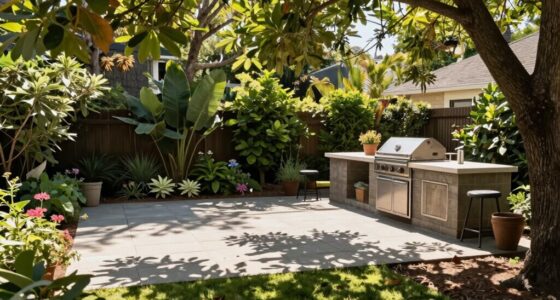
Are you looking to transform your backyard into the perfect outdoor living space? Building a modular outdoor kitchen is an excellent way to do that, especially because it allows you to develop your dream setup in stages. This approach makes the project more manageable and budget-friendly, giving you the flexibility to add features as you go. Starting small with essential components, like a prep station or a simple grill setup, lets you enjoy the space immediately while planning for future enhancements.
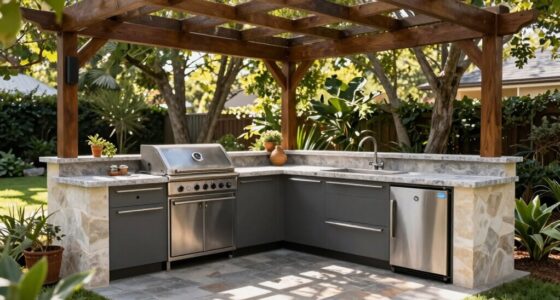
One of the biggest advantages of modular designs is that you can customize your kitchen over time. You don’t have to invest everything upfront; instead, you can focus on the core elements first and expand later. For example, you might initially install a basic counter with a weatherproof countertop and a built-in grill. As your needs evolve, you can add a sink, refrigeration units, or even a bar area. This step-by-step approach helps you avoid overspending and makes the process less overwhelming.
Modular outdoor kitchens let you customize and expand over time, making upgrades manageable and cost-effective.
When it comes to selecting equipment, consider portable appliances that can be easily moved or stored. These give you flexibility, especially if you’re working with limited space or want to switch things up for different occasions. Portable grills, mini fridges, and movable prep carts are perfect for a modular setup because they don’t require permanent connections. Pair these with weatherproof materials like stainless steel, composite countertops, and durable cabinetry to withstand the elements. Weatherproof materials ensure your outdoor kitchen stays in top condition, resisting moisture, sun damage, and temperature fluctuations. This longevity means you won’t have to replace components frequently, saving you time and money down the line.
Building in stages also allows you to focus on quality rather than rushing into a complete setup. As you add more features, you can select high-grade, weatherproof materials that hold up well outdoors. This approach ensures your kitchen remains functional and attractive for years. Plus, it’s easier to troubleshoot and upgrade smaller sections rather than a large, complex installation all at once.
Products Worth Considering

HOPETANA 8 × 16 ft Walk-In Polycarbonate Greenhouse

Solo Stove Bonfire 2.0 Smokeless Wood-Burning Fire Pit with Stand, Silver

Greenworks 48V Brushless 3-in-1 Leaf Blower, Vacuum, and Mulcher with Two 4.0Ah Batteries
As an affiliate, we earn on qualifying purchases.
Frequently Asked Questions
What Are the Typical Costs Involved in Building a Modular Outdoor Kitchen?
Building a modular outdoor kitchen costs between $5,000 and $15,000, depending on your budget planning and material selection. You’ll need to take into account expenses for appliances, counters, cabinets, and installation. Opting for high-end materials or custom features increases costs, while choosing budget-friendly options can save money. Remember, planning ahead helps you stay within your budget and ensures you select the right materials for durability and style.
How Do I Choose the Right Materials for Outdoor Durability?
Did you know that weather-resistant materials can extend your outdoor kitchen’s lifespan by up to 50%? When choosing materials, prioritize weather resistance and durability. Opt for stainless steel, granite, or concrete, which withstand rain, sun, and temperature changes. Consider material selection carefully to avoid frequent repairs or replacements. Your goal is to select options that combine aesthetic appeal with resilience, ensuring your outdoor kitchen stays functional and beautiful for years to come.
Can Existing Patios Be Integrated Into a Modular Kitchen Design?
Yes, you can integrate existing patios into a modular kitchen design. Focus on patio integration by carefully planning how the new modules will connect to your current space. This approach helps optimize your outdoor space, making it more functional and seamless. You can customize modules to fit existing features, ensuring the design complements your patio layout while maximizing space utilization. Proper planning results in a cohesive, efficient outdoor kitchen.
What Permits or Approvals Are Required for Outdoor Kitchen Construction?
Oh, sure, just build your outdoor kitchen without permits—what could go wrong? In reality, you’ll need to check local building codes and zoning permits before starting construction. These regulations ensure safety and compliance, avoiding hefty fines or demolition. Contact your local building department early to get the necessary approvals, and follow all guidelines. It’s a small step that saves you big headaches later!
How Can I Customize Modules to Fit Small or Irregular Spaces?
To customize modules for small or irregular spaces, you should focus on space optimization and module flexibility. You can select smaller, multi-purpose modules or have them custom-built to fit awkward corners or unique layouts. Combining adjustable or modular components allows you to maximize functionality without overcrowding. By tailoring your modules, you create a seamless outdoor kitchen that works perfectly within your space’s specific dimensions, ensuring efficiency and aesthetic appeal.
Conclusion
With modular outdoor kitchens, you’re crafting a blank canvas that evolves with your needs—each stage adding new colors and details to your outdoor masterpiece. Think of it as planting seeds today that blossom into your dream space tomorrow. By building in stages, you stay flexible and inspired, turning your backyard into a personalized retreat. So, start small, dream big, and watch your outdoor kitchen grow like a beautiful garden in full bloom.