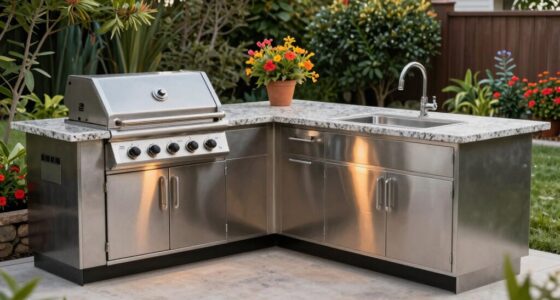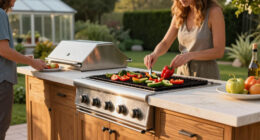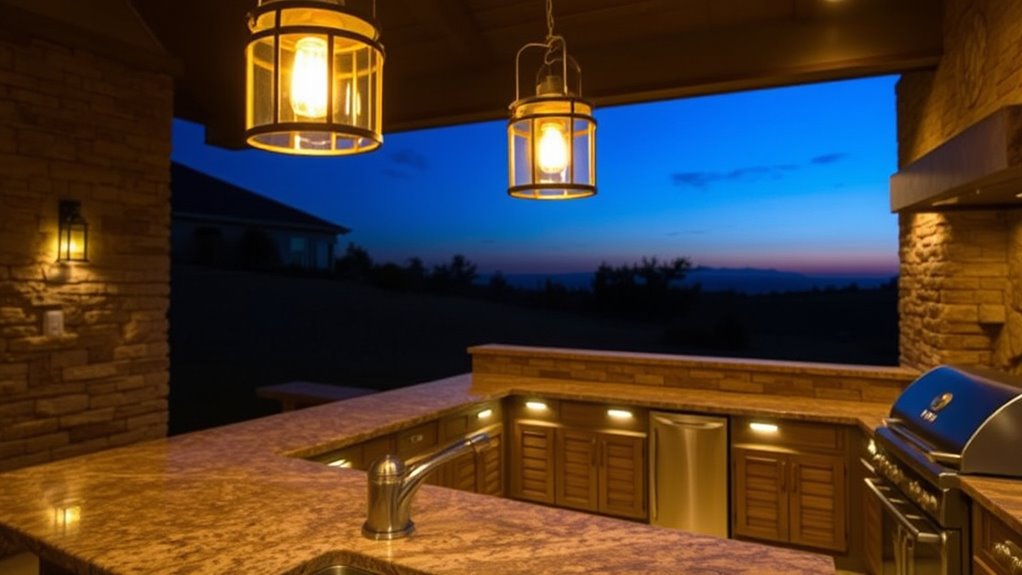
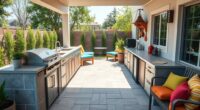
To achieve a great outdoor kitchen lighting design, combine focused task lighting over prep and cooking areas with softer ambient lights around seating zones. Use strategic fixture placement to reduce shadows and highlight landscape or architectural features for visual interest. Incorporate solar-powered options for eco-friendliness, and choose durable fixtures that withstand weather. Balancing functionality with ambiance creates an inviting space perfect for any evening occasion — and exploring the design details can help you perfect your outdoor experience.

Get garden gear delivered free — and shop member deals
- Fast, free delivery on millions of items
- Access to Prime Big Deal Days deals on October 6–7
- Prime Video, Amazon Music and more included
Key Takeaways
- Strategically position fixtures over cooking and prep areas for optimal task lighting and safety.
- Incorporate ambient lighting like string lights or wall sconces to create a cozy, inviting atmosphere.
- Use accent lighting to highlight landscape features, architectural details, and decorative elements.
- Optimize solar placement to maximize natural light during the day, reducing reliance on artificial lighting.
- Select weather-resistant fixtures that provide durable, reliable illumination for both functional and aesthetic purposes.
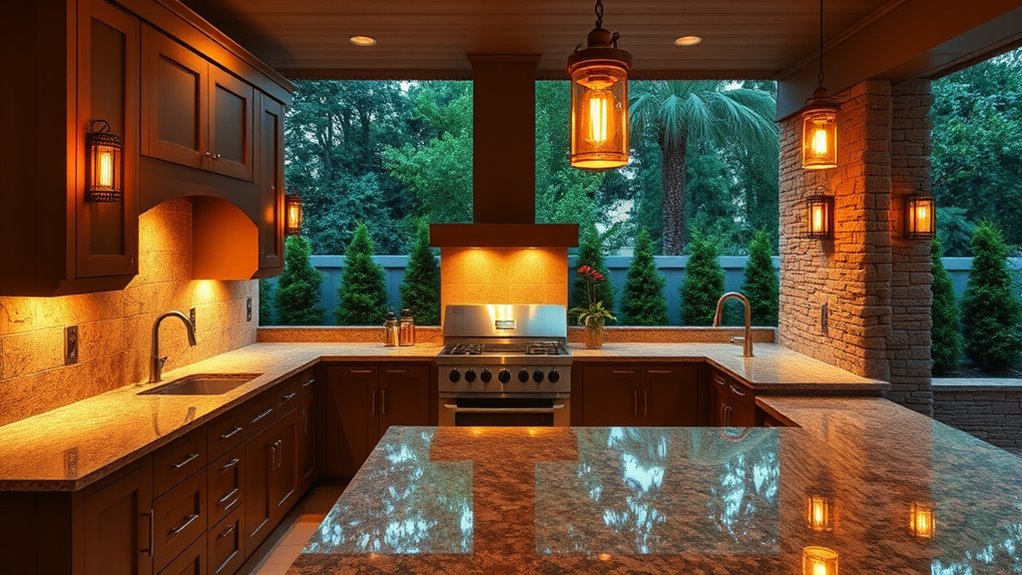
Creating the perfect outdoor kitchen begins with thoughtful lighting design that combines functionality and ambiance. The key to achieving this balance lies in understanding how to optimize solar placement and fixture selection. When planning your outdoor lighting, consider how sunlight interacts with your space throughout the day. Proper solar placement ensures that natural light enhances your outdoor area during daylight hours and reduces the need for artificial lighting when the sun is shining. Positioning features like trees, arches, or structures strategically can shade certain areas, preventing glare and creating a comfortable environment. During nighttime, solar-powered lights can be integrated into pathways or around the perimeter, providing soft, eco-friendly illumination that charges during the day and lights up at dusk.
Fixture selection is equally essential in setting the right tone and guaranteeing safety. You want fixtures that are durable enough to withstand outdoor conditions, such as moisture, temperature fluctuations, and UV exposure. When choosing fixtures, think about their purpose: task lighting for cooking and prep areas, ambient lighting for dining spaces, and accent lighting to highlight architectural features or landscape elements. For task areas like grills and countertops, go for brighter, focused fixtures that provide clear visibility without harsh glare. In contrast, for ambient lighting, softer fixtures like string lights or lanterns create a warm, inviting glow that encourages relaxation. Accent lighting, such as spotlights or well-placed bollards, adds depth and visual interest, making your outdoor kitchen more inviting after sunset.
The placement of fixtures matters just as much as their type. Position task lighting directly over cooking surfaces and prep zones to ensure you see clearly, even on the darkest nights. For ambient lighting, hang string lights overhead or mount wall sconces at strategic points to cast a gentle glow across seating areas. Accent lights should be aimed at trees, waterfalls, or decorative elements to draw attention and add layers of light. Remember to consider the overall layout to avoid shadows and uneven lighting, which can detract from the space’s functionality and charm. Additionally, incorporating top-rated outdoor fixtures ensures longevity and optimal performance in various weather conditions.
Ultimately, the combination of well-thought-out solar placement and carefully selected fixtures transforms your outdoor kitchen into a versatile, inviting space. By balancing practical illumination with cozy ambiance, you’ll be able to enjoy your outdoor setup at any hour, whether you’re hosting a lively barbecue or relaxing with a quiet evening drink. The right lighting plan not only elevates the aesthetics but also enhances safety and usability, making your outdoor kitchen a true extension of your home.
As an affiliate, we earn on qualifying purchases.
Frequently Asked Questions
How Do I Choose Weather-Resistant Lighting Fixtures?
To choose weather-resistant lighting fixtures, look for durable fixtures made from weatherproof materials like stainless steel, aluminum, or sealed plastic. Make certain they have an IP (Ingress Protection) rating of at least IP65, which means they’re protected against dust and water jets. Opt for fixtures specifically designed for outdoor use, as they’re built to withstand the elements and last longer in your outdoor kitchen environment.
What Is the Best Lighting Placement for Safety?
Think of your outdoor kitchen as a stage where safety takes center spotlight. You should place task lighting directly over work areas to illuminate every chop and stir clearly, avoiding shadows that hide hazards. Use decorative fixtures around seating and pathways to create a warm glow that guides guests safely. This strategic placement guarantees every step is lit, turning your outdoor space into a safe, inviting haven for cooking and entertaining.
How Can I Control Outdoor Lighting Remotely?
You can control outdoor lighting remotely using smart dimming systems with voice control integration. Install compatible smart switches or smart bulbs that connect to your Wi-Fi network. Then, use voice commands through devices like Alexa, Google Assistant, or Siri to turn lights on or off, adjust brightness, or set schedules. This setup offers convenient, hands-free control, enhancing your outdoor kitchen experience and ensuring safety and ambiance at your fingertips.
What Energy-Efficient Options Are Available for Outdoor Kitchens?
Imagine a gentle sunrise illuminating your outdoor space—this is the beauty of energy-efficient options. You can choose solar lighting, which harnesses sunlight to power your kitchen, reducing energy bills. LED technology is also an excellent choice, offering bright illumination with minimal power consumption. Both options are eco-friendly, long-lasting, and perfect for creating a warm, inviting atmosphere while keeping your energy use in check.
How Do I Prevent Light Pollution in My Backyard?
To prevent light pollution in your backyard, focus on light pollution mitigation by using downward-facing fixtures and shielded lights. Create distinct backyard light zones with dimmer, softer lighting in seating areas and brighter lights where needed, avoiding spillover. This approach helps contain illumination within your space, reducing glare and skyglow. Regularly check and adjust your outdoor lighting to guarantee it’s effective, energy-efficient, and environmentally friendly.
weatherproof outdoor wall sconces
As an affiliate, we earn on qualifying purchases.
As an affiliate, we earn on qualifying purchases.
Conclusion
Remember, the right lighting transforms your outdoor kitchen into a welcoming oasis, much like a carefully chosen playlist sets the mood for a gathering. When you combine functional task lighting with soft ambient glows, you create a space that’s both practical and inviting. Think of it as seasoning your favorite dish—you add just enough to enhance, never overpower. With thoughtful design, your outdoor kitchen becomes a place where every meal feels like a special occasion.
outdoor landscape accent spotlights
As an affiliate, we earn on qualifying purchases.
As an affiliate, we earn on qualifying purchases.
weather-resistant outdoor task lighting fixtures
As an affiliate, we earn on qualifying purchases.
As an affiliate, we earn on qualifying purchases.
Halloween Picks
halloween
As an affiliate, we earn on qualifying purchases.