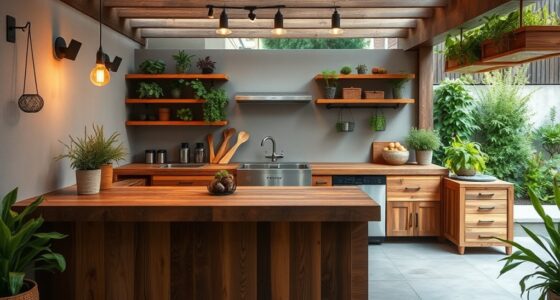
To optimize your outdoor kitchen, guarantee your countertops provide at least 24 inches of workspace on each side of your grill or main station for comfortable prep and cooking. Consider your daily needs and gatherings to size the surfaces appropriately, balancing enough space without creating clutter. Incorporate ergonomic design principles for ease of movement and comfort, and select durable, weather-resistant materials to maintain longevity. Keep these tips in mind, and you’ll discover how to craft a practical, stylish outdoor culinary area.
Key Takeaways
- Ensure countertops provide a minimum of 24 inches on each side of the cooking station for adequate workspace.
- Optimize ergonomic layout by balancing countertop size with ease of movement during food prep and cooking.
- Consider daily use and entertaining needs to determine appropriate countertop dimensions and seating arrangements.
- Use durable, weather-resistant materials like stainless steel or treated wood to maintain longevity and safety.
- Incorporate seating that complements workspace size without obstructing access or pathways for a functional outdoor kitchen.

Designing an outdoor kitchen that’s both functional and comfortable starts with choosing the right countertop sizes and understanding workspace ergonomics. When planning your space, think about how you’ll use it daily and entertain guests. Properly sized countertops provide enough room for prep work, cooking, and serving without feeling cramped. A good rule of thumb is to allocate at least 24 inches of workspace on each side of your grill or cooking station, ensuring you have ample space for ingredients, utensils, and other essentials. Recognize that larger countertops might be necessary if you plan to host frequent gatherings or prepare elaborate meals. However, balance is key—overly large surfaces can hinder movement and make the space feel cluttered. Countertop sizing is essential for creating a practical outdoor cooking area that suits your needs.
Seating arrangements play a fundamental role in your outdoor kitchen’s functionality. Consider integrating built-in or nearby seating that complements your countertop layout. For example, a bar-height counter with stools creates a social hub where guests can mingle while you cook. When designing these seating areas, ensure they don’t obstruct walkways or access to appliances. Comfort and accessibility should guide your choices, especially if you or your guests will be spending extended time outdoors. Incorporate weatherproof materials into your seating and countertop designs to withstand the elements. Durable options like treated wood, stainless steel, or composite materials resist rain, sun, and temperature fluctuations, maintaining their appearance over time.
Frequently Asked Questions
How Do I Choose the Best Material for Outdoor Countertops?
To choose the best material for outdoor countertops, consider material durability and aesthetic appeal. You want something that withstands weather, spills, and heavy use without cracking or fading. Materials like granite, quartz, or concrete offer excellent durability, while also enhancing your outdoor space’s look. Pick a material that matches your style and needs, ensuring it’s easy to maintain and resilient over time, so your outdoor kitchen stays beautiful and functional.
What Are the Maintenance Tips for Outdoor Kitchen Countertops?
Think of your outdoor countertop as a garden that needs regular care. You should follow simple cleaning routines, like wiping down surfaces after use and avoiding harsh chemicals. Sealing techniques help protect against stains and weather damage, so reseal your countertop every couple of years. Keep debris and dirt off your surface, and promptly clean spills. With consistent maintenance, your outdoor kitchen will stay beautiful and functional for years to come.
How Can I Prevent Outdoor Countertops From Weather Damage?
To prevent weather damage on your outdoor countertops, you should regularly apply sealing techniques to protect the surface from moisture and UV rays. Additionally, use protective covers when you’re not using the space, especially during harsh weather. These steps help preserve the material, prevent stains, and extend the lifespan of your countertops. Make sealing a routine, and always cover your countertops to keep them safe from rain, snow, and sun damage.
What Is the Average Cost for Different Countertop Materials?
You could spend a fortune on outdoor countertops, but it’s not necessary to break the bank. The cost comparison varies widely depending on the material durability; for instance, laminate costs around $20-$40 per square foot, while granite ranges from $40-$100, and concrete is about $70-$100. Consider your budget and climate to find the best balance between price and durability, ensuring your outdoor space stays beautiful and functional.
How Do I Incorporate Storage Into My Outdoor Countertop Design?
You can incorporate storage into your outdoor countertop design by adding built-in storage options like drawers, cabinets, or open shelves beneath the countertop. This keeps your essentials within reach and maintains a clean look. To enhance aesthetics, consider decorative features such as stylish hardware or contrasting finishes that blend functionality with visual appeal. These elements help maximize space while creating an inviting, organized outdoor cooking area.
Conclusion
By choosing the right countertop sizes and optimizing your workspace ergonomics, your outdoor kitchen becomes both functional and comfortable. Don’t worry about it feeling cramped; picture a 4-foot wide prep area next to a 2-foot sink, leaving plenty of room for movement. This setup ensures you can cook, prep, and entertain effortlessly. With thoughtful planning, your outdoor space will invite everyone to gather and enjoy, making every meal a pleasure.