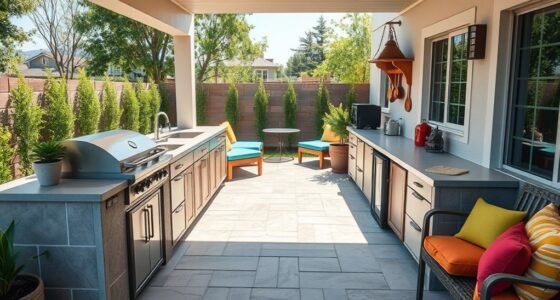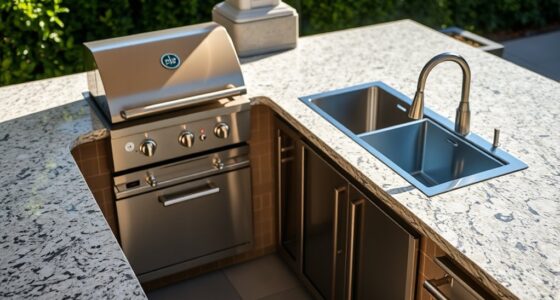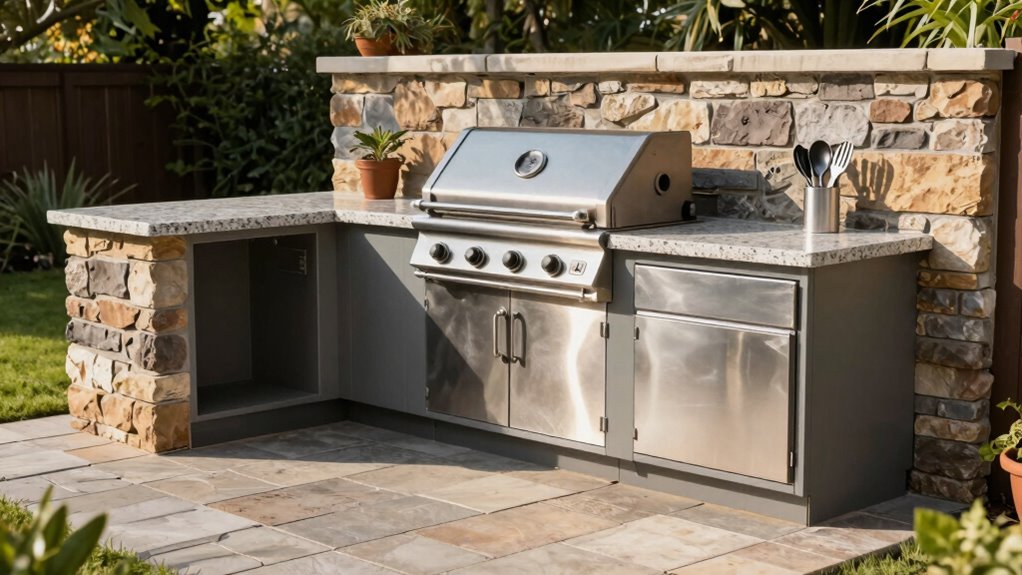
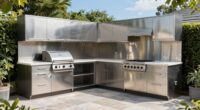
When planning your outdoor kitchen, focus on flexibility by installing modular components, extra outlets, and adaptable wiring for future upgrades. Incorporate natural elements and landscape features to guarantee seamless integration and aesthetic cohesion as your yard evolves. Set a realistic budget that prioritizes essentials now, leaving room for future features like a fire pit or refrigerator. Carefully consider electrical and plumbing needs, designing with expansion in mind. Exploring these tips will help you create a functional and stylish space prepared for what’s next.

Get garden gear delivered free — and shop member deals
- Fast, free delivery on millions of items
- Access to Prime Big Deal Days deals on October 6–7
- Prime Video, Amazon Music and more included
Key Takeaways
- Design with modular components and flexible infrastructure to easily accommodate future appliances and features.
- Install wiring and plumbing with extra outlets and capacity for seamless upgrades later.
- Incorporate natural landscape elements to ensure aesthetic cohesion as the space evolves.
- Prioritize high-quality, adaptable materials suitable for future modifications and expansions.
- Plan layout and features with future enhancements like lighting, fire pits, or tech integrations in mind.
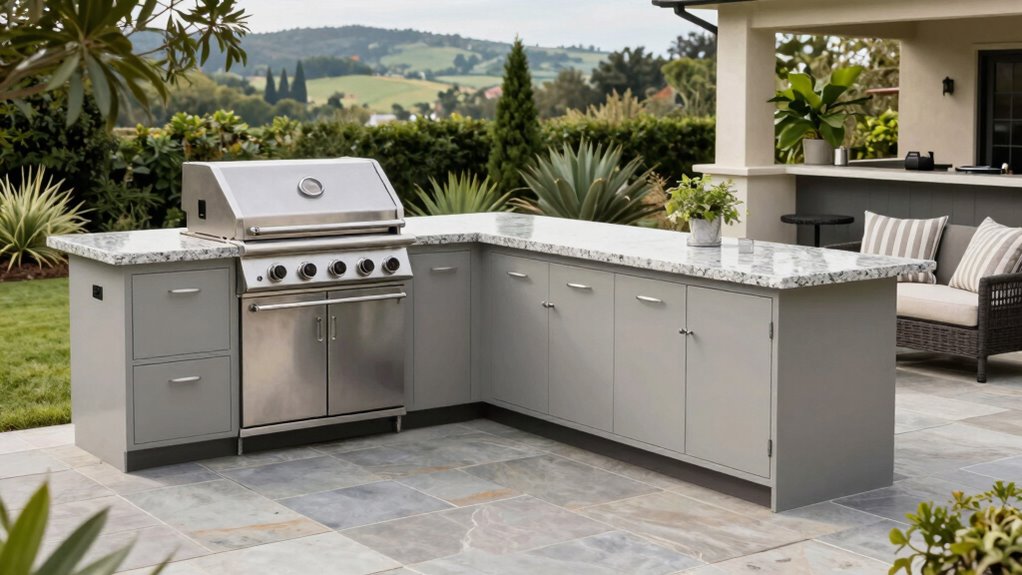
Creating an outdoor kitchen can transform your backyard into the perfect space for entertaining and cooking year-round. When planning your setup, it’s vital to think ahead about future upgrades, guaranteeing your design can evolve without major disruptions. Start by considering how your outdoor kitchen will blend with your landscape. Landscape integration isn’t just about aesthetics; it’s about creating a cohesive look that complements your yard’s existing features. Incorporate natural elements like stone, wood, or greenery into your initial design to make future enhancements easier. For example, if you plan to add a pergola or lighting later, designing your current layout with those elements in mind will save time and money down the line. Planning for Landscape integration from the start ensures that your outdoor kitchen remains a harmonious part of your yard as it evolves. Budget considerations play a fundamental role in your planning process. While it’s tempting to dream big, setting a realistic budget helps keep your project on track and prevents overspending. Think about how much you’re willing to invest initially and how much you’d like to allocate for future upgrades. Prioritize features that are essential now, such as a durable grill, countertop space, and seating, while leaving room for enhancements like an outdoor refrigerator, sink, or fire pit later. When selecting materials, choose high-quality, versatile options that can handle future modifications without requiring complete replacements. This approach saves you money and effort as your outdoor kitchen grows. Designing with future upgrades in mind also means planning for flexibility. For instance, install wiring and plumbing in a way that allows for easy additions or modifications later. Use modular components that can be expanded or replaced without tearing down your entire setup. Additionally, keep your electrical system ready for additional appliances or lighting fixtures by installing extra outlets and switches now, even if you don’t need them immediately. This foresight ensures that when the time comes to upgrade, you won’t face costly or complicated work. Furthermore, understanding projector technology can help you select the most adaptable features for your outdoor setup. Incorporating knowledge about best outdoor electrical wiring practices can also help ensure safety and future readiness. Finally, stay mindful of your overall outdoor space’s layout. You want your outdoor kitchen to feel integrated into your yard’s landscape, not an afterthought. By designing around existing trees, pathways, or garden beds, you create a natural flow that makes future upgrades feel seamless. Incorporating outdoor design principles early in your planning process can help achieve this harmony. Being aware of potential future upgrades during initial planning allows you to create a more adaptable and resilient outdoor kitchen setup. Planning ahead and balancing landscape integration with budget considerations will give your outdoor kitchen the flexibility to grow over time, making it a functional, beautiful centerpiece of your backyard for years to come.
modular outdoor kitchen cabinets
As an affiliate, we earn on qualifying purchases.
As an affiliate, we earn on qualifying purchases.
Frequently Asked Questions
What Are the Best Materials for Outdoor Kitchen Durability?
You should choose weather-resistant materials like stainless steel, stone, or concrete for your outdoor kitchen. These durable surface options withstand the elements, preventing damage from rain, sun, and temperature changes. Opt for materials that resist rust, cracking, and fading to guarantee longevity. By selecting tough, weather-resistant materials, you’ll create a resilient outdoor kitchen that remains functional and attractive for years, even with future upgrades in mind.
How Do I Incorporate Smart Technology Into My Outdoor Kitchen?
You can incorporate smart technology into your outdoor kitchen by integrating smart appliances and systems for seamless control. Use smart grills, lighting, and weather sensors with wireless connectivity to monitor and manage your setup remotely. Opt for voice-activated devices and app-controlled systems to make cooking and entertaining effortless. This smart integration enhances convenience, allows for future upgrades, and creates an innovative outdoor space tailored to your lifestyle.
What Permits or Regulations Are Needed for Outdoor Kitchens?
Your outdoor kitchen dreams could be dashed by unexpected permits! You need to check local zoning restrictions and guarantee proper utility connections before building. Contact your city or county offices to find out if you need permits for electrical, plumbing, or gas work. Failing to do so can lead to hefty fines or forced removal. Planning ahead saves headaches and guarantees your outdoor oasis becomes a legal, safe, and enjoyable space.
How Can I Ensure Adequate Lighting for Nighttime Cooking?
You should focus on strategic lighting placement to guarantee safety and visibility during nighttime cooking. Install durable light fixtures overhead, such as weatherproof pendant lights or recessed lighting, to illuminate your workspace evenly. Consider task lighting directly over the grill and prep areas, and add ambient lighting around seating zones for a cozy atmosphere. Proper lighting placement and high-quality light fixtures help you cook safely and enjoy your outdoor kitchen well into the night.
What Are Cost-Effective Ways to Upgrade My Outdoor Kitchen Later?
To upgrade your outdoor kitchen cost-effectively later, focus on budget planning and design flexibility. Choose versatile materials and appliances that can easily be expanded or replaced. Incorporate modular components like movable countertops or portable appliances, which allow you to upgrade without major renovations. Planning ahead with flexible wiring and plumbing also saves money in the long run, making future upgrades smoother and more affordable.
outdoor kitchen electrical outlets
As an affiliate, we earn on qualifying purchases.
As an affiliate, we earn on qualifying purchases.
Conclusion
Building an outdoor kitchen plan around future upgrades is like planting a tree—you want to choose a spot and design with growth in mind. When I first built my patio, I didn’t think ahead, and now I wish I had planned for extra counter space and better lighting. Think of your outdoor kitchen as a living space that evolves; start with a solid foundation, and watch your backyard become a true extension of your home, ready for anything.
outdoor kitchen plumbing fixtures
As an affiliate, we earn on qualifying purchases.
As an affiliate, we earn on qualifying purchases.
As an affiliate, we earn on qualifying purchases.
Fall Picks
fall essentials
As an affiliate, we earn on qualifying purchases.