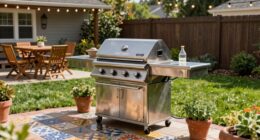
To safely install gas lines in your outdoor kitchen, carefully plan the route to avoid underground utilities and use approved materials like stainless steel or rigid piping. Double-check all connections for leaks with soapy water or detectors, and make certain proper venting to prevent gas buildup. It’s best to hire a licensed professional to ensure compliance with safety codes. Keep safety practices in mind, and you’ll be on your way to a secure, functional outdoor cooking space—more tips ahead.
Key Takeaways
- Plan gas line routes carefully to avoid interference with utilities and follow local codes and manufacturer guidelines.
- Use approved materials like flexible stainless steel or rigid piping, ensuring all connections are tight and leak-free.
- Install a readily accessible shut-off valve outside the cooking area for emergency disconnection.
- Conduct thorough leak testing using soapy water or approved detectors before operation.
- Consult a licensed professional for proper installation, venting requirements, and compliance with safety standards.
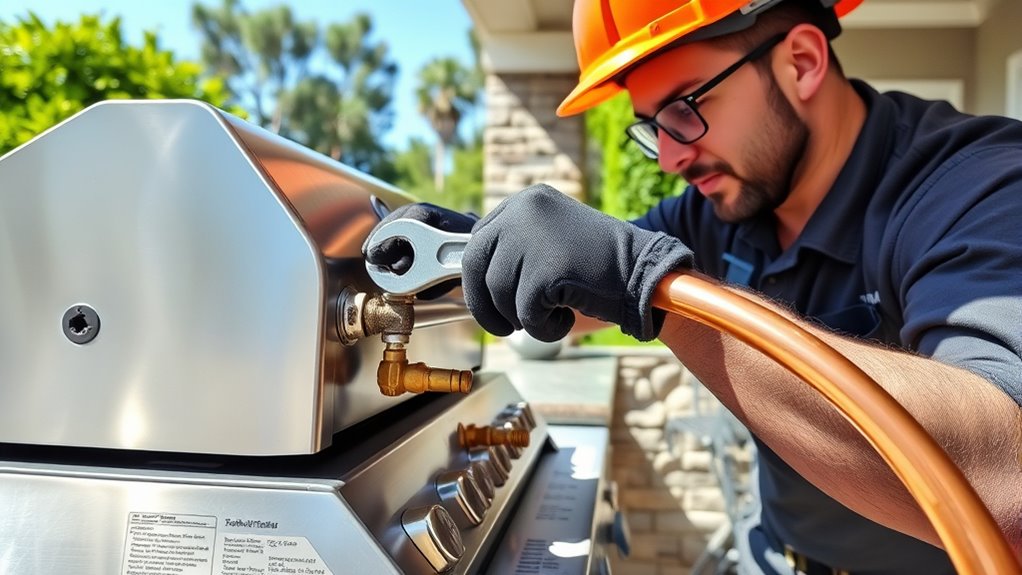
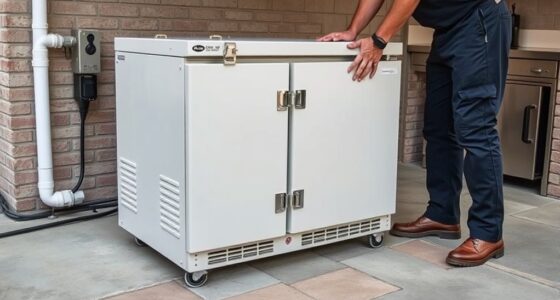
Installing gas lines in outdoor kitchens requires careful planning and adherence to safety standards. To guarantee your setup is safe and functional, you need to focus on preventing gas leaks and meeting venting requirements. Gas leak prevention is vital because even small leaks can lead to dangerous situations, including fires or carbon monoxide buildup. Before starting, double-check all components for leaks using a soapy water solution or an approved gas detector after installation. You should never rely solely on visual inspections; testing is essential to confirm tight connections and identify any potential leaks early. Properly securing gas lines and avoiding sharp bends will also minimize the risk of leaks over time.
Ensure safety by checking for leaks and securing gas lines properly in your outdoor kitchen setup.
Venting requirements are another essential aspect. Outdoor kitchens, by their nature, usually provide good airflow, but you still need to ensure proper venting to avoid buildup of any gases or fumes. Adequate venting helps disperse gases quickly and reduces the chance of accumulation, which is especially important if you’re installing appliances like gas-powered grills or heaters. Make sure your outdoor setup includes vents or openings that allow for free airflow, and follow local codes or manufacturer instructions regarding vent placement and size. If you’re installing any appliances that produce smoke or fumes, set up dedicated exhaust vents or hoods to capture and direct these out of the cooking area. Proper venting not only enhances safety but also improves the overall performance of your outdoor cooking station.
When laying out your gas lines, plan your route carefully to avoid interference with electrical wiring, sprinkler systems, or other buried utilities. Use approved materials, such as flexible stainless steel or rigid piping, and follow manufacturer guidelines for installation. Always ensure connections are tight and secure, and use the correct fittings to prevent leaks. When connecting appliances, check for leaks again before fully operating your system. It’s also wise to install a shut-off valve accessible from outside the cooking area for quick disconnection in an emergency. Additionally, understanding gas pressure regulation is crucial to ensure your appliances operate safely and efficiently.
Finally, consider consulting a licensed professional for the installation. They’re trained to handle the complexities of gas line setup, ensuring compliance with safety standards and local codes. Proper installation, combined with vigilant gas leak prevention practices and adherence to venting requirements, will give you peace of mind and a safe, enjoyable outdoor cooking space.

RectorSeal Better Bubble 65554 Advanced Leak Detector, Detects Refrigerant Gas, Air, and Oxygen, Fast Acting, Can Be Used at Varied Temperature/Pressure Conditions, Plumbing, 8 oz.
APPLICATION: Better Bubble is an advanced leak locator that can detect refrigerant gas, air, oxygen and most other…
As an affiliate, we earn on qualifying purchases.
As an affiliate, we earn on qualifying purchases.
Frequently Asked Questions
What Safety Precautions Should I Take Before Starting Installation?
Before starting installation, you should turn off the gas supply and inspect all connections for leaks using a soap solution. Make certain no open flames or sparks are nearby, as a gas leak can pose a serious fire hazard. Wear proper safety gear, work in a well-ventilated area, and double-check all fittings before turning the gas on. Taking these precautions helps prevent accidents and keeps your outdoor kitchen safe.
Can I Install Gas Lines Myself or Should I Hire a Professional?
You can attempt DIY gas line installation, but beware of the risks involved. While it may save money upfront, improper work can lead to leaks, explosions, or carbon monoxide poisoning. Many areas require certification and adherence to local codes, making hiring a licensed professional the safer choice. Their expertise guarantees your outdoor kitchen remains safe and compliant, giving you peace of mind while enjoying your space.
How Often Should Outdoor Gas Lines Be Inspected or Maintained?
You should inspect your outdoor gas lines at least once a year and follow a regular maintenance schedule to guarantee safety. Look for signs of leaks, corrosion, or damage, and schedule professional inspections if you notice any issues. Regular maintenance helps prevent potential hazards and keeps your outdoor kitchen running smoothly, so don’t skip these essential checks. Staying proactive protects your home and loved ones from gas-related accidents.
Are There Specific Permits Required for Outdoor Gas Line Installation?
Yes, you need to check permit requirements before installing outdoor gas lines. Local regulations vary, so you should contact your city or county government to understand what permits are necessary. Usually, a permit guarantees your installation complies with safety standards and building codes. Failing to get the proper permits can lead to fines or safety hazards, so always verify permit requirements and secure approval before starting your outdoor gas line project.
What Signs Indicate a Gas Leak in Outdoor Lines?
Think of a gas leak as a warning whisper from your outdoor kitchen. If you smell a strong gas odor or notice a hissing sound near the gas lines, don’t ignore it. These signs indicate a potential leak, so turn off the gas supply immediately. Ventilate the area and avoid any open flames or sparks. Call a professional to inspect and fix the issue before using your outdoor kitchen again.

Fire Magic 1-Hour Gas Shut-Off Valve Automatic Timer
Safely and automatically shut off gas flow
As an affiliate, we earn on qualifying purchases.
As an affiliate, we earn on qualifying purchases.
Conclusion
Installing gas lines in your outdoor kitchen can be safe and straightforward if you follow proper procedures. Remember, about 75% of gas leaks occur from improper installation or maintenance, so taking your time and consulting professionals is essential. With careful planning and adherence to safety standards, you can enjoy a seamless outdoor cooking experience. Don’t rush the process—your safety and your delicious meals are worth it!
![Puxyblue [2026 NEW] 72" Flexible Gas Line Kit for Dryer Stove Range Flexible Stainless Steel Gas Dryer Kit - 5/8" OD(1/2" ID) Dryer Gas Line with Connector 3/4" FIP & 1/2" MIP & 3/4" MIP Fitting](https://m.media-amazon.com/images/I/51Km8ahs+PL._SL500_.jpg)
Puxyblue [2026 NEW] 72" Flexible Gas Line Kit for Dryer Stove Range Flexible Stainless Steel Gas Dryer Kit – 5/8" OD(1/2" ID) Dryer Gas Line with Connector 3/4" FIP & 1/2" MIP & 3/4" MIP Fitting
☞Open the package, you will see 2 fittings have been installed on the gas line, there is no…
As an affiliate, we earn on qualifying purchases.
As an affiliate, we earn on qualifying purchases.

APPL Adapter Kit Z-Flex Venting Gas Heater
Appl Adapter Kit Z-Flex Venting Gas Heater.
As an affiliate, we earn on qualifying purchases.
As an affiliate, we earn on qualifying purchases.