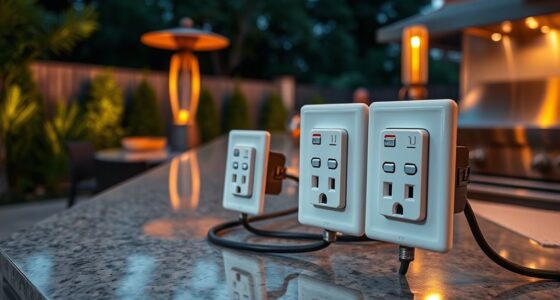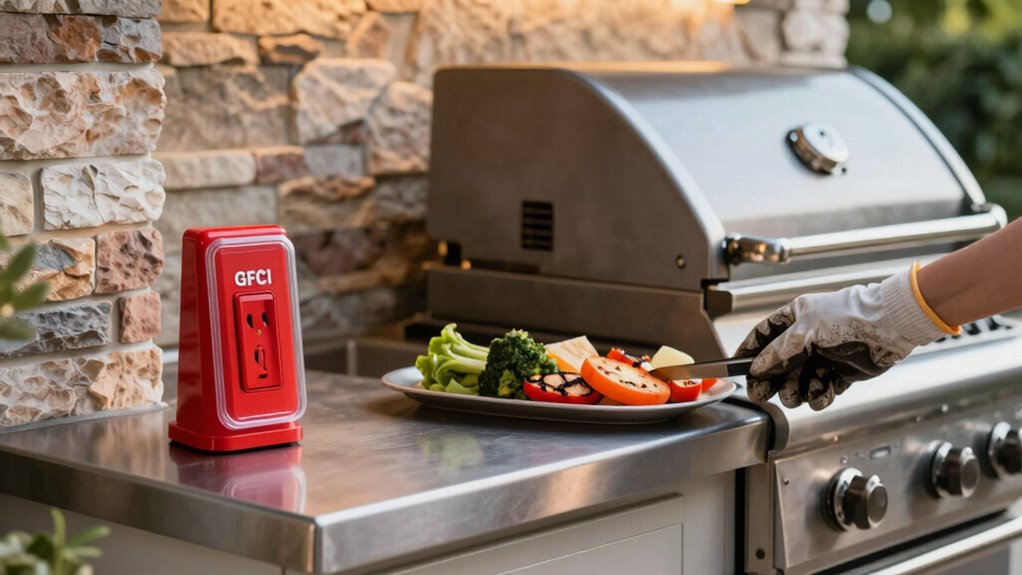

GFCI protection is essential in your backyard cooking space because it quickly detects ground faults and cuts off power, preventing electrical shocks, especially near water or moist conditions. It continuously monitors the electrical flow and acts fast to shut off power during leaks or faults. Proper placement and maintenance of GFCI outlets enhance safety and protect your family during outdoor activities. Keep your space safer—learn more about how to install and maintain GFCI protection properly.

Get garden gear delivered free — and shop member deals
- Fast, free delivery on millions of items
- Access to Prime Big Deal Days deals on October 6–7
- Prime Video, Amazon Music and more included
Key Takeaways
- GFCI protection prevents electrical shocks by shutting off power during ground faults, especially crucial near water sources in outdoor cooking areas.
- It provides an essential safety layer for outdoor outlets, reducing the risk of injuries from moisture and weather-related electrical issues.
- Proper GFCI installation ensures outlets are protected from short circuits and electrical leaks common in outdoor environments.
- GFCIs work alongside grounding techniques to enhance overall electrical safety in backyard cooking spaces.
- Regular inspection and maintenance of GFCI outlets help prevent hazards caused by environmental factors and equipment wear.
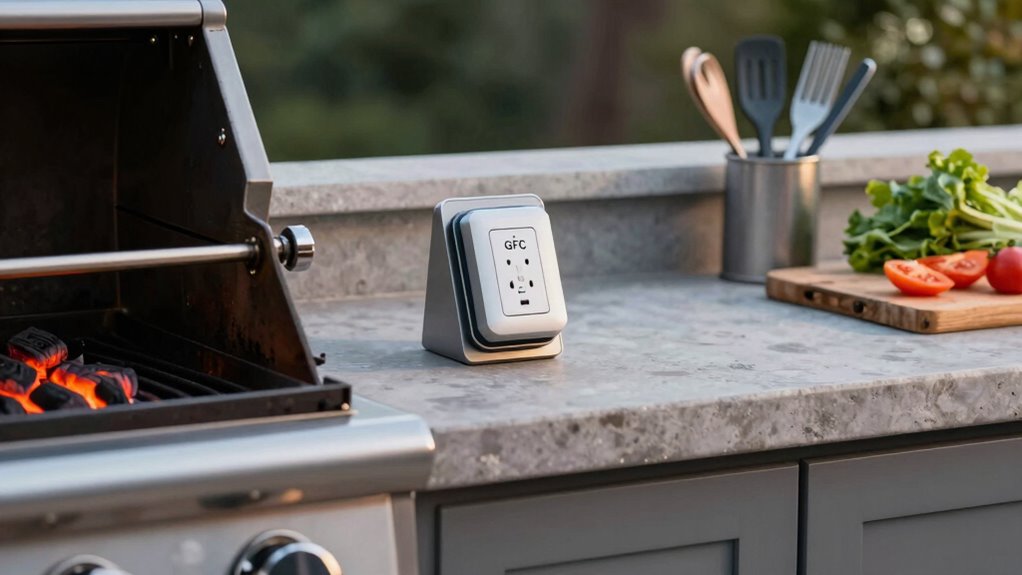
When setting up your backyard cooking space, safety should always come first—especially around electrical outlets and appliances. You’re likely to use grills, lights, or even small appliances, and all of these require proper electrical safety measures. That’s where GFCI protection becomes essential. GFCI, or Ground Fault Circuit Interrupter, is designed to prevent electrical shock by quickly shutting off power if it detects a ground fault or leakage. In outdoor environments, where moisture and unpredictable weather are common, GFCIs are a vital layer of protection. They reduce the risk of electrical shock by continuously monitoring the flow of electricity and cutting power if an imbalance occurs.
Having GFCI outlets installed in your backyard ensures that you’re protected from accidental shocks, especially when working near water sources like sinks, ponds, or even wet grass. Without GFCIs, even minor faults can lead to serious injuries. It’s important to remember that outdoor power safety isn’t just about using GFCI outlets; it also involves proper appliance grounding techniques. Grounding appliances correctly ensures that in the event of a fault, the electrical current has a safe path to the ground, reducing the risk of shock or fire. When you follow proper appliance grounding techniques, you help maintain a safe environment, especially when running power cords across damp surfaces or placing devices near water.
You should also consider the placement of outlets—making sure they’re weather-resistant and positioned away from potential water exposure. Regularly inspect cords and appliances for damage, and replace any that show signs of wear. Using extension cords rated for outdoor use is equally important. They’re built to withstand moisture and temperature changes, further enhancing outdoor power safety. Remember, never overload outlets or daisy-chain multiple extension cords, as doing so can increase the risk of electrical faults. Additionally, understanding the importance of GFCI protection can help reinforce your safety measures and prevent accidents. Proper cable management techniques also help avoid accidental damage to cords and outlets, which could compromise safety. Ensuring your wiring adheres to electrical safety standards not only protects your property but also ensures peace of mind during outdoor activities.
Another key aspect is being aware of the common plant problems, such as pests or environmental stress, which can affect your outdoor safety setup if plants are near electrical components. Incorporating these safety measures is especially crucial in environments with natural elements, where unforeseen circumstances can pose risks.
In your backyard cooking space, combining the use of GFCI protection with proper appliance grounding techniques creates a safer environment. It’s about more than just avoiding surprises—you’re protecting yourself, your family, and your property. When you respect electrical safety protocols, including the installation of GFCIs and proper grounding, you can enjoy cooking outdoors with confidence. Keep safety at the forefront, and always follow local electrical codes and manufacturer instructions to ensure your outdoor setup remains secure and functional.
As an affiliate, we earn on qualifying purchases.
Frequently Asked Questions
Can GFCI Outlets Be Installed Outdoors by Homeowners?
Yes, you can install GFCI outlets outdoors, but you need to follow electrical codes to guarantee safety. Outdoor safety is vital, so using weather-resistant GFCIs is recommended. You should also make certain of proper installation, possibly with a weatherproof cover, to prevent water exposure. Always turn off power at the breaker and consult a qualified electrician if you’re unsure. Proper GFCI outlet installation protects you and your family from electrical hazards.
How Often Should GFCI Outlets Be Tested?
Think of your GFCI outlet as a vigilant guardian of electrical safety, always ready to protect you. You should test your GFCI outlets at least once a month to make sure they’re functioning properly. Regular outlet maintenance keeps your safety shield strong, preventing potential electrical hazards. By staying diligent, you honor your guardian, ensuring your backyard cooking space remains a safe haven for family and friends alike.
Are GFCI Protectors Necessary for All Outdoor Cooking Appliances?
Yes, GFCI protectors are necessary for all outdoor cooking appliances. They guarantee outdoor safety by preventing electrical shocks, especially in damp or wet conditions. You should check that the GFCI outlets are compatible with your appliances to avoid any issues. Using GFCI protection helps safeguard your family while you enjoy cooking outdoors, offering peace of mind and preventing electrical accidents. Always prioritize safety when setting up your outdoor kitchen.
What Are the Cost Differences Between GFCI and Standard Outlets?
You’ll find GFCI outlets typically cost about $10 to $20 more than standard outlets, making them a worthwhile investment considering outlet safety. This small difference can prevent costly electrical accidents or injuries. While standard outlets cost around $2 to $5, GFCI outlets range from $12 to $25. The added safety and peace of mind make GFCIs a smart choice for outdoor cooking spaces, especially where water is involved.
Do GFCIS Require Special Wiring or Additional Components?
GFCIs do require special wiring and adherence to installation guidelines to guarantee electrical safety. You’ll need to connect the GFCI outlet correctly to the circuit, following manufacturer instructions and local codes. Sometimes, additional components like a dedicated circuit or weatherproof enclosure are necessary for outdoor use. Proper installation guarantees GFCI functionality, providing essential protection from electrical shocks, especially in outdoor cooking spaces where moisture and water are common risks.
weatherproof GFCI electrical outlet
As an affiliate, we earn on qualifying purchases.
As an affiliate, we earn on qualifying purchases.
Conclusion
Think of GFCI protection as your backyard’s silent guardian, quietly watching over your cooking adventures like a vigilant lighthouse guiding ships safely home. It’s the superhero that swoops in at the first sign of trouble, preventing electrical mishaps before they strike. Don’t leave your outdoor kitchen vulnerable to danger—embrace GFCI protection and turn your backyard into a safe haven where every cookout ends with laughter, not regret. Stay protected, stay safe, and keep the good times flowing.
outdoor extension cords rated for moisture
As an affiliate, we earn on qualifying purchases.
As an affiliate, we earn on qualifying purchases.
ground fault circuit interrupter for outdoor use
As an affiliate, we earn on qualifying purchases.
As an affiliate, we earn on qualifying purchases.
Evergreen bestsellers Picks
bestsellers
As an affiliate, we earn on qualifying purchases.