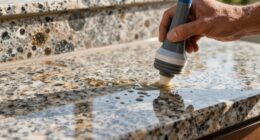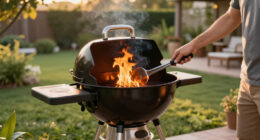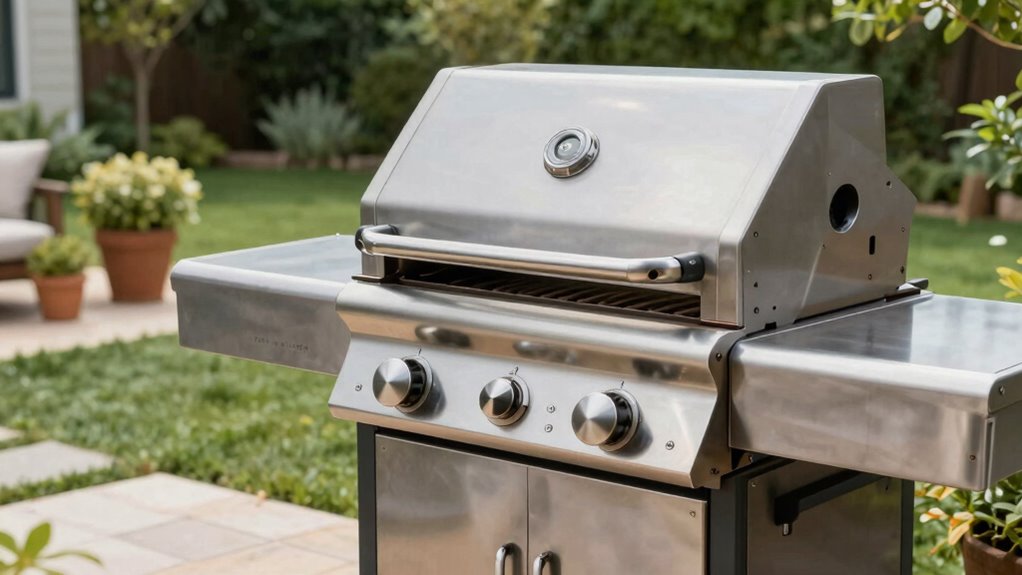
Before building your grill setup, consider the necessary clearance to guarantee safety and proper function. Think about whether it’s indoor or outdoor, and follow guidelines for fire safety and ventilation. Use fire-resistant materials near heat sources and leave enough space for airflow and smoke exhaust. Measure carefully, consult manufacturer instructions, and plan for ventilation systems. To master all the details that keep your grill safe and efficient, keep exploring these key points.
Key Takeaways
- Assess specific clearance requirements based on grill type, location (indoor or outdoor), and manufacturer guidelines.
- Prioritize safety by maintaining adequate distance from walls, ceilings, and combustible materials.
- Ensure proper ventilation pathways to manage heat, smoke, and fumes effectively.
- Choose heat-resistant materials like brick or stainless steel near the grill to reduce fire risk.
- Plan for sufficient airflow and space around ventilation systems to optimize performance and safety.
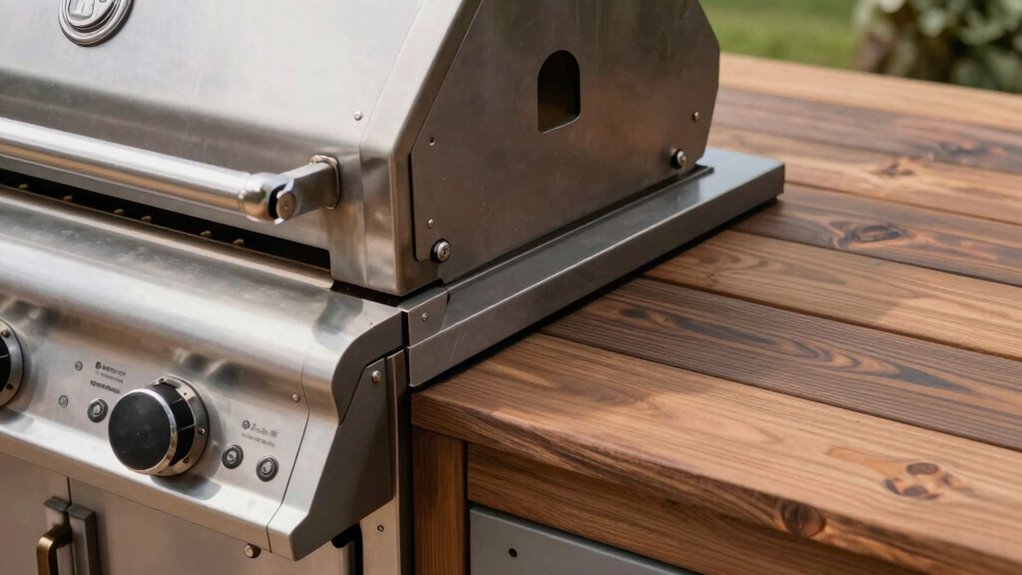
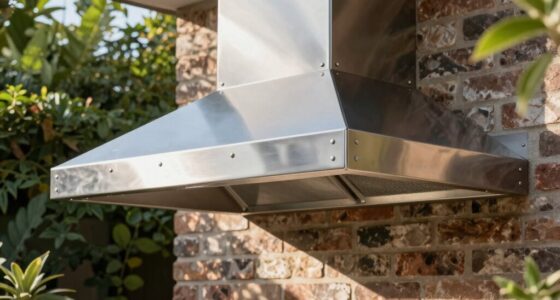
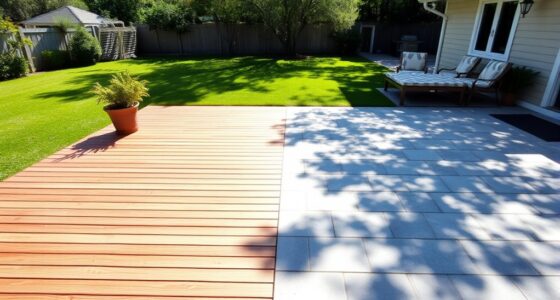
When setting up your grill, understanding the importance of proper clearance is essential for safety and ideal performance. Clearances aren’t just about following building codes; they help prevent accidents, ensure proper airflow, and extend the lifespan of your equipment. Whether you’re working with an indoor or outdoor setup, paying attention to these distances is crucial. Indoor safety, in particular, demands strict adherence to clearance guidelines because indoor spaces can amplify fire risks if safety measures aren’t met. You need enough space around the grill so heat doesn’t build up dangerously close to walls, ceilings, or other combustible materials. Ignoring these clearances can lead to fires, smoke damage, or health hazards from poor ventilation. Additionally, understanding proper ventilation is key to maintaining a safe grilling environment indoors. Proper ventilation is especially important because it helps manage heat buildup, which can otherwise compromise safety. Material choices play a significant role in determining your clearance needs. Different materials respond differently to heat and fire. For example, metal surfaces like stainless steel or brick are more fire-resistant and can be placed closer to a grill than wood or plastic, which are more combustible. When planning your setup, choose materials that can withstand high temperatures or that are rated for indoor use if you’re installing inside. If you opt for materials with lower fire resistance, you’ll need to maintain larger clearances to keep everything safe. This isn’t just about avoiding fire hazards; it’s also about making certain your grill operates efficiently and doesn’t cause heat damage to surrounding surfaces. Proper clearance is also tied to ventilation. For indoor grills, you need to consider airflow to prevent smoke buildup and ensure safe exhaust of fumes. Without adequate space, smoke and gases can accumulate, creating health risks and reducing visibility. Ventilation systems, like range hoods or exhaust fans, should be positioned with enough clearance to draw smoke away effectively. In outdoor setups, clearance helps with airflow around the grill, preventing heat from becoming trapped and reducing the risk of accidental fires. Properly assessing clearance distances beforehand can help you avoid costly renovations or safety issues later. Additionally, consulting manufacturer guidelines can provide specific clearance requirements tailored to your grill model. Ultimately, thinking about clearances before you build saves you time, money, and potential hazards down the line. Take the time to research the specific requirements for your grill model and materials. Measure carefully, and don’t cut corners—especially with indoor safety in mind. Proper clearance isn’t just a recommendation; it’s an essential safety measure that makes sure your grilling experience is enjoyable, safe, and long-lasting.
outdoor grill clearance space
As an affiliate, we earn on qualifying purchases.
As an affiliate, we earn on qualifying purchases.
Frequently Asked Questions
What Materials Are Best for Heat-Resistant Grill Clearance Areas?
You should choose heat-resistant materials like brick, concrete, or ceramic tiles for grill clearance areas, as they withstand high temperatures well. Fireproof coatings, such as specialized heat-resistant paints or sprays, add extra protection on surfaces that may come into contact with heat. These materials and coatings help prevent fires and damage, ensuring your grill setup is safe and durable. Always verify the heat resistance ratings before installation.
How Do Local Building Codes Affect Grill Clearance Requirements?
Local building codes directly influence your grill clearance requirements, ensuring fire safety and adherence to legal regulations. You must check with your city or county for specific distances and safety standards, as they may vary. Ignoring these codes could lead to fines or unsafe conditions. Always prioritize compliance to protect your property and loved ones, and to create a safe, enjoyable grilling space that meets legal standards.
Can I Modify Existing Structures to Improve Clearance Space?
Sure, you can modify existing structures to improve clearance space, but don’t forget the irony—sometimes, a little landscape integration and aesthetic considerations can turn what seems like a fix into a stunning feature. Adjusting a wall or adding a decorative barrier might boost safety and function, yet still blend seamlessly with your outdoor design. Just make certain your modifications meet local codes and don’t sacrifice the overall look you want to achieve.
What Are Common Mistakes to Avoid When Measuring Clearance?
When measuring clearance, avoid common mistakes like not accounting for cooking safety or ignoring placement guidelines. Always measure from the grill to nearby structures, guaranteeing enough space for ventilation and heat dissipation. Don’t forget to include space for safe movement around the grill. Double-check measurements before installing, and consider future use. Proper clearance ensures safe cooking, reduces fire hazards, and aligns with placement guidelines for a secure, enjoyable grilling experience.
How Does Weather Impact Grill Clearance Safety Considerations?
Weather factors, like wind and rain, considerably impact grill clearance safety considerations. Strong winds can blow sparks or flames, so you need extra clearance to prevent fires. Rain can cause slippery surfaces, making it harder to handle hot equipment safely. You should also consider how humidity affects heat buildup. Adjust your clearance plans accordingly to guarantee safety in all weather conditions, minimizing risks during grilling regardless of the weather.
indoor grill ventilation system
As an affiliate, we earn on qualifying purchases.
As an affiliate, we earn on qualifying purchases.
Conclusion
Thinking about grill clearance is like mapping out a treasure hunt—you need to know where to dig before you start. By planning your space carefully, you’ll guarantee safe, efficient grilling experiences that won’t feel cramped or risky. Remember, a little foresight now prevents big headaches later. So, take your time, measure twice, and build with confidence—your perfect outdoor cooking spot is just a thoughtful plan away. Happy grilling!
fire-resistant grill materials
As an affiliate, we earn on qualifying purchases.
As an affiliate, we earn on qualifying purchases.
stainless steel grill guard
As an affiliate, we earn on qualifying purchases.
As an affiliate, we earn on qualifying purchases.