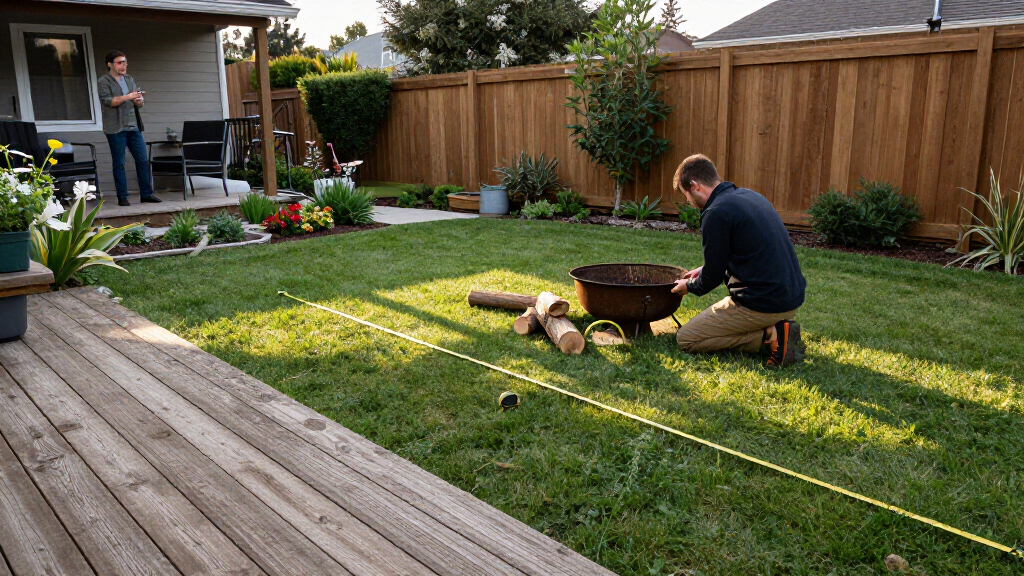

TL;DR
A report by Ideal Home says there is no specific legal distance a neighbour must keep a fire pit from a garden fence. Safety concerns or smoke that substantially interferes with a home or risks health may warrant speaking to the neighbour and, if the problem continues, contacting the local council.
A neighbour’s fire pit being close to a garden fence does not, by itself, break a distance rule: there is no specific legal minimum for how far a fire pit must sit from a fence, according to an Ideal Home report. The report says residents may have grounds to act if the fire creates a fire risk or its smoke substantially interferes with their home or may harm health.

Get garden gear delivered free with Prime
- Fast, free delivery on millions of items
- Prime Video, Amazon Music and more included
- Member-only deals all year
The report cites Gaz Eastwood, an outdoor cooking and heating expert at Direct Stoves, who says neighbours can generally use a fire pit in their garden, but should not treat the absence of a distance rule as permission to place one without regard to safety. The article does not identify a single distance that would be safe in every garden; it advises following the product’s instructions and considering the surrounding materials and layout.
Eastwood’s general safety advice is to place a fire pit on a flat, non-combustible surface, away from fences, foliage and low-hanging branches. The article also says a lit fire pit should not be moved. If its position seems hazardous, it recommends first raising the concern with the neighbour and asking whether they can use a different location in future.
If smoke remains a problem, the report says residents can contact their local council. Jordan Kluth, a senior associate and conveyancing solicitor at John Fowlers, says smoke may qualify as a statutory nuisance if it unreasonably and substantially interferes with use or enjoyment of a home or other premises, or injures or is likely to injure health. A council that finds a nuisance may issue an abatement notice restricting or preventing the fire pit’s use. The report says a court can impose a fine if the notice is ignored or breached without reasonable excuse.
When Smoke Can Trigger Council Action
The distinction matters because proximity alone is not presented as an automatic legal breach. A fire pit near a fence may nevertheless merit a conversation if it could expose nearby fencing, plants or property to fire. Smoke complaints involve a separate question: whether the effects meet the statutory nuisance threshold described in the report.
That threshold means a neighbour’s dislike of smoke, on its own, is not established by this source as enough to secure formal action. The reported test focuses on substantial and unreasonable interference with the use or enjoyment of premises, or actual or likely harm to health. The council’s assessment is central; residents should not assume an abatement notice will follow simply because a complaint is made.
For residents, the suggested sequence is practical: raise the concern directly, keep a record of recurring smoke or safety problems, and contact the council if the issue continues. This gives the neighbour an opportunity to address the situation while directing more serious or persistent concerns to the authority responsible for investigating nuisance complaints.
Products Worth Considering

Solo Stove Bonfire 2.0 Smokeless Wood-Burning Fire Pit with Stand, 19.5-Inch, Silver

Orbit B-hyve XR 16-Zone Indoor/Outdoor Smart Sprinkler Controller

Orbit B-hyve 12-Zone Indoor/Outdoor Wi-Fi Sprinkler Controller
As an affiliate, we earn on qualifying purchases.
No Set Fence Clearance Rule
The Ideal Home article is seasonal consumer guidance about outdoor fire pits, not a report of a new law, council decision or individual dispute. Its central point is that the material it cites identifies no specific statutory distance between a domestic fire pit and a garden fence. It does not say that all placements are safe, or that neighbours have no recourse when a fire or smoke causes a serious problem.
The report separates two concerns. Fire safety calls for careful placement and adherence to manufacturer instructions; smoke nuisance may be considered under the Environmental Protection Act 1990, as described by Kluth. The article does not provide a national measurement for safe placement or a universal formula for deciding whether smoke is a nuisance. Those details depend on the circumstances and, for a formal complaint, the council’s assessment.
“As a general rule, fire pits should be placed on a flat, non-combustible surface, well away from fences, foliage or low-hanging branches.”
— Gaz Eastwood, outdoor cooking and heating expert at Direct Stoves, as quoted by Ideal Home
How Councils Judge Each Complaint
The report does not specify a safe number of metres between a fire pit and a fence, nor does it describe a test for measuring fire risk in every garden. It also does not say how a council would decide a particular smoke complaint, how long an investigation could take, or what evidence an individual council would request.
Whether smoke substantially interferes with a home or is likely to harm health is a case-specific assessment, not a finding that follows automatically from a neighbour using a fire pit. The article gives no details about an actual complaint or council ruling, so it cannot establish how any particular dispute would be resolved.
Steps for Residents Facing Smoke
Residents concerned about a nearby fire pit can start by speaking calmly with the neighbour about the placement, smoke or perceived risk, and asking whether the fire pit can be used farther from the boundary on future occasions. The report advises following manufacturer instructions and says a fire pit should not be moved while lit.
If the problem continues, residents can contact their local council and explain what is happening, including how often smoke reaches the property and how it affects use of the home or health. The council can assess whether the statutory nuisance test applies. According to the report, it may issue an abatement notice if it agrees that action is warranted; the outcome and any enforcement would depend on the individual case.
Key Questions
Is there a legal minimum distance between a fire pit and a fence?
The Ideal Home report says there is no specific legal distance set for a fire pit from a garden fence. That does not remove the need to consider fire safety or smoke impacts.
What should I do if my neighbour’s fire pit seems too close?
The report recommends speaking to the neighbour first and explaining the concern. It says users should follow manufacturer instructions and place fire pits on a flat, non-combustible surface away from fences, foliage and low branches.
When can smoke from a fire pit be a statutory nuisance?
As described by solicitor Jordan Kluth, smoke may qualify if it unreasonably and substantially interferes with the use or enjoyment of premises, or injures or is likely to injure health. A council assesses whether the test is met.
What can the council do about a fire-pit smoke complaint?
If the council finds a statutory nuisance, the report says it can issue an abatement notice restricting or preventing use. It reports that a court can impose a fine if the notice is ignored or breached without reasonable excuse.
Source: rss