
To use propane tanks safely, always store them outdoors in well-ventilated areas away from heat, flames, or electrical sparks. Regularly inspect tanks for leaks, rust, or damage, and make certain valves and hoses are in good condition. Keep labels clear and up-to-date to avoid mix-ups. When handling, keep valves closed, use protective caps, and never tamper with cylinders. Following these guidelines will help keep you safe—continue to explore for more detailed safety tips.
Open a free Amazon Business account
Business pricing, bulk buying and tax-exempt orders.
As an affiliate, we earn on qualifying purchases.
Key Takeaways
- Store propane tanks outdoors in well-ventilated areas away from heat, flames, and electrical sources.
- Regularly inspect tanks, valves, and hoses for leaks, rust, or damage, and perform necessary maintenance.
- Clearly label tanks with current, legible information to prevent incorrect connections and aid emergency response.
- Check for leaks using soapy water, and immediately shut off and move leaking tanks to ventilated areas.
- Keep valves closed and use protective caps during storage, handling tanks responsibly to ensure safety.

Proper storage of propane tanks and cylinders is essential for safety and efficiency. When you’re handling these tanks, you want to ensure they’re well-maintained and clearly labeled to prevent accidents. Regular tank maintenance is crucial because it helps identify potential issues before they become dangerous. You should inspect your propane tanks regularly for leaks, rust, or damage. Check the valves and hoses for cracks or wear, and ensure that the tank’s pressure relief valve functions correctly. Keeping up with proper maintenance not only prolongs the lifespan of your tanks but also keeps you safe by minimizing the risk of leaks or explosions. Additionally, understanding proper storage practices can significantly reduce the chance of accidents or hazardous situations.
Regularly inspect propane tanks for leaks, rust, and damage to ensure safety and longevity.
Cylinder labeling plays a vital role in safe storage practices. Always verify that your propane cylinders are properly labeled with their contents and inspection dates. Labels should be clear, legible, and up to date, so you and anyone else using the tanks can easily identify their purpose and safety status. When a cylinder’s label becomes worn or unreadable, replace it immediately. Proper labeling prevents dangerous mistakes, such as connecting the wrong tank to appliances or mixing different gases. It also helps in case of an emergency, as responders can quickly identify the contents and take appropriate action.
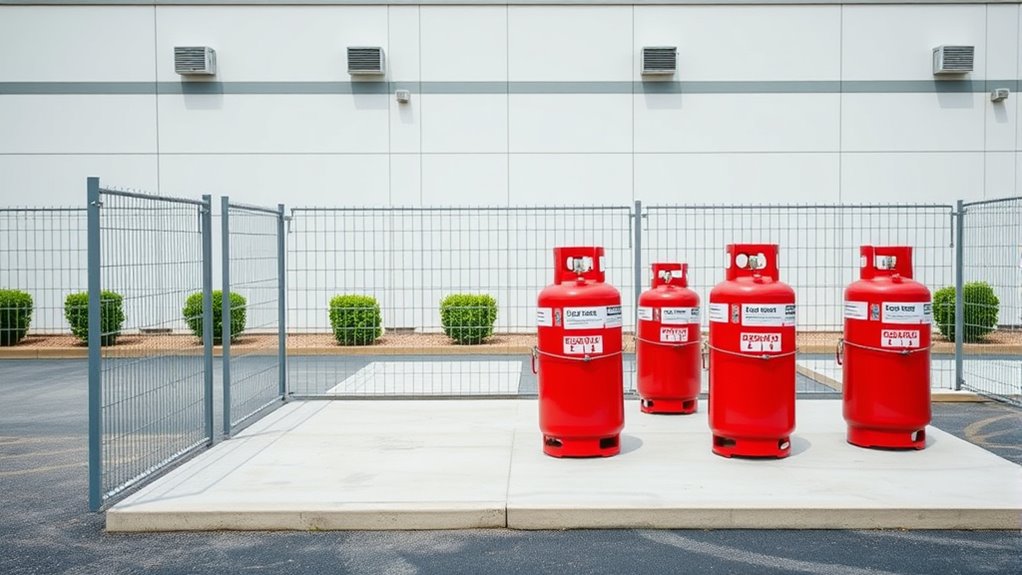
You should store propane tanks outdoors in a well-ventilated area, away from heat sources, open flames, or electrical sparks. Never store tanks in basements, garages, or enclosed spaces where gas could accumulate. Keep tanks upright and secure them to prevent tipping or falling, which could damage valves or cause leaks. When not in use, ensure the valves are tightly closed and check for leaks using soapy water around the valve connections—bubbles will indicate a leak. If you detect a leak, turn off the tank, move it to a well-ventilated area, and have it inspected or replaced.
In addition to proper placement and inspection, remember that safe storage involves keeping your tanks away from children and pets. Use protective caps on valves when tanks are stored, and never attempt to modify or tamper with the cylinders. Regularly reviewing your storage setup and adhering to guidelines for tank maintenance and cylinder labeling can considerably reduce risks and ensure your propane usage remains safe. Taking these steps demonstrates responsible handling, helping you enjoy the benefits of propane with peace of mind.
As an affiliate, we earn on qualifying purchases.
Frequently Asked Questions
How Often Should Propane Tanks Be Inspected for Safety?
You should inspect your propane tanks at least once a year to ensure safety. It is crucial to follow recommended safety check intervals, especially if you notice any leaks, rust, or damage. Regular inspections help catch potential issues early, reducing risks. If you use your tank frequently or it’s exposed to harsh conditions, consider more frequent inspections. Always have a professional conduct thorough safety checks to keep everything secure.
Can Propane Tanks Be Stored Indoors Safely?
You can store propane tanks indoors safely if you follow proper ventilation requirements. Make certain the storage area is well-ventilated to prevent gas buildup, avoiding enclosed spaces like basements or closets. Keep tanks upright and away from heat sources or flames. Regularly check for leaks and never store tanks near living areas. Proper indoor storage with adequate ventilation minimizes risks, allowing safe use and storage of propane tanks inside your home.
What Are the Signs of a Leaking Propane Tank?
A propane leak feels like a sudden gust of wind — unmistakable and urgent. You’ll notice a strong, sulfur-like smell, which is a key sign of a leak. Propane leak detection also involves listening for hissing sounds near your tank. Check for tank corrosion signs like rust or discoloration. If you suspect a leak, turn off the tank immediately, ventilate the area, and call for professional help to prevent danger.
Are There Specific Regulations for Large Propane Cylinder Storage?
Yes, there are specific storage regulations and safety standards you need to adhere to for large propane cylinders. You must store them in well-ventilated, outdoor areas away from heat sources, and keep them upright to prevent leaks. Local codes often require secure anchoring, proper signage, and designated storage zones. Always check with your local authorities or safety organizations to ensure you meet all storage regulations and maintain safety standards.
How Should I Dispose of an Old or Damaged Propane Tank?
You should never attempt to dispose of a damaged tank yourself. Instead, contact your local propane supplier or a certified recycling facility for proper tank disposal. Confirm the tank is completely depressurized and free of propane before handing it over. Do not puncture, cut, or burn the damaged tank. Proper tank disposal involves safe handling, professional assessment, and following local regulations to prevent hazards.
As an affiliate, we earn on qualifying purchases.
Conclusion
By handling propane tanks with care, you’re safeguarding your home and loved ones like a gentle guardian. Proper storage keeps danger at bay, turning what could be a fiery threat into a silent protector. When you respect these safety tips, you’re not just storing fuel—you’re nurturing peace of mind, creating a safe haven where safety blossoms like a well-tended garden. Embrace caution, and let your vigilance be the shining light that keeps everyone safe.
outdoor propane tank storage cabinet
As an affiliate, we earn on qualifying purchases.
As an affiliate, we earn on qualifying purchases.
As an affiliate, we earn on qualifying purchases.
Flea & tick season Picks
flea and tick prevention
As an affiliate, we earn on qualifying purchases.