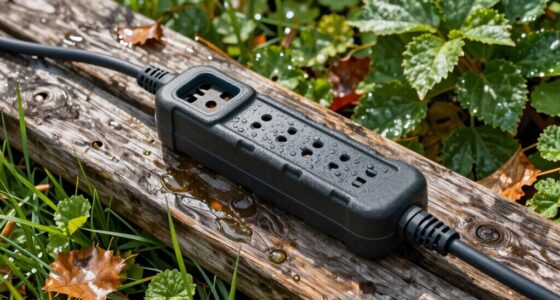
To handle outdoor electrical safety confidently, start by ensuring all systems are properly grounded and protected with weatherproof covers. Use outdoor-rated extension cords and avoid overloading circuits. Regularly inspect cords and equipment for damage, and keep high-traffic areas clear of tripping hazards. Always shut off power before working on electrical devices and wear insulated gloves and tools. For more expert tips on staying safe outdoors, keep exploring essential safety practices and precautions.
Key Takeaways
- Use weatherproof outlets, covers, and outdoor-rated extension cords for reliable protection against moisture.
- Always shut off power and use insulated gloves/tools before performing electrical work outdoors.
- Regularly inspect equipment for damage, wear, or fraying, and replace faulty components promptly.
- Consult licensed electricians for complex installations or repairs beyond basic knowledge.
- Display high-contrast safety signs and ensure proper grounding to enhance visibility and safety awareness.

Have you ever wondered how to stay safe while enjoying your outdoor spaces? It’s a valid concern, especially when you consider the potential hazards that come with outdoor electrical setups. Electrical hazard prevention should be a top priority, and it starts with understanding the right safety practices and having the essential safety equipment on hand. Whether you’re setting up outdoor lighting, powering equipment, or installing outdoor appliances, knowing how to handle electrical safety can prevent accidents and injuries.
First, always guarantee your outdoor electrical system is grounded properly. Proper grounding helps protect you from electrical shocks if a fault occurs. Use weatherproof outlets and covers, especially if outlets are exposed to rain or moisture. These safety equipment essentials are designed to prevent water from entering electrical connections, reducing the risk of short circuits and electrocution. Remember, never force plugs into outlets or bypass safety covers; doing so compromises safety and increases the threat of electrical hazards.
Ensure outdoor outlets are weatherproof and properly grounded to prevent water entry and electrical hazards.
When working outdoors, avoid overloading circuits. Use outdoor-rated extension cords and power strips, but only connect what the cord’s capacity allows. Keep extension cords away from high-traffic areas to prevent tripping or accidental damage. Regularly inspect cords and equipment for signs of wear, fraying, or damage, and replace them immediately if needed. Damaged cords are a common source of electrical hazards and can cause shocks or fires. Understanding the role of contrast ratio in electrical safety, such as clear visibility of warning labels and safety signs, can also improve awareness during outdoor work.
Using safety equipment essentials such as insulated gloves and tools can make a significant difference. Insulated gloves offer protection against accidental shocks, especially when handling electrical devices or wiring. Always shut off power at the source before performing any work on electrical systems. Locking circuit breakers or switches is a good practice to assure no one accidentally turns the power back on while you’re working.
When in doubt, consult a licensed electrician for installations or repairs. Don’t attempt to handle complex electrical work yourself unless you’re trained; mistakes can be costly and dangerous. Keep a fire extinguisher nearby, specifically a class C extinguisher suitable for electrical fires, and ensure you’re familiar with its use.
outdoor weatherproof electrical outlet covers
As an affiliate, we earn on qualifying purchases.
As an affiliate, we earn on qualifying purchases.
Frequently Asked Questions
What Equipment Is Essential for Outdoor Electrical Safety?
You need essential equipment like protective gear—insulated gloves, boots, and eye protection—to stay safe outdoors. Grounding techniques are vital; make certain all electrical tools and equipment are properly grounded to prevent shocks. Use insulated tools and weatherproof outlets, and keep a fire extinguisher nearby. Regularly inspect cords and connections for damage. By combining protective gear with proper grounding, you minimize risks, guaranteeing a safer outdoor electrical environment.
How Often Should Outdoor Electrical Systems Be Inspected?
You should inspect outdoor electrical systems at least once a year, following recommended inspection frequency guidelines. Regular inspections help identify potential hazards early, ensuring safety protocols are maintained. After severe weather events, it’s essential to check your system for damage or wear. Consistent inspections protect you from electrical shocks, fires, and outages, keeping your outdoor environment safe. Always document inspections and promptly address any issues discovered during these checks.
Can I Perform Outdoor Electrical Repairs Myself?
You can perform DIY repairs outdoors, but only if you understand electrical safety precautions. Always turn off power at the main breaker before starting any work, wear insulated gloves, and use proper tools. If you’re unsure or if the repair involves complex wiring, it’s best to call a licensed electrician. Prioritize safety over convenience, and never take shortcuts when dealing with outdoor electrical systems.
What Are Common Outdoor Electrical Hazards?
You should watch out for common outdoor electrical hazards like exposed wiring, damaged cords, and faulty outlets, which can cause electrical shocks. Overgrown trees or debris can also interfere with power lines, leading to outages. Always stay alert to these dangers, especially during storms or heavy winds, to prevent accidents. Regular inspections and prompt repairs help minimize risks of electrical shock and unexpected power outages, ensuring safety for everyone around your outdoor space.
How Do Weather Conditions Affect Outdoor Electrical Safety?
Weather conditions profoundly impact outdoor electrical safety. Heavy rain or storms can cause moisture to seep into electrical connections, increasing the risk of short circuits or electrocution. Strong winds can topple power lines, creating dangerous situations. To guarantee safety, you should always follow safety precautions like turning off outdoor equipment during storms, inspecting for damage, and keeping a safe distance from downed power lines. Visualize the hazards to stay alert and prepared.
As an affiliate, we earn on qualifying purchases.
Conclusion
Remember, safety isn’t something you can afford to guess about—it’s about taking the right steps every time. With proper precautions, you can enjoy your outdoor spaces without worry. Keep your tools in check, stay dry, and always turn off power before working. As the saying goes, “A stitch in time saves nine.” By being proactive, you protect yourself and your loved ones, ensuring outdoor adventures stay fun and safe.
insulated electrical gloves for outdoor work
As an affiliate, we earn on qualifying purchases.
As an affiliate, we earn on qualifying purchases.
As an affiliate, we earn on qualifying purchases.