
When installing an outdoor sink, you’ll need to follow plumbing codes that cover proper drainage and freeze protection. Make sure your drain pipes slope correctly for gravity flow and are made from materials resistant to cold temperatures, like PVC or metal. Insulate pipes, install heat tape, or use frost-proof fixtures to prevent freezing. Proper venting is also essential to avoid odors and siphoning. For detailed guidelines, continuing will help guarantee your setup is both safe and code-compliant.
Key Takeaways
- Ensure outdoor sink drainage connects to an approved sewer or septic system, adhering to local plumbing regulations.
- Use frost-resistant materials and insulate pipes to prevent freezing in cold climates.
- Install proper venting to prevent siphoning, odors, and ensure smooth drainage flow.
- Follow local codes for sink placement, considering accessibility, sustainability, and proximity to water sources.
- Consult licensed plumbers to verify compliance with drainage, freeze protection, and environmental regulations.
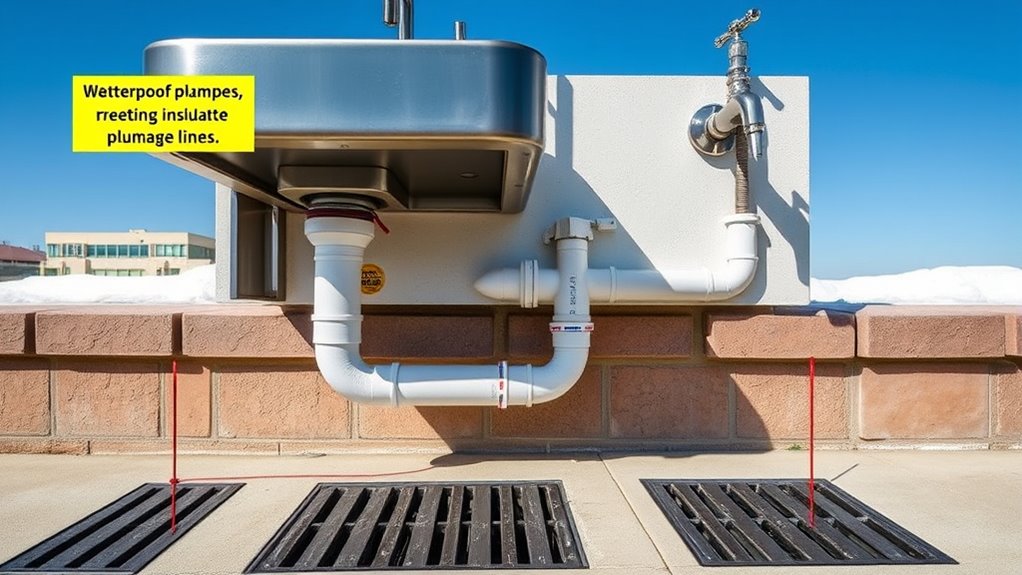
Outdoor sinks are a convenient addition to your property, but installing them requires understanding plumbing codes to guarantee safety and compliance. One important aspect to contemplate is how you set up your sink, especially regarding sink placement. You want to position the outdoor sink where it’s most useful—near your garden, grill area, or pool—but also in a way that adheres to local plumbing regulations. Proper sink placement ensures that water flows correctly into your drainage system and minimizes hazards. When planning your setup, think about the proximity to rainwater harvesting systems. If you collect rainwater for outdoor use, your sink’s placement should facilitate easy access to this source, making it simple to incorporate sustainable practices without violating code rules. This might mean positioning the sink near a rainwater collection system or ensuring it’s on a suitable foundation that supports additional plumbing connections. Additionally, considering pool plumbing standards can help ensure your setup doesn’t interfere with existing water features or safety measures.
Proper outdoor sink placement ensures functionality, safety, and compliance with plumbing codes while supporting rainwater harvesting practices.
Drainage is critical for outdoor sinks, and plumbing codes typically specify how drain lines should be installed to prevent leaks, backups, and contamination. You’ll need to use appropriate materials that resist freezing if you live in colder climates, and ensure drain pipes slope correctly to facilitate gravity flow. Proper drainage also involves venting the system to prevent siphoning and odors. Keep in mind that codes often demand that drain lines connect to a city sewer or approved septic system, rather than discharging directly onto the ground. This is especially important if you’re harvesting rainwater, as the runoff from your sink shouldn’t contaminate natural water sources or violate environmental regulations.
Freeze protection is another essential factor, especially if you experience cold winters. To prevent your outdoor plumbing from freezing and bursting, you might need to insulate pipes, install heat tape, or use frost-proof fixtures. Some codes require that the drain lines be installed below the frost line or within insulated enclosures. If your sink is in an exposed area, you should also consider installing a drain with a trap that’s designed for freezing conditions or using a drain loop to prevent water from stagnating and freezing. Proper freeze protection not only safeguards your investment but also ensures ongoing functionality without costly repairs.
Finally, always check local plumbing codes and regulations before installation. They can vary considerably depending on your location, and compliance is essential to avoid fines or plumbing issues. Consulting with a licensed plumber ensures your outdoor sink installation aligns with all drainage and freeze protection standards, giving you peace of mind that your setup is safe, sustainable, and compliant.

Flexible Expandable Bathroom P Trap, 1 1/4 to 1 1/2 Sink Drain Adapter Included, Wash Basin Rubber Tips Sink Drain Pipe, Universal Extension Tube for Kitchen Bathroom Sink Sewer Drain
【DIY and Space saving】You can DIY sink drain S-trap pipe P-Trap, It has a rubber fitting and nut…
As an affiliate, we earn on qualifying purchases.
As an affiliate, we earn on qualifying purchases.
Frequently Asked Questions
Can Outdoor Sink Plumbing Be Modified After Installation?
Yes, you can modify outdoor sink plumbing after installation. You might add temporary fixtures or install pipe insulation to improve freeze protection. Just make certain you follow local plumbing codes and use appropriate materials. Turning off water supply and draining pipes before making changes helps prevent leaks or damage. If you’re unsure, consulting a professional ensures your modifications are safe and compliant with regulations.
Are There Specific Materials Recommended for Outdoor Sink Piping?
Did you know that using the right materials can extend outdoor sink pipe lifespan by up to 50%? For outdoor sink piping, you should choose durable materials like copper, PEX, or PVC, which resist weathering and corrosion. Also, make certain you use pipe insulation to prevent freezing. These choices help protect your plumbing system from damage and ensure reliable function, even in harsh weather conditions.
How Often Should Outdoor Sink Drainage Systems Be Inspected?
You should inspect your outdoor sink drainage system at least twice a year, especially before winter freeze conditions arrive and after harsh weather. Regular inspections help catch leaks early and guarantee proper drainage, reducing the risk of water damage. During inspections, check for cracks, blockages, and leaks to prevent freeze damage and improve leak prevention. Consistent maintenance keeps your system functioning smoothly, even through cold winter months.
What Are the Consequences of Non-Compliance With Outdoor Plumbing Codes?
If you ignore outdoor plumbing codes, you risk legal penalties like fines or citations, which can add up quickly. Non-compliance may also void your insurance coverage, making it harder to claim damages if issues arise. You could face costly repairs or legal trouble, so it’s essential to follow regulations for drainage and freeze protection. Staying compliant keeps you protected legally and financially, ensuring your outdoor sink functions safely year-round.
Is Special Licensing Required for Outdoor Sink Plumbing Work?
You might wonder if special licensing is needed for outdoor sink plumbing work. The answer is yes; licensing requirements often mandate licensed plumbers for such projects. Without proper plumbing permits and licensed professionals, you risk code violations, fines, or water damage. Imagine your outdoor sink freezing or leaking, causing costly repairs—licensing guarantees the work meets safety standards. Always check local regulations to stay compliant and protect your property.

VEVOR Frost Proof Yard Hydrant, 3.25FT Freeze-Proof Outdoor Faucet with 12" Bury Dept, 3/4" NPT Pipe Connection & 3/4" NH Hose Coupling, Heavy-Duty Cast Iron Hydrant for Yard, Garden, Farm Irrigation
Keep Water Flowing: Our 3.25FT frost-proof yard hydrant, with 12" bury depth, adapts to frost lines in various…
As an affiliate, we earn on qualifying purchases.
As an affiliate, we earn on qualifying purchases.
Conclusion
Following plumbing codes for outdoor sinks is like building a sturdy bridge—you guarantee safety and reliability. Proper drainage and freeze protection keep your setup running smoothly, no matter the weather. By adhering to these guidelines, you create a space that’s both functional and resilient, like a well-oiled machine. So, take the time to follow these codes; it’s the secret sauce that keeps your outdoor sink working happily for years to come.

Duck Brand Foam Pipe Covers, Pipe Insulation Foam Tubes for Hot and Cold Water Pipes, Pre Slit and Self Sealing Adhesive Edge, 0.75 in. x 1 Ft., 6 Sticks Per Package, 6 Feet Total, Black
Duck Brand insulating foam pipe stick covers are great for insulating both hot and cold water pipes
As an affiliate, we earn on qualifying purchases.
As an affiliate, we earn on qualifying purchases.

HEATIT Water Pipe Heat Tape – Prevent Freezing & Easy Installation for Metal & Plastic Pipes, CSA & ETL Certified Heat Trace Cable, All-Weather Protection, Trusted Choice HISD 3ft, 7w/ft, 120V
[CSA & ETL Certified for Superior Safety] CSA and ETL certifications are trusted safety marks in North America,…
As an affiliate, we earn on qualifying purchases.
As an affiliate, we earn on qualifying purchases.