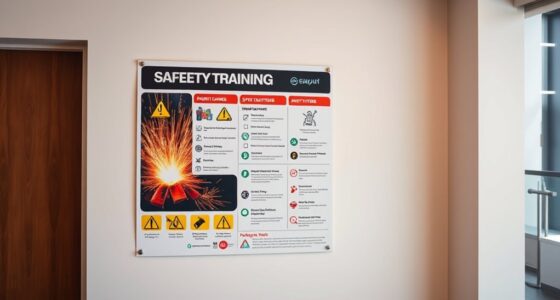
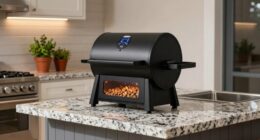
To guarantee safe placement of your pizza oven, keep it at least several inches to a foot away from combustible materials like wood, fabric, and paper, and use fire-resistant barriers if needed. Proper ventilation is vital to direct smoke and heat away, so include vents or exhaust hoods and position them for easy maintenance. Place the oven on a non-combustible surface such as stone or concrete. For more details on clearance and heat management, continue exploring the guidelines.
Key Takeaways
- Maintain adequate clearance from combustible materials, typically several inches to one foot, as per manufacturer guidelines.
- Install proper ventilation systems with vents or exhaust hoods to direct heat and fumes away from the oven area.
- Place the oven on a non-combustible surface like stone or concrete to prevent fire hazards.
- Use insulation around the oven to manage heat dispersion and protect surrounding structures.
- Regularly inspect and maintain ventilation, clearance zones, and safety barriers for optimal safety and performance.
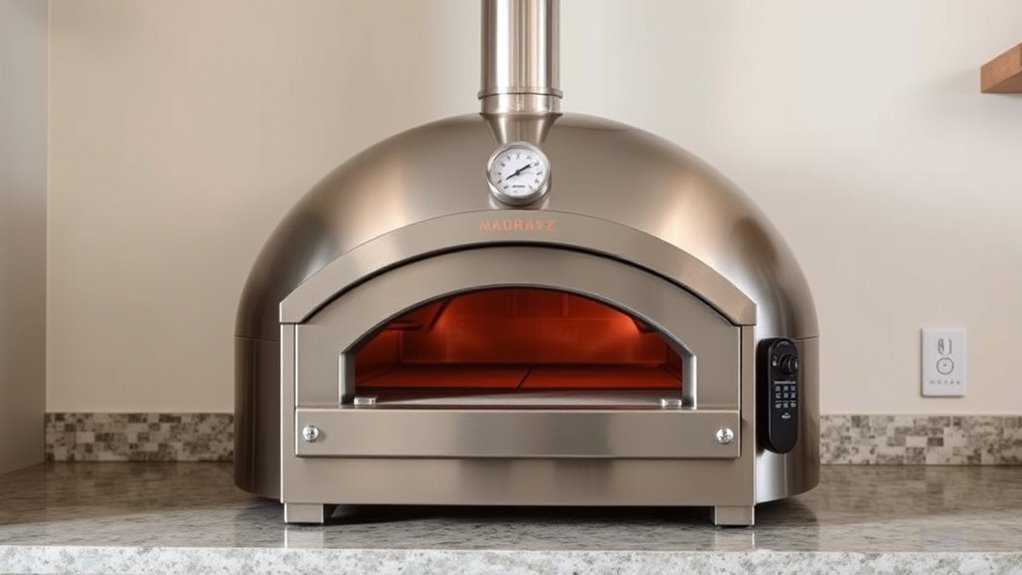
Placing your pizza oven safely is essential to prevent accidents and guarantee ideal performance. One of the most important considerations is understanding ventilation requirements. Proper ventilation ensures that smoke, heat, and any potentially harmful fumes are effectively directed away from your cooking area. Without adequate airflow, heat can build up around the oven, increasing the risk of fire or damage to nearby structures. Make sure your installation includes enough clearance for ventilation systems to operate efficiently, whether that means installing vents, exhaust hoods, or vent pipes. These components should be positioned so they don’t obstruct airflow and are easy to access for maintenance. Good ventilation not only keeps your space safe but also helps maintain the quality of your pizza by controlling smoke and heat levels. Additionally, considering vessel insulation can help manage heat dispersion and improve safety around your oven setup.
Another critical factor is the presence of combustible materials. You need to keep all flammable items, such as wooden furniture, curtains, paper products, and certain plastics, well away from the oven. Heat radiates from the cooking chamber and exterior surfaces, and if combustible materials are too close, they can ignite unexpectedly. The key is establishing a safe clearance zone around your pizza oven, which varies depending on the oven’s size and heat output. Typically, a minimum distance of several inches to a foot from combustible materials is recommended, but always refer to the manufacturer’s guidelines for specific measurements. Never store combustible items directly beneath or beside the oven, and consider using fire-resistant barriers or shields if space constraints make proximity unavoidable.
It’s equally important to think about the flooring and surrounding surfaces. If your oven is placed on a combustible surface like wood or plastic, you risk fire hazards. Use non-combustible materials such as stone, concrete, or tile underneath and around the oven to provide a safe base that can withstand high temperatures. Additionally, ensure your setup allows for easy cleaning and inspection. Accumulated grease, ash, or debris can ignite if left unchecked, so establishing a clear, clutter-free zone around the oven is wise.
Top picks for "safe placement pizza"
Open Amazon search results for this keyword.
As an affiliate, we earn on qualifying purchases.
Frequently Asked Questions
Can Pizza Ovens Be Installed Indoors Safely?
Yes, you can install a pizza oven indoors safely if you guarantee proper pizza oven insulation and meet ventilation requirements. Make sure the oven is installed in a well-ventilated area to prevent smoke and heat buildup. Adequate insulation helps contain heat and reduces fire risk. Consult local building codes and a professional installer to ensure all safety standards are met, making indoor installation both safe and efficient.
What Materials Are Best for Heat-Resistant Placement Surfaces?
You should use heat-resistant surfaces like ceramic tiles, concrete, or stone for placement flooring. These flooring materials withstand high temperatures and prevent heat damage or fire hazards. Avoid flammable or easily damaged materials like wood or laminate. Make sure the surface is level and non-slip to guarantee safety. Proper heat-resistant surfaces protect your space and keep your pizza oven safely positioned during operation.
How Do Weather Conditions Affect Outdoor Pizza Oven Safety?
Weather conditions impact your outdoor pizza oven safety by causing temperature fluctuations and exposure to moisture. You should implement weatherproofing measures like covers, shields, and weather-resistant materials to protect it. During extreme cold or heat, monitor temperature changes closely. Properly sealing and insulating your oven prevents damage, and covering it when not in use helps maintain safety and longevity, ensuring it functions correctly regardless of weather conditions.
Are There Specific Building Codes for Pizza Oven Installations?
Building codes banish boundary breaches, demanding you obtain building permits before installing your pizza oven. These codes prioritize fire safety, dictating proper placement, clearance, and venting to prevent hazards. You must follow local laws, ensuring your oven’s installation aligns with safety standards. Ignoring these regulations risks hefty fines, fire dangers, and safety setbacks. Always check with your local building department, ensuring your outdoor culinary creation complies with all codes and keeps everyone safe.
What Safety Equipment Is Recommended During Installation?
During installation, you should wear fire-resistant barriers like gloves and aprons to protect yourself from heat and sparks. Guarantee safety clearance around the oven is maintained to prevent accidents. Use a fire extinguisher nearby, and keep a smoke detector installed in the area. These safety measures help minimize risks and ensure a secure setup, making your pizza oven installation safer and compliant with recommended practices.
Conclusion
By carefully considering clearance and heat requirements, you guarantee your pizza oven is both safe and efficient. Proper placement not only protects your space and loved ones but also enhances your cooking experience. Are you ready to create a perfect pizza station that’s both functional and safe? Remember, taking the time to plan your oven’s placement now will save you from potential hazards later. So, why not start designing your ideal setup today?