When storing propane around an entertaining space, keep tanks outdoors in a well-ventilated area away from ignition sources like grills or heaters. Make certain tanks are upright, securely anchored, and at least 10 feet from doors, windows, or vents. Regularly inspect for leaks with soapy water and repair any issues immediately. Use protective enclosures designed for propane storage, and educate everyone on safety protocols. To discover more tips, keep exploring effective ways to maintain a safe environment.

Get garden gear delivered free — and shop member deals
- Fast, free delivery on millions of items
- Access to Prime Big Deal Days deals on October 6–7
- Prime Video, Amazon Music and more included
Key Takeaways
- Store propane tanks outdoors in a well-ventilated, shaded area away from direct sunlight and weather exposure.
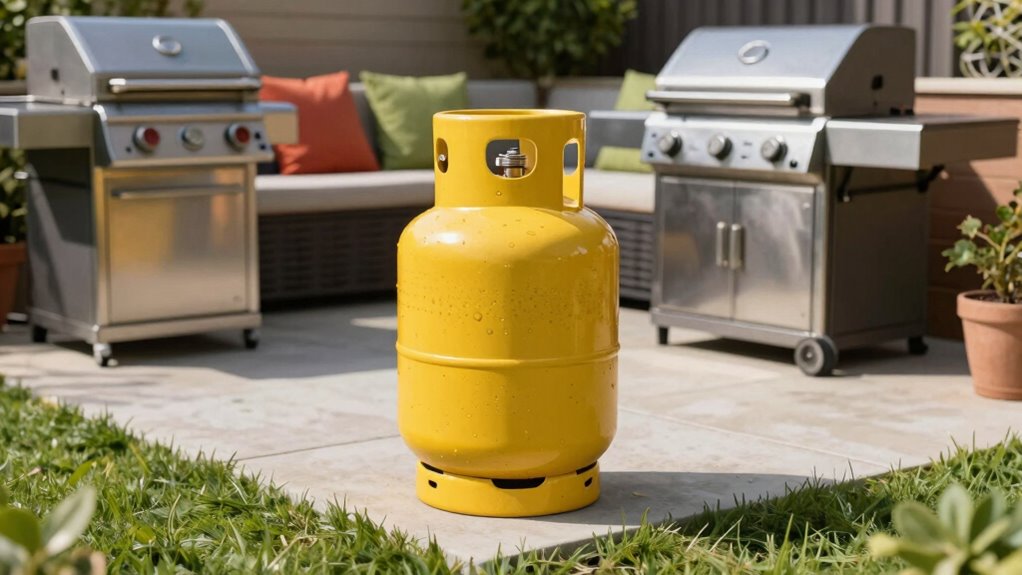
- Keep tanks upright, securely anchored, and at least 10 feet from any ignition sources or open flames.
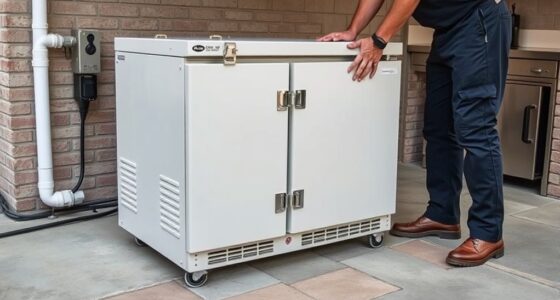
- Use propane cabinets or enclosures designed for safe outdoor storage, ensuring proper airflow.
- Regularly inspect tanks for leaks, corrosion, or damage, and repair or replace faulty components immediately.
- Educate all users on safety protocols, including quick shutdown procedures and emergency contact information.
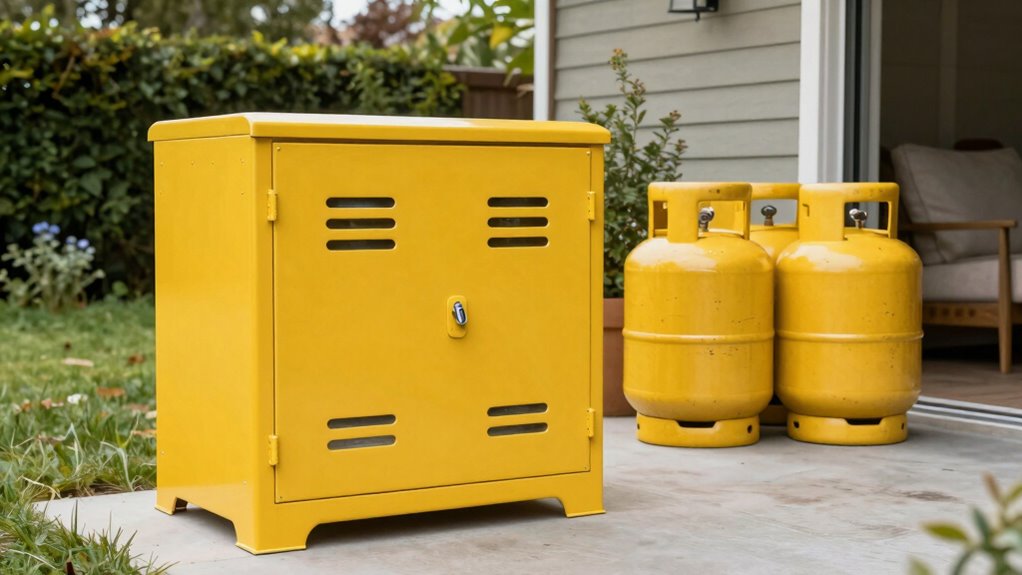
Are you aware of the best practices for storing propane safely? If you’re planning to keep propane tanks near an entertainment space, safety should be your top priority. One of the most important aspects is propane leak prevention. Before storing, always check that your tanks are in good condition, with no signs of rust, corrosion, or damage. Make sure the valves are tightly closed when not in use, and regularly inspect for leaks by applying soapy water around the valve and connections—bubbles will indicate a leak. Never use a flame or spark to check for leaks, as that could ignite escaping propane. Instead, address any leaks immediately by repairing or replacing faulty components, and keep a fire extinguisher nearby, just in case. Proper ventilation is equally vital when storing propane around an entertaining area. Propane is heavier than air, so it tends to settle in low spots if it leaks. Ensuring good airflow around your storage spot helps prevent the accumulation of gas, reducing the risk of ignition. You should avoid storing tanks in enclosed or poorly ventilated spaces, like garages or sheds, unless they’re specifically designed for safe propane storage with ventilation systems. Outdoors, choose a well-ventilated area that’s shielded from direct sunlight and weather elements, but open enough to allow any accidental leaks to dissipate quickly. Keep the storage tank upright and secure it firmly to prevent tipping or damage from accidental bumps. Additionally, using proper storage containers can help contain potential leaks and protect tanks from environmental damage. Placement is also key. Keep propane tanks at least 10 feet away from ignition sources such as grills, outdoor heaters, or fire pits. Position tanks away from windows, doors, or ventilation ducts that could carry gas indoors if a leak occurs. Never store propane tanks in basements or below-ground areas, where gas could accumulate unnoticed. Instead, choose a dedicated outdoor storage spot that’s away from high traffic zones, and consider using a designated propane cabinet or enclosure that allows for proper airflow while keeping tanks protected from the elements. Finally, educate everyone around you about propane safety. Make sure all users know how to shut off the tank quickly and understand the importance of proper storage. Regularly review safety protocols, keep emergency contact numbers handy, and stay vigilant for any signs of leaks or damage. When you follow these practices—prioritizing propane leak prevention and ensuring proper ventilation—you create a safer environment around your entertaining space, so everyone can relax and enjoy without worry.
outdoor propane tank storage enclosure
As an affiliate, we earn on qualifying purchases.
As an affiliate, we earn on qualifying purchases.
Frequently Asked Questions
Can Propane Tanks Be Stored Indoors Safely?
Propane tanks shouldn’t be stored indoors due to safety risks. If you must, make certain the area has proper indoor ventilation to prevent gas buildup. Keep the tank secure in a well-ventilated, upright position, away from heat sources and flames. Regularly check for leaks and corrosion. Remember, storing propane indoors increases the risk of fire or explosion, so it’s best to keep tanks outdoors in a secure, ventilated spot.
How Often Should Propane Tanks Be Inspected?
You should inspect your propane tanks at least once a year for proper tank maintenance and leak detection. Regularly check for rust, dents, or corrosion, which can compromise safety. Before each use, perform a quick leak detection test by applying a soap and water solution to the valve and fittings; if bubbles form, turn off the tank and have it serviced. Consistent inspections help prevent accidents and guarantee safe usage around your entertaining space.
What Are Signs of a Propane Leak?
You should be alert for signs of a propane leak, such as a strong propane odor, which is often described as a rotten egg smell. Leak detection is essential—if you notice the smell or see hissing sounds, turn off the tank immediately and ventilate the area. Never attempt to find the leak yourself; instead, contact professionals to inspect and fix the issue safely.
Is It Safe to Store Multiple Propane Tanks Together?
Storing multiple propane tanks together isn’t safe unless they’re properly secured with tank mounting and kept in well-ventilated areas. You should guarantee each tank is upright and spaced apart to prevent leaks or accidents. Ventilation requirements are essential; tanks need fresh air circulation to avoid gas buildup. Never store tanks indoors or near heat sources, and check for leaks regularly to maintain a safe environment around your entertaining space.
How Far Should Propane Be Kept From Electrical Sources?
Think of electrical sources as sparks in a fireworks display—dangerous if too close. You should keep propane tanks at least 10 feet away from electrical safety hazards, including outlets, switches, and appliances. Proper tank placement minimizes risk, ensuring sparks won’t ignite gas. Always follow manufacturer guidelines and local codes. Keeping this safe distance helps prevent accidents during your gatherings, making your entertaining space both fun and secure.
As an affiliate, we earn on qualifying purchases.
Conclusion
Now that you know the essential safety tips, imagine hosting your next gathering without a single worry. Properly stored propane keeps your entertaining space secure, but a small oversight could lead to unexpected trouble. Stay vigilant, follow these precautions, and enjoy your time outdoors with confidence. The secret to a safe, fun-filled event is in your hands—are you ready to take the necessary steps and keep everyone safe? The choice is yours.
propane safety fire extinguisher
As an affiliate, we earn on qualifying purchases.
As an affiliate, we earn on qualifying purchases.
As an affiliate, we earn on qualifying purchases.
Fall yard work Picks
leaf blowers
As an affiliate, we earn on qualifying purchases.