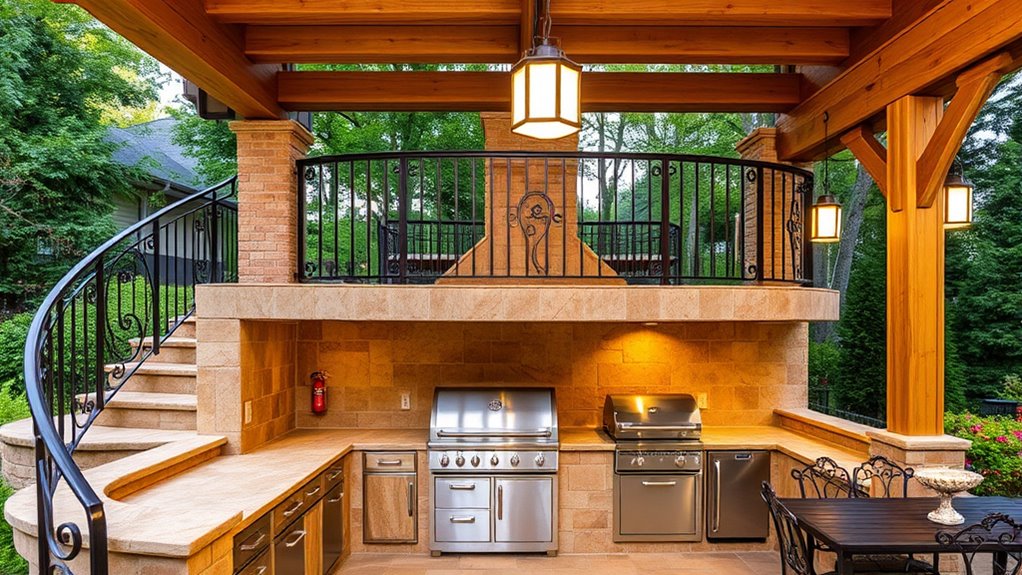

When designing a multi-level outdoor kitchen, you should prioritize fire safety by keeping heat sources away from combustible materials and installing fire-resistant features. Guarantee structural integrity by using weather-resistant materials, securing railings, and inspecting supports regularly. Manage electrical safety through outdoor-rated wiring, proper lighting, and avoiding overloads. Keep the area free of clutter and store tools safely to prevent trips. To learn more about keeping your outdoor kitchen safe, continue exploring detailed safety tips.

Get garden gear delivered free with Prime
- Fast, free delivery on millions of items
- Prime Video, Amazon Music and more included
- Member-only deals all year
Key Takeaways
- Ensure secure, non-slip staircases and railings to prevent falls across different levels.
- Maintain proper fire clearance and use fire-resistant materials in all zones.
- Install weatherproof electrical wiring and lighting suitable for outdoor, multi-level layouts.
- Keep pathways clear, level, and well-lit to avoid trips and enhance safety during nighttime use.
- Regularly inspect and reinforce structural elements to support heavy equipment and ensure stability across levels.
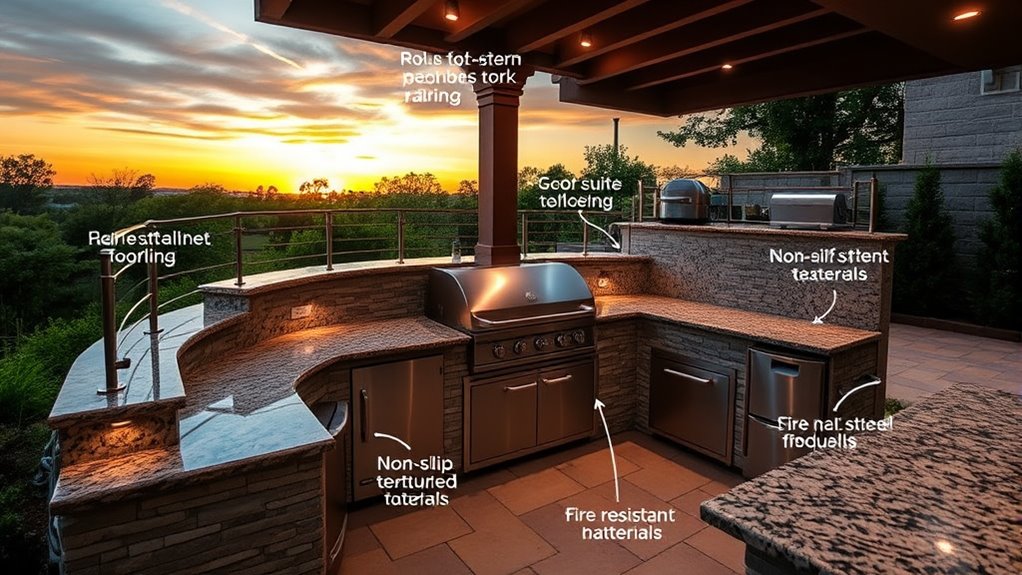
Creating a multi-level outdoor kitchen can enhance your backyard’s functionality and aesthetic appeal, but it also introduces unique safety challenges you need to address. One of your primary concerns should be managing fire hazards. When designing a multi-level setup, you might be tempted to include multiple cooking stations or grills at different levels. However, this increases the risk of accidental fires, especially if the appliances are placed too close to combustible materials or each other. Always ensure there’s sufficient clearance around grills, fire pits, and other heat sources, and use fire-resistant materials where possible. Keep a fire extinguisher nearby and know how to use it. Never leave cooking appliances unattended, and avoid overloading electrical outlets or extension cords, which can also pose fire risks.
Prioritize fire safety with proper clearances, fire-resistant materials, and accessible extinguishers in your outdoor kitchen.
Another critical aspect is maintaining the structural integrity of your outdoor kitchen. Multi-level designs often involve stairs, platforms, and supporting structures that need to be sturdy and well-constructed. Weak or poorly built elements can cause accidents, especially when carrying hot food or heavy equipment. Use high-quality, weather-resistant materials like treated wood, stone, or metal that can withstand the elements without warping or deteriorating. Regularly inspect supporting beams, railings, and steps for signs of wear, rot, or rust, and replace any compromised parts immediately. Properly anchored stairs and railings are essential to prevent falls, which can lead to serious injuries.
In addition to fire safety and structural integrity, consider the placement of electrical outlets and lighting. Poorly installed wiring can be a fire hazard, especially in an outdoor environment exposed to moisture and varying temperatures. Use outdoor-rated wiring and fixtures, and ensure all electrical work complies with local codes. Adequate lighting not only improves usability but also reduces the risk of trips and falls on uneven or multi-level surfaces at night. Pathways should be clearly marked, level, and slip-resistant, particularly on stairs and ramps.
Furthermore, it’s important to educate yourself about proper maintenance and regular inspections to ensure ongoing safety. Heavy or unstable furniture can tip over or cause trips, so opt for sturdy, weatherproof options with secure bases. Avoid clutter around cooking areas and ensure that all tools and equipment are stored safely when not in use. By paying attention to these safety considerations—fire hazards, structural integrity, electrical safety, and proper furniture—you’ll create a beautiful outdoor kitchen that’s both functional and safe for everyone to enjoy.
outdoor fire-resistant grill mats
As an affiliate, we earn on qualifying purchases.
As an affiliate, we earn on qualifying purchases.
Frequently Asked Questions
How Do I Prevent Slips and Falls on Multi-Level Outdoor Kitchen Surfaces?
To prevent slips and falls on your multi-level outdoor kitchen, make certain you use non-slip mats on all walking surfaces, especially in wet areas. Install sturdy handrails along stairs and elevated sections for added support and stability. Keep the surfaces clean and dry by promptly wiping away spills or debris. Regularly inspect the mats and handrails for wear and tear, replacing or repairing them as needed to maintain a safe environment.
What Are the Best Fire Safety Practices for Outdoor Kitchens?
Did you know that 70% of outdoor fire incidents involve improperly maintained equipment? You should always keep a fire extinguisher nearby, ideally within 10 feet of your outdoor kitchen, and make sure it’s easily accessible. When using outdoor fire pits, never leave them unattended and keep a fire extinguisher close by. Regularly check your fire safety gear and follow manufacturer instructions to prevent accidents and keep your outdoor space safe.
How Should I Store Outdoor Kitchen Equipment Safely?
You should focus on storage organization by designating specific areas for each piece of outdoor kitchen equipment, ensuring everything is easy to access and neatly stored. Regular equipment maintenance helps prevent accidents and prolongs the lifespan of your tools. Keep sharp or heavy items on lower shelves to prevent injuries, and always use weatherproof containers to protect your equipment from the elements, maintaining safety and efficiency in your outdoor cooking space.
Are There Specific Safety Codes for Multi-Level Outdoor Kitchens?
Did you know that nearly 60% of outdoor kitchen injuries involve structural issues? You should check local zoning regulations and building permits before constructing your multi-level outdoor kitchen, as specific safety codes apply. These codes guarantee structural integrity and safe gas or electrical connections. Failing to adhere can lead to fines or safety hazards. Always consult your local building department to meet all safety standards and avoid costly mistakes.
How Can I Ensure Electrical Safety in Outdoor Kitchen Setups?
To guarantee electrical safety in your outdoor kitchen, you should install GFCI outlets everywhere electrical devices are used. Always use circuit protection by installing circuit breakers designed for outdoor use and make sure wiring is weatherproof. Regularly check outlets and cords for damage, and keep electrical connections away from water sources. Following these steps minimizes risk and keeps your outdoor cooking space safe.
weatherproof outdoor electrical wiring kit
As an affiliate, we earn on qualifying purchases.
As an affiliate, we earn on qualifying purchases.
Conclusion
By prioritizing safety, you create an outdoor oasis where everyone can gather without worry. Think of your kitchen as a well-choreographed dance—each step deliberate and mindful, ensuring harmony and security. Remember, a safe outdoor kitchen isn’t just about avoiding accidents; it’s about crafting a space where memories are made and laughter flows freely. So, stay vigilant, plan wisely, and let safety be the foundation of your outdoor culinary adventures.
non-slip outdoor staircase handrails
As an affiliate, we earn on qualifying purchases.
As an affiliate, we earn on qualifying purchases.
As an affiliate, we earn on qualifying purchases.
Fall yard work Picks
leaf blowers
As an affiliate, we earn on qualifying purchases.