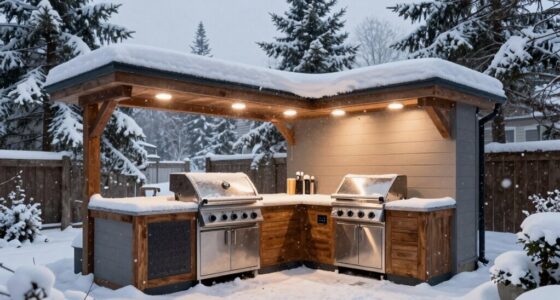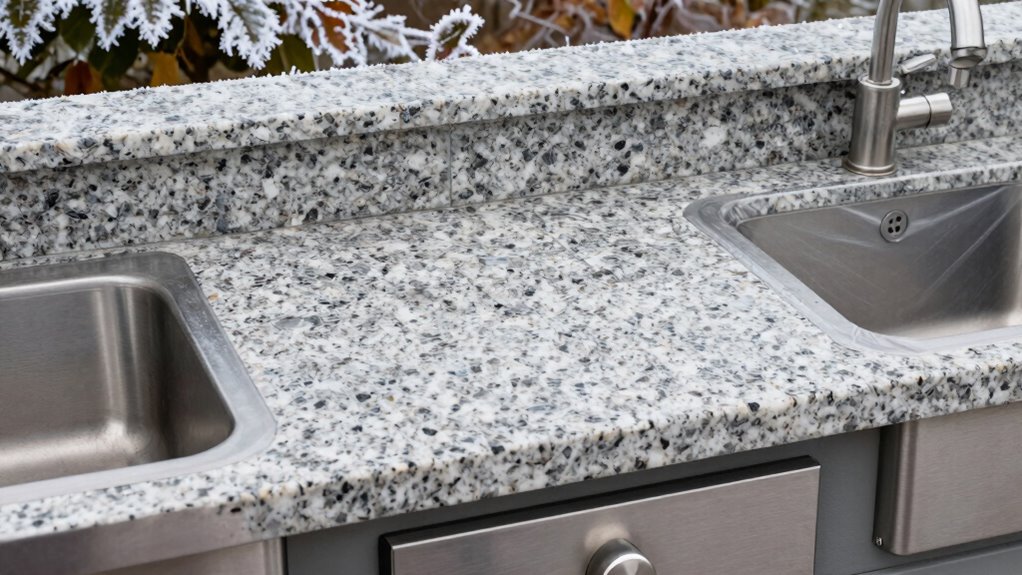
To plan for freeze-thaw cycles in your outdoor kitchen, select materials that resist cracking, like treated concrete or engineered stone, and guarantee they have low porosity. Incorporate good drainage systems and slope surfaces to prevent water pooling. Seal all joints with flexible, high-quality sealants and position vulnerable appliances in less exposed spots. Regular maintenance, such as clearing snow and inspecting for damage, will help extend your materials’ lifespan. Keep exploring to discover more ways to protect your outdoor space.

Get garden gear delivered free — and shop member deals
- Fast, free delivery on millions of items
- Access to Prime Big Deal Days deals on October 6–7
- Prime Video, Amazon Music and more included
Key Takeaways
- Select materials with low porosity and high freeze-thaw resistance to withstand seasonal temperature changes.
- Incorporate effective drainage systems to prevent water pooling and reduce freeze-thaw damage risk.
- Seal all joints and seams with flexible, durable sealants to prevent water infiltration and accommodate expansion.
- Position appliances and countertops strategically to minimize exposure to snow, ice, and moisture.
- Implement regular maintenance, including cleaning, sealing, and inspecting for cracks, to prolong material lifespan.
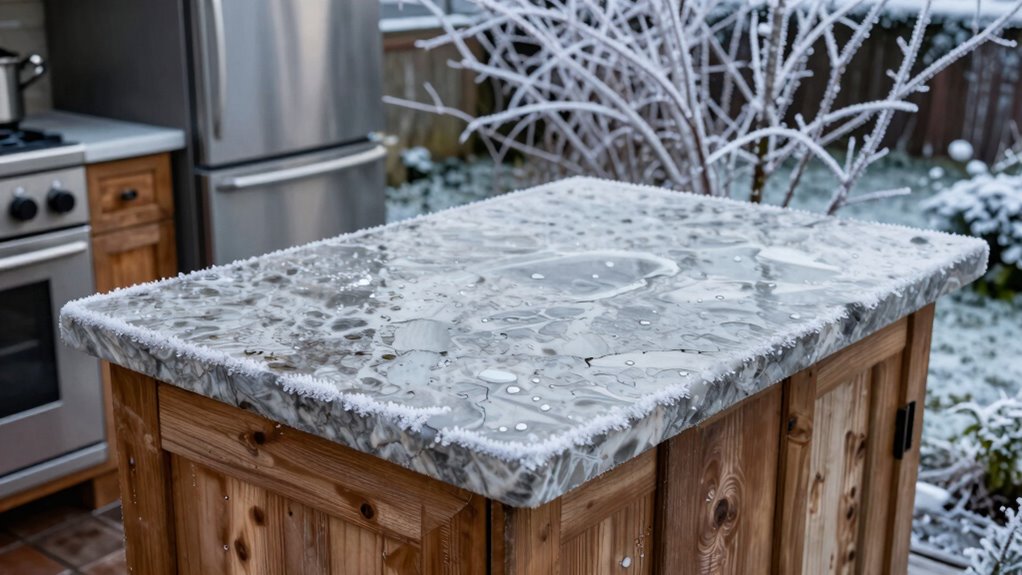
When designing an outdoor kitchen in climates with frequent freeze-thaw cycles, you need to plan carefully to guarantee your materials withstand the seasonal shifts. The key challenge in these environments is managing how materials respond to temperature fluctuations, especially considering material expansion. As temperatures drop, water trapped within porous stones or concrete can freeze, causing the material to expand and potentially crack or spall. To prevent this, you should select materials that have low porosity and are specifically designed to endure freeze-thaw conditions, such as certain types of engineered stone or treated concrete. Additionally, it’s crucial to think about how water drains away from your outdoor kitchen surfaces. Proper drainage solutions help minimize water accumulation, reducing the risk of water infiltration that can freeze and damage your materials. You might consider installing sloped surfaces, drainage channels, or permeable pavers that facilitate quick water runoff.
Choosing the right materials isn’t enough if you don’t incorporate effective drainage solutions. These solutions prevent water from pooling on countertops, around appliances, or on the ground, where it could freeze and cause expansion-related damage. For example, installing a slight slope toward dedicated drainage areas ensures that melting snow or rain doesn’t linger. Using materials like gravel or permeable pavers allows water to seep through rather than pool on the surface, minimizing freeze-thaw stress. When planning your outdoor kitchen layout, keep in mind that any joints or seams need to be sealed properly. Water can seep into cracks and expand when frozen, so high-quality sealants and flexible joints help accommodate material expansion and contraction without cracking. Incorporating freeze-thaw-resistant materials into your design enhances the durability of your outdoor kitchen over time. Moreover, selecting materials with suitable thermal properties can further improve resilience against temperature fluctuations.
Furthermore, you should consider the placement of your kitchen components. Position heavy appliances or countertops in areas less exposed to harsh winter elements, or add protective covers for seasonal periods, to limit water exposure. Regular maintenance also plays a crucial role—clearing snow and ice promptly and inspecting for signs of cracking can help you catch issues early before they worsen. Properly designing drainage systems ensures that water does not pool in critical areas, which is vital for preventing damage. Combining durable materials with effective drainage solutions and strategic placement creates a resilient outdoor kitchen that withstands the rigors of freeze-thaw cycles. This proactive approach not only extends the lifespan of your setup but also saves you money and effort in repairs down the line. Planning ahead ensures that your outdoor kitchen remains functional, safe, and attractive through every season, regardless of the weather challenges you face.
outdoor kitchen sealant high flexibility
As an affiliate, we earn on qualifying purchases.
As an affiliate, we earn on qualifying purchases.
Frequently Asked Questions
How Do Freeze-Thaw Cycles Affect Different Types of Outdoor Kitchen Appliances?
Freeze-thaw cycles cause material expansion and contraction due to temperature fluctuations, which can damage outdoor kitchen appliances. Metal parts may crack or warp, while plastics can become brittle. Stone and concrete might develop cracks or spalling. You need to choose materials that withstand these cycles or add protective features like insulation. Regular maintenance also helps prevent damage, ensuring your appliances stay functional despite the challenging temperature swings.
What Are the Signs of Damage Caused by Freeze-Thaw Cycles?
You’ll notice damage from freeze-thaw cycles as expansion cracks appearing on surfaces, which signal that water has repeatedly frozen and expanded inside the material. Material spalling may occur, where pieces of the surface chip or flake off, compromising durability. These signs indicate the material’s structural integrity is weakening due to freeze-thaw stress. Addressing these issues early prevents further deterioration, so keep an eye out for cracks and surface damage around your outdoor kitchen.
Can Sealants Prevent Freeze-Thaw Damage in Outdoor Kitchen Materials?
Did you know that properly applied sealants can reduce freeze-thaw damage by up to 90%? Sealant effectiveness depends on choosing a product with good material flexibility, allowing it to expand and contract with temperature changes. While sealants won’t completely prevent damage, they form a waterproof barrier that minimizes water infiltration and reduces the risk of cracks. Regular maintenance and selecting flexible, durable materials are essential for long-lasting outdoor kitchen surfaces.
How Often Should Outdoor Kitchen Materials Be Inspected After Cold Seasons?
You should inspect your outdoor kitchen materials at least once after each cold season. This seasonal maintenance helps you catch any signs of freeze-thaw damage early, ensuring material durability. Check for cracks, chips, or shifting, especially around joints and seals. Regular inspections allow you to address minor issues before they worsen, prolonging the lifespan of your outdoor kitchen and maintaining its functionality through future seasons.
Are There Specific Brands Known for Freeze-Thaw Resistant Outdoor Kitchen Materials?
You’ll find that brands like Kalamazoo and Bull offer outdoor kitchen materials with impressive material durability, especially designed to handle harsh freeze-thaw cycles. These brands have built a strong reputation for quality and resilience, making them a wise choice for your outdoor space. Choosing reputable brands guarantees your setup remains beautiful and functional through changing seasons, giving you peace of mind and more time to enjoy your outdoor gatherings.
permeable pavers for outdoor patio
As an affiliate, we earn on qualifying purchases.
As an affiliate, we earn on qualifying purchases.
Conclusion
By choosing the right materials and implementing proper maintenance, you can confidently enjoy your outdoor kitchen year-round. Remember, aren’t you worth the extra effort to safeguard your investment? Planning ahead for freeze-thaw cycles ensures your outdoor space stays beautiful and functional, no matter the weather. So, take the time now to prepare—because a well-protected outdoor kitchen is a joy to use season after season. Ready to make your outdoor cooking space last?
freeze-thaw resistant concrete for outdoor kitchen
As an affiliate, we earn on qualifying purchases.
As an affiliate, we earn on qualifying purchases.
outdoor drainage system for kitchen
As an affiliate, we earn on qualifying purchases.
As an affiliate, we earn on qualifying purchases.
Fall yard work Picks
leaf blowers
As an affiliate, we earn on qualifying purchases.