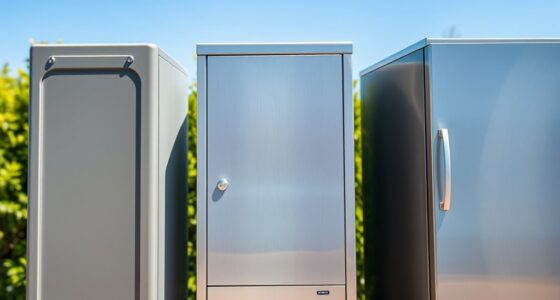
When choosing materials for sun-drenched spaces, opt for UV-resistant options like composite decking, treated wood, or outdoor fabrics labeled as UV-resistant. These materials contain stabilizers or protective coatings that prevent fading, cracking, and deterioration caused by constant sun exposure. Applying additional sealants and maintaining surfaces also helps extend their lifespan. To discover more about selecting the best UV-resistant materials for your space, keep exploring reliable options and expert tips.
Key Takeaways
- Choose materials specifically labeled as UV-resistant or outdoor-grade for enhanced durability in sunlit areas.
- Opt for composite decking, treated wood, or metal surfaces with UV protective coatings to prevent fading and damage.
- Incorporate UV stabilizers or inhibitors into plastics, fabrics, and finishes to absorb or block harmful UV rays.
- Regularly apply sealants or protective coatings with UV inhibitors to extend material lifespan and maintain appearance.
- Prioritize engineered materials with built-in UV protection for fixtures, furniture, and surfaces exposed to prolonged sunlight.
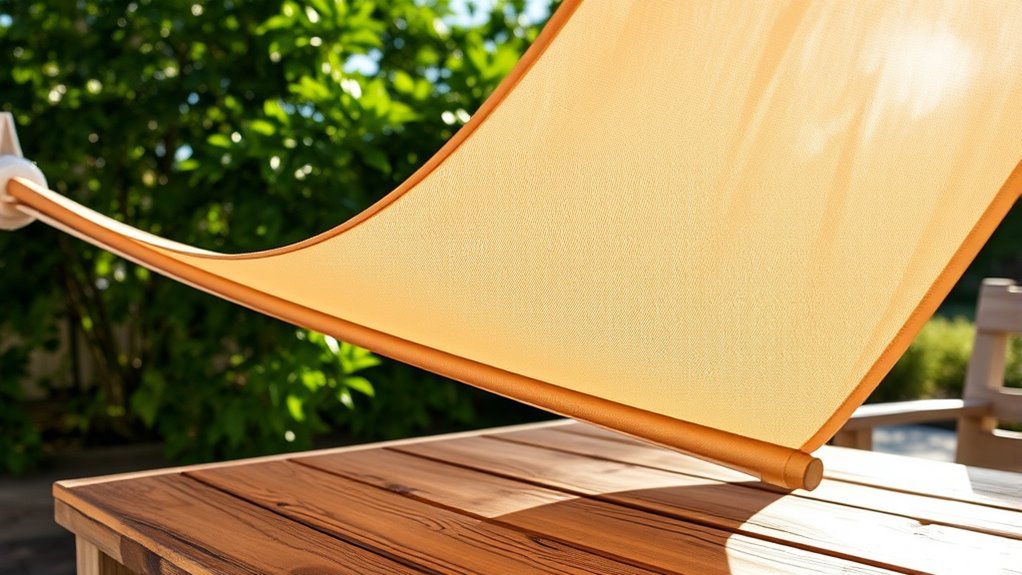
When designing or furnishing sun-drenched spaces, choosing the right materials is vital to guarantee durability and longevity. Sun exposure exposes your furnishings and surfaces to harsh elements like UV rays, which can cause significant damage over time. UV degradation becomes a real concern, especially when selecting materials that need to withstand constant sunlight. Without proper consideration, your furniture, fabrics, and finishes can fade, crack, or weaken prematurely. That’s why prioritizing material durability is essential; it ensures your investments stay vibrant and intact despite relentless sun exposure.
You need to look for materials specifically designed to resist UV damage. For outdoor furniture, opting for plastics or composites that contain UV stabilizers helps prevent the breakdown of the material’s structure. These stabilizers absorb or block harmful UV rays, reducing the risk of discoloration and degradation. Similarly, choose fabrics labeled as UV-resistant or outdoor-grade, which are often treated with special coatings or dyes that slow down fading and prevent fibers from weakening. These fabrics are not only more colorfast but also maintain their integrity longer, even under intense sunlight.
When selecting surfaces like decking or siding, materials such as composite decking with UV inhibitors or certain treated woods offer superior resistance to UV degradation. These materials are engineered to endure prolonged sun exposure without warping, splitting, or losing their color. Metal surfaces, especially those with protective coatings or powder finishes, tend to be more resilient against UV damage, making them ideal for outdoor accents or fixtures. Recognizing the material’s inherent durability and its capacity to withstand UV rays will save you money and effort in the long run.
Beyond choosing the right materials, consider applying protective finishes or sealants that contain UV inhibitors. These products create an additional barrier, shielding surfaces from harmful rays and extending their lifespan. Regular maintenance, like cleaning and reapplying protective coatings, further enhances material durability and preserves the aesthetic appeal of your sunlit spaces. Incorporating UV-resistant materials into your design ensures your sun-drenched space remains beautiful and functional for years to come.
Frequently Asked Questions
How Do Uv-Resistant Materials Impact Indoor Air Quality?
UV-resistant materials usually emit fewer harmful substances, which helps improve indoor air quality. When you choose these materials, you decrease potential material emissions that could negatively affect your indoor air. This means less exposure to volatile organic compounds (VOCs) and other pollutants, creating a healthier environment. By prioritizing UV-resistant options, you guarantee your indoor air remains cleaner and safer, especially in sun-drenched spaces where materials are more exposed to sunlight.
Are Uv-Resistant Materials Suitable for High-Humidity Environments?
Yes, UV-resistant materials are suitable for high-humidity environments because they offer excellent corrosion resistance and enhanced material durability. You’ll find that these materials withstand moisture and UV exposure better than standard options, preventing deterioration over time. When choosing, look for those specifically designed for humid conditions, ensuring long-lasting performance. This way, your space remains resilient, maintaining its appearance and integrity despite high humidity levels.
What Are the Long-Term Maintenance Requirements for Uv-Resistant Surfaces?
You’ll want to perform regular durability testing to guarantee your UV-resistant surfaces stay in top shape. Keep up with sealing techniques, reapplying sealants as needed to prevent damage from UV rays and moisture. Cleaning your surfaces with gentle, non-abrasive products also helps maintain their look and functionality over the long term. Consistent maintenance keeps your UV-resistant materials durable and effective in sun-drenched environments.
Can Uv-Resistant Materials Be Recycled or Environmentally Friendly?
Yes, UV-resistant materials can be eco-friendly and recyclable. Imagine a durable, sun-proof surface that’s not just tough but also kind to the planet. Many eco-friendly options are now designed with recycling processes in mind, allowing you to reduce waste and environmental impact. By choosing these materials, you get long-lasting performance while supporting sustainability. So, you can enjoy sunny spaces knowing your choices help protect the environment.
How Do Budget Constraints Influence Uv-Resistant Material Choices?
Budget constraints impact your choice of UV-resistant materials by pushing you toward cost-effective solutions. You’ll need to prioritize budget-friendly options that still offer durability against sun damage, often opting for materials with proven longevity at a lower price. This means carefully comparing options, considering recycled or environmentally friendly materials when possible, and balancing upfront costs with long-term durability to guarantee your space stays protected without overspending.
Conclusion
So, next time you choose that flashy, inexpensive furniture for your sun-soaked patio, remember it’s basically inviting the sun to turn your decor into a crispy, faded nightmare. Opt for UV-resistant materials, or prepare to see your stylish setup slowly turn into a ghostly relic of its former self. Protect your investment from becoming a sun-dried, peeling disaster—because nothing says “luxury” like furniture that’s more Sahara than sanctuary.