
TL;DR

Get garden gear delivered free with Prime
- Fast, free delivery on millions of items
- Prime Video, Amazon Music and more included
- Member-only deals all year
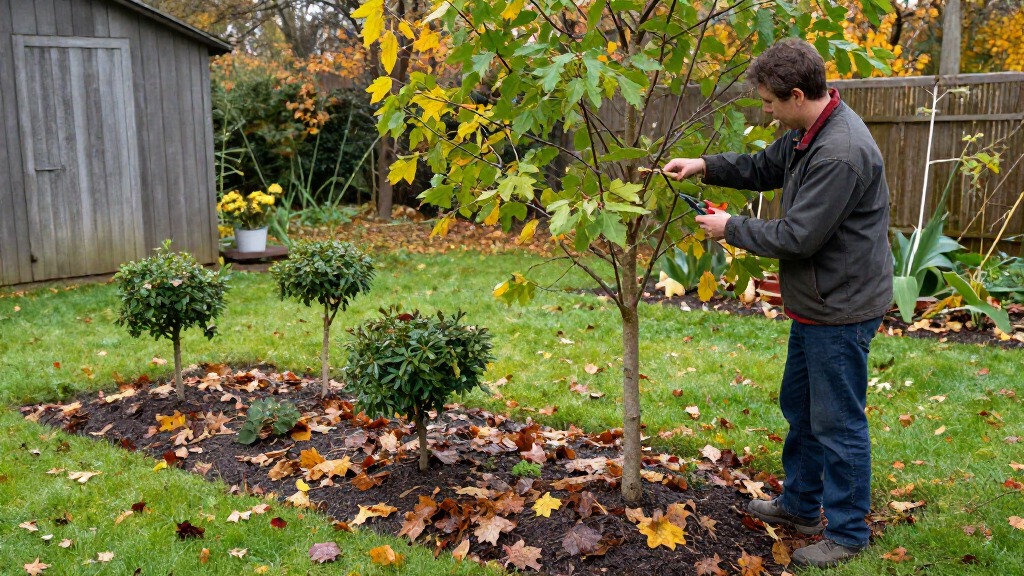
A gardening report advises against routine tree pruning in October because most trees have not yet reached their dormant season. It identifies acers, birches and newly planted trees as exceptions for a light trim focused on dead, damaged, diseased or broken growth.
Most trees should be left unpruned in October, according to an Ideal Home gardening report, which says the month is generally too early for routine pruning before dormancy. The report identifies acers, birches and newly planted trees as exceptions that may receive a light trim to remove problem growth.
The report draws on advice from Gareth Mitchell, a gardening expert and founder of Tree2MyDoor. He recommends keeping any October work limited, rather than reshaping a tree or cutting it back heavily. The suggested focus is the “three Ds” — dead, damaged or diseased branches — along with broken growth or branches rubbing against one another.
For Japanese maples and other acers, Mitchell recommends checking for dead, damaged or crossing branches before dormancy. The report notes that acers generally have an attractive natural shape and need little pruning. It does not describe October as the best time for a substantial acer prune.
Birches may have small dead or damaged branches removed in October, the report says. Mitchell warns that heavy pruning in late winter and early spring can cause sap loss when sap flow is at its peak. Newly planted trees may also need minor corrective pruning to remove broken growth and balance their shape. The advice is limited to light work, not a general clearance of branches.
Why October Cuts Need Restraint
The timing of a cut can affect a tree’s health. Mitchell says pruning at the wrong point in the year can lead to excessive sap loss or leave a tree more exposed to disease. For readers doing autumn garden maintenance, the distinction is practical: falling leaves do not necessarily mean a tree is ready for its annual prune.
The report’s exceptions are narrow. A check for hazardous or unhealthy branches may be appropriate, but the advice does not support routine thinning or major reshaping in October. Limiting cuts also helps avoid removing healthy growth unnecessarily while many trees are still outside their dormant period.
As an affiliate, we earn on qualifying purchases.
Dormancy Sets the Pruning Window
Ideal Home describes the dormant season as typically running from late autumn to late winter. October is characterized as early autumn, so the report says most trees have not yet reached the period generally preferred for pruning. It gives apple trees as an example: their main pruning is usually done in winter, and cutting them too early may cause unnecessary stress.
The advice does not mean that no tree work can be done in October. Instead, it distinguishes between light corrective pruning and substantial pruning. The former is reserved for specific cases in the report; the timing and approach for other species may differ.
“Timing really matters when it comes to pruning.”
— Gareth Mitchell, gardening expert and founder of Tree2MyDoor, as quoted by Ideal Home
As an affiliate, we earn on qualifying purchases.
Species And Site Conditions Matter
The report does not provide a full pruning schedule for every tree species, nor does it specify how much growth can safely be removed from an individual tree. Its guidance is general and may not account for local climate, tree condition or site-specific risks. It also does not give detailed instructions on pruning technique or cuts for each species.
Mitchell’s comments are presented through Ideal Home; the article does not cite a separate study or public authority supporting the recommendations. Readers with a damaged, diseased or unusually large tree may need advice tailored to that tree, rather than treating the three exceptions as a universal rule.
As an affiliate, we earn on qualifying purchases.
Check Before Making Any Cuts
Before pruning in October, identify the tree and check whether the work is limited to dead, damaged, diseased or broken branches. If it is a routine shape-up, the report’s advice is to wait until the appropriate pruning period for that species rather than assume leaf fall marks dormancy.
For acers, birches and newly planted trees, keep any necessary work light. The report does not set a later date for each type of tree, so owners should seek species-specific guidance if they are unsure about timing or the extent of a cut.
As an affiliate, we earn on qualifying purchases.
Key Questions
Can trees be pruned in October?
Most trees should not be pruned routinely in October, according to the Ideal Home report, because it is generally still early autumn rather than the dormant season. Limited corrective pruning may be suitable for the exceptions described.
Which trees are listed as October exceptions?
The report names acers, birches and newly planted trees. It recommends only light work, such as removing dead, damaged, diseased, crossing or broken branches.
Why does the report advise against heavy pruning?
Gardening expert Gareth Mitchell says pruning at the wrong time can cause excessive sap loss or expose a tree to disease. He also notes that birches can lose sap when heavily pruned in late winter and early spring.
When is the dormant season?
The report describes it as typically running from late autumn to late winter. The right timing can vary by species, so October is not presented as the correct pruning time for most trees.
Source: rss
Halloween Picks
halloween
As an affiliate, we earn on qualifying purchases.