
TL;DR

Get garden gear delivered free with Prime
- Fast, free delivery on millions of items
- Prime Video, Amazon Music and more included
- Member-only deals all year
RHS Bridgewater curator Tracy Snell has shared the meanings of nine plants featured in the Yangzhou Scholars’ Garden, which opened in September 2026. The selection links familiar garden plants with ideas including longevity, modesty and love, alongside growing advice from RHS Chief Horticulturist Guy Barter. Symbolic meanings are cultural associations, not claims about what plants can bring to a garden owner.
RHS Bridgewater curator Tracy Snell has outlined the meanings of nine plants associated with Chinese gardens, with cultivation advice from RHS Chief Horticulturist Guy Barter. The guide, published by Amateur Gardening, follows the September 2026 opening of the Yangzhou Scholars’ Garden in Salford and connects familiar garden plants with ideas such as longevity, modesty and love.
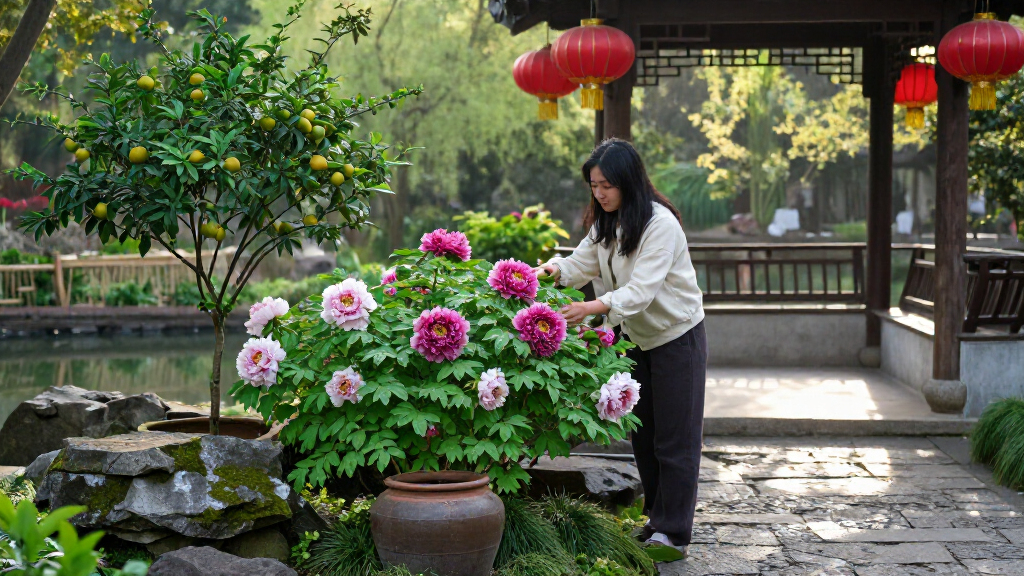
Snell says plants in a Chinese scholars’ garden can express a person’s character while helping create a carefully arranged version of nature. The design also uses plants alongside features such as rocks, buildings and water, and marks the changing seasons. The Yangzhou garden took eight years to make, according to the report.
The nine selections are magnolia, associated with purity and noble character; ginkgo, with longevity and tenacity; Japanese maple (Acer palmatum), with happiness and longevity; and Fargesia nitida bamboo, whose hollow stems and flexible growth are linked to modesty and resilience. The remaining plants are Chinese wintersweet, hydrangea, pine, plum and peony. The supplied report gives meanings and growing guidance for the first six, but does not include details for pine, plum or peony.
Barter’s advice varies by plant and site. Magnolias prefer full sun and well-drained soil, while Japanese maples do better in partial shade and soil that does not dry out excessively. Ginkgo trees usually need plenty of room, although Barter recommends the dwarf cultivar ‘Troll’ for small gardens or containers. Clumping Fargesia bamboo is generally less prone to spreading than running types, but Barter advises checking for unwanted spread each year.
Symbolism Meets Garden Practice
The guide connects cultural symbolism with practical decisions about choosing and caring for plants. For gardeners, the meanings can add a layer of interpretation to plants already grown in Britain; the horticultural advice helps readers judge whether a species suits their space, soil and light.
Some recommendations also highlight trade-offs. A ginkgo may suit a gardener seeking a tree associated with endurance, but its typical size makes it unsuitable for many small plots. Japanese maples can offer seasonal interest, while their preferred moist soil and partial shade may limit where they thrive. The symbolism is presented as a cultural association, not as evidence that growing a plant causes luck, love or long life.
Products Worth Considering

EGO POWER+ LB6151 Cordless Leaf Blower with 2.5Ah Battery and Charger

Husqvarna 525P4S Gas-Powered Pole Saw with 12-Inch Bar

EVERECO Polycarbonate Greenhouse Panels, 8 ft × 4 ft × 0.24 in, 6-Pack
As an affiliate, we earn on qualifying purchases.
The Yangzhou Garden’s Design
The Yangzhou Scholars’ Garden at RHS Bridgewater in Salford opened in September 2026 after eight years of work, according to Amateur Gardening. Snell, the garden’s curator, explains that plant choices in this tradition are part of a broader composition: their placement works with architecture, rocks and water to shape a stylised landscape.
The article also points to overlap between Chinese garden traditions and British gardening: several featured plants are already familiar in UK gardens. Its horticultural guidance is credited to Barter, while the explanations of meaning and design are attributed to Snell. The available source excerpt does not provide full profiles for all nine plants.
“Plants in a Chinese scholars’ garden are chosen as an expression of the person’s personality, as well as creating a stylised version of nature.”
— Tracy Snell, curator at RHS Bridgewater
Details Missing From the Plant List
The supplied report excerpt stops partway through its hydrangea advice and does not include the full entries for pine, plum and peony, despite naming them among the nine favourites. Their specific meanings and growing recommendations cannot be established from the available material. The report also presents symbolism as cultural interpretation; it does not claim or show that plants affect a person’s luck, relationships or lifespan.
Growing conditions differ among gardens, and the excerpt does not provide a complete planting plan or advice for every soil type and climate. Readers should treat the listed tips as general horticultural guidance rather than a guarantee that a plant will thrive in every location.
Further Plant Advice to Follow
The article’s available material gives no announced follow-up or further milestone. For now, readers can use the reported profiles for the plants covered, while checking the complete Amateur Gardening guide or RHS plant advice for details omitted from the supplied excerpt. Gardeners considering trees or bamboo should assess available space and site conditions before planting.
Key Questions
Which plants are included in the Chinese garden guide?
The report names magnolia, ginkgo, Japanese maple, Fargesia nitida bamboo, Chinese wintersweet, hydrangea, pine, plum and peony. The supplied excerpt provides detailed meanings and care tips for the first six only.
What does a ginkgo represent in the guide?
Curator Tracy Snell associates ginkgo with longevity and tenacity. Horticulturist Guy Barter says most ginkgos grow large and need space, while the dwarf cultivar ‘Troll’ can suit small gardens or containers.
Which of the listed plants can suit a small garden?
Barter identifies the dwarf ginkgo cultivar ‘Troll’ as an option for small spaces and containers. He also describes magnolias as reaching about 8–12 metres at maturity, so gardeners should consider their eventual size before planting.
Does the guide say these plants bring luck, love or long life?
No. It describes traditional symbolic meanings associated with the plants. The report does not claim that growing them causes luck, love or a longer life.
Source: amateurgardening.com