TL;DR

Get garden gear delivered free with Prime
- Fast, free delivery on millions of items
- Prime Video, Amazon Music and more included
- Member-only deals all year
Garden designer Harry Holding advises gardeners to weigh the work and water needed to reseed a drought-damaged lawn against how they use the space. He recommends keeping grass where it serves practical needs, while considering a smaller lawn, meadow or drought-tolerant planting where it does not.
Garden designer Harry Holding says gardeners should decide whether to reseed a drought-damaged lawn by considering how they use it, the condition of the soil and the work needed to establish new grass. His advice, reported by Amateur Gardening, is to keep lawn where it serves a clear purpose, but consider reducing or replacing it where it is difficult to maintain or takes space from more useful planting and seating.
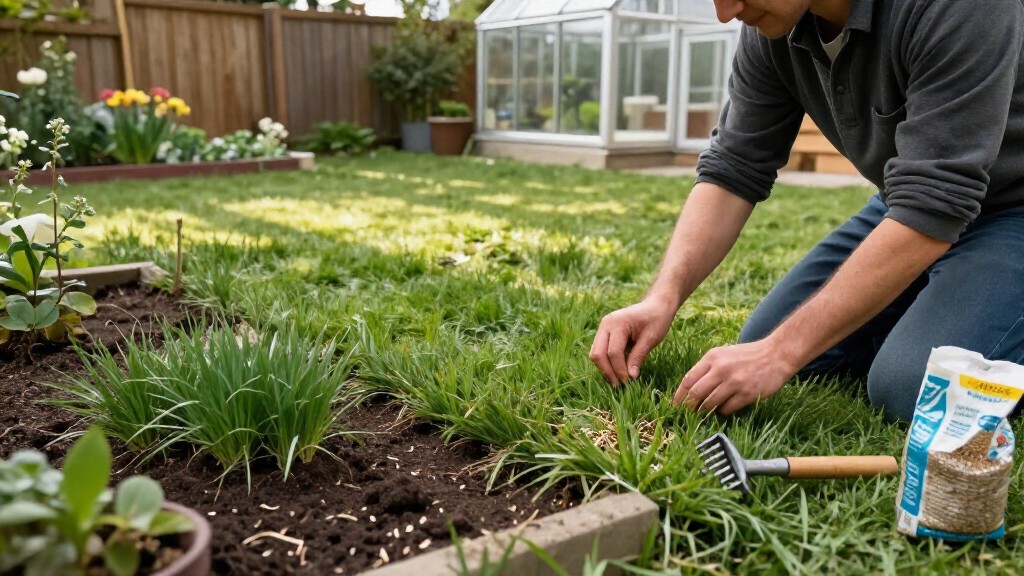
Holding says simply scattering seed over dead or compacted ground is unlikely to work. The surface needs to be broken up, dead thatch removed and soil top-dressed before sowing. New seed also requires regular watering while it establishes, which can be difficult during drought or water restrictions. The results depend partly on local conditions: Holding describes London clay as particularly challenging because it can bake and crack in summer, then become wet and boggy in winter.
He also points to the continuing demands of a lawn. Regular mowing, and often feeding and watering, can make grass a high-maintenance garden feature; in dry weather, it may die back and look unattractive. For gardeners reluctant to remove all their grass, Holding suggests shrinking the lawn and using the space for seating, borders, meadow planting or drought-tolerant ground cover.
Those alternatives should match how the garden is used. Holding says a lawn can justify its upkeep when it provides room for children to play, picnics or gatherings. By contrast, he questions keeping one solely because it is traditionally expected in a British garden, especially in small urban spaces with shade or heavy soil. He recommends judging the lawn’s size against the garden’s other needs, rather than treating grass as the default.
Choosing Grass for How You Live
The decision affects more than the garden’s appearance: it can determine how much time and water a household spends maintaining the space, and what the garden can be used for. Reseeding takes preparation and establishment watering, while leaving an unsuitable lawn in place can mean repeated maintenance without reliable results in dry conditions.
Reducing grass does not mean losing all open space. Holding says a smaller lawn can leave room for dining, seating and layered planting, while longer grass, wildflowers and drought-tolerant plants offer other ways to add structure. His advice is not that every lawn should go, but that its size and role should fit the garden and its users.
Products Worth Considering

Husqvarna Automower 550 Commercial Robotic Lawn Mower

Greenworks 60V 25-Inch Self-Propelled Lawn Mower with Two 4.0Ah Batteries

Husqvarna Power Axe 350i Chainsaw, 18 Inch with Battery and Charger
As an affiliate, we earn on qualifying purchases.
From Heat Damage to Garden Redesign
The report describes lawns affected by a UK summer of heatwaves and extended periods without rain, alongside hosepipe bans. It says all but the most established lawns would have suffered, though it does not provide a survey or figures measuring the extent of damage. The setting for Holding’s advice is therefore a practical choice facing gardeners after dry weather, not a claim that every patch of dead grass has the same cause or needs the same remedy.
Holding is founder and principal designer of Harry Holding Studio. His garden at the Eden Project received the Environmental Innovation Award at the 2026 RHS Chelsea Flower Show, according to the supplied report. He frames lawn decisions around use and proportion: a lawn can provide a valuable open area, but in a small garden it may crowd out a terrace, dining space or planting.
For gardeners considering a change, Holding identifies autumn as a good time to plant while soil remains warm and rain is more likely. He cautions that timing alone does not make ground suitable for work: on heavy soil during wet weather, disturbing it can cause harm. Planning and preparation can continue from autumn into spring, subject to soil and weather conditions.
“Seed scattered onto compacted ground rarely takes, so you need to break up the surface, scarify out the dead thatch and top-dress before sowing. Then it needs regular watering until it establishes, which is challenging to provide in a drought.”
— Harry Holding, garden designer, as quoted by Amateur Gardening
Local Soil and Lawn Conditions
The report does not assess any individual garden or say whether a particular dead lawn can recover. It provides no location-specific soil tests, costs, watering quantities or guarantee that reseeding or replacement planting will succeed. The cause of a lawn’s damage may also vary; the article focuses on heat and drought but does not rule out other factors for any one garden.
Holding’s suggestions are general design advice, not a site inspection. Whether to reseed, reduce or replace grass depends on the lawn’s condition, soil, shade, intended use and local weather. The source also does not set out specific seed mixes or a detailed step-by-step reseeding schedule.
Assess Use Before Autumn Planting
Gardeners considering a change can start by identifying what the lawn is for and how much open space they need, then assess the soil and the area’s sun and shade. If reseeding, Holding’s advice is to prepare compacted ground, remove dead thatch, top-dress and plan for regular watering as seed establishes. If replacing or reducing grass, autumn can be a suitable planting period, provided the ground is not too wet to work safely.
The source sets out no scheduled follow-up or official decision point. The practical next step is a garden-by-garden assessment, with planting and ground preparation timed around local conditions.
Key Questions
Should I reseed a dead lawn or replace it?
Holding’s advice is to decide based on how you use the space, soil conditions and the effort needed to establish and maintain grass. Keep lawn where it supports activities such as play or gatherings; consider reducing or replacing it where it is difficult to maintain or less useful than other garden features.
Can I just scatter seed over bare, compacted patches?
No. Holding says seed scattered over compacted soil rarely takes. He recommends breaking up the surface, removing dead thatch and top-dressing before sowing.
Why can reseeding be difficult during drought?
New grass needs regular watering while it establishes. Holding says providing that water can be challenging during drought, particularly where restrictions are in place.
What can replace part of a lawn?
Holding suggests options including meadow or drought-tolerant planting, deeper borders, and creeping plants such as wild thyme or chamomile in gravel or between paving. The right choice depends on how the space will be used.
When is a good time to plant instead?
Holding describes autumn as a good time because soil is still warm and rain is usually more likely. He cautions that working heavy soil during wet weather can do harm, so conditions should guide the timing.
Source: amateurgardening.com