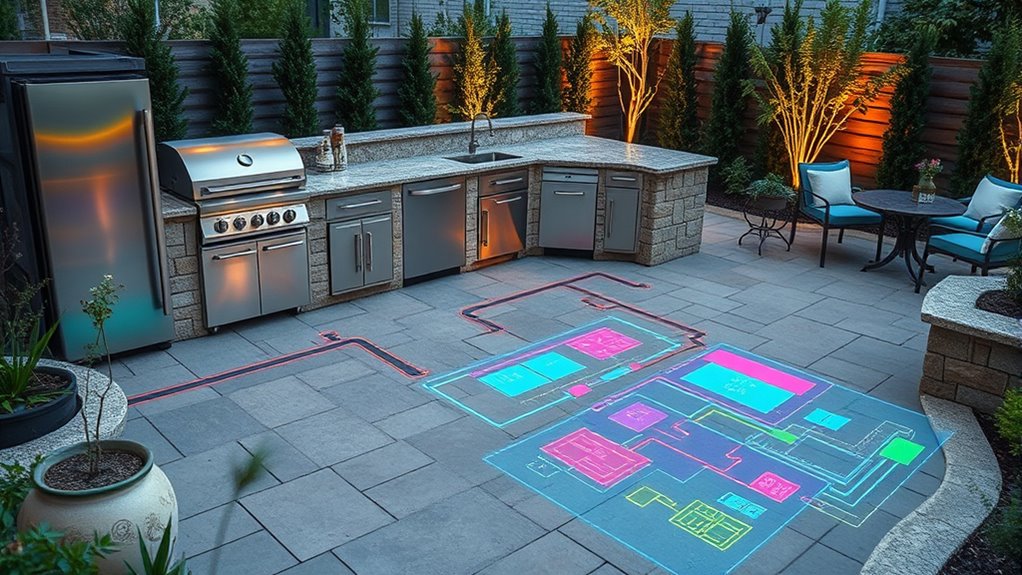
When planning electrical and plumbing layouts for your outdoor kitchen, start by mapping out key appliances and ensuring safe, accessible placement. Install dedicated circuits, GFCI outlets, and weatherproof wiring for safety, while positioning plumbing lines for convenience and code compliance. Properly plan drainage, water supply, and shut-off valves to prevent issues. Smart lighting enhances atmosphere, but a thorough layout helps save time and costs. Keep reading to discover expert tips for a seamless, functional outdoor space.
Key Takeaways
- Map appliance locations to ensure accessibility, proper integration, and dedicated circuits for safety.
- Position electrical outlets near appliances and prep areas, using weatherproof and GFCI-protected outlets for safety.
- Plan lighting strategically over workstations and pathways, incorporating ambient options for atmosphere control.
- Place the sink for optimal convenience, ensuring insulated water lines and proper drainage compliant with local codes.
- Collaborate with licensed professionals to ensure electrical and plumbing layouts meet safety standards and building codes.
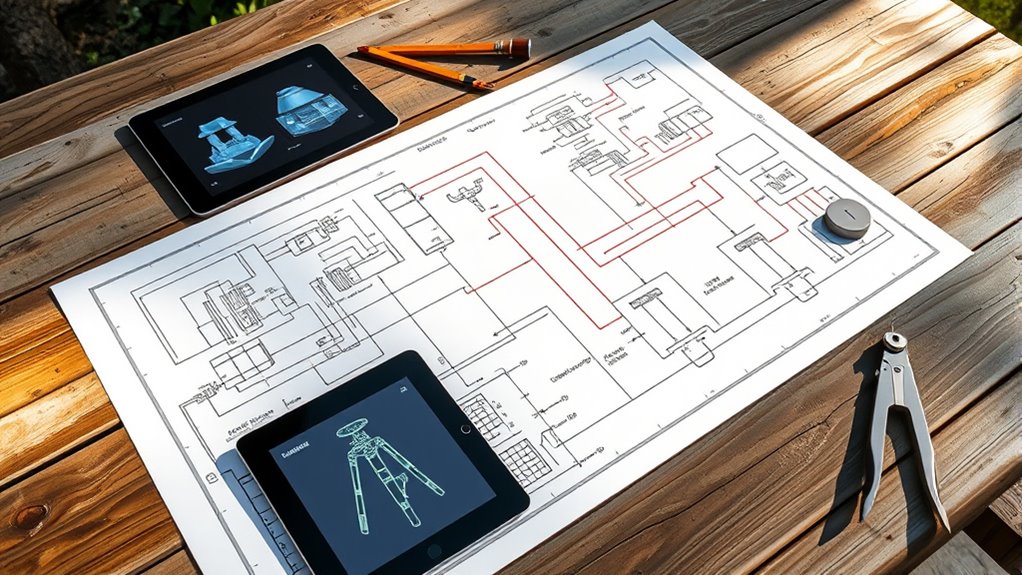
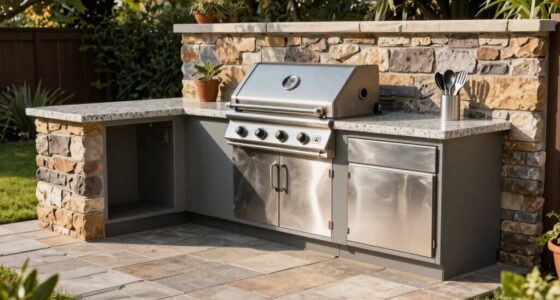
Creating a well-designed outdoor kitchen begins with careful planning of your electrical and plumbing layouts. This foundational step guarantees your space functions smoothly and safely while offering convenience and style. Start by mapping out where you want your main appliances, like your grill, refrigerator, sink, and any additional features such as a pizza oven or beverage center. Consider how these appliances will work together and how you’ll access them comfortably. Proper appliance integration isn’t just about placement; it’s about ensuring each piece connects seamlessly to your electrical and plumbing systems without creating clutter or hazards.
Plan your outdoor kitchen carefully with strategic electrical and plumbing layouts for safety and convenience.
Lighting placement is equally critical. You’ll want to strategically position lighting to illuminate work areas, dining zones, and pathways without causing glare or shadows. Think about installing task lighting over countertops, under cabinets, and around cooking stations. Incorporate ambient lighting for a cozy atmosphere, such as string lights or recessed fixtures, to make your outdoor space inviting after sunset. When planning lighting, consider how you’ll control it—perhaps with dimmers or smart switches—so you can adjust the ambiance effortlessly.
As you plan, keep in mind the proximity of your electrical outlets and water supply lines to your appliances. Proper placement minimizes the need for extension cords or long hose runs, which can be safety hazards. For example, placing outlets near your grill and prep stations allows for easy access to small appliances and tools, reducing clutter and trip hazards. When integrating appliances, ensure that each is wired to a dedicated circuit to prevent overloads and potential outages. Use weatherproof outlets and GFCI (ground-fault circuit interrupter) protection for outdoor safety, especially around water sources.
Your plumbing layout should prioritize accessibility and efficiency. Position the sink where it’s most convenient for food prep and cleanup, ideally close to your other cooking appliances. Make sure water lines are insulated to prevent freezing in colder climates. Also, plan drainage away from your foundation and ensure all plumbing connections meet local building codes. Consider installing shut-off valves for easy maintenance and repairs without disrupting the entire system.
Throughout this process, work closely with licensed electricians and plumbers to ensure all wiring and piping meet safety standards. Proper planning now will save you time, money, and headaches later. By thoughtfully arranging lighting placement and appliance integration, you create a functional, safe, and inviting outdoor kitchen that’s perfect for entertaining and everyday use.

addlon 102FT(96+6) Solar String Lights Outdoor with Remote, Waterproof Patio Lights with 30 Shatterproof LED Bulbs, 30H+ Long-Lasting Dimmable & Timable Solar Light for Backyard Camping Garden Decor
【addlon High-Capacity Solar Lights Outdoor】 Designed for longer, brighter nights. These 102FT solar string lights include 32 shatter-resistant...
As an affiliate, we earn on qualifying purchases.
Frequently Asked Questions
What Permits Are Required for Outdoor Kitchen Electrical and Plumbing Work?
You’ll need to check permit requirements for your outdoor kitchen’s electrical and plumbing work. Typically, you must obtain permits from your local building department before starting. Licensing procedures often include submitting detailed plans, proof of licensing, and inspections. Make certain you follow all regulations to avoid fines or delays. Consulting with licensed electricians and plumbers can help streamline the process and ensure your project meets safety standards and complies with local codes.
How Can I Prevent Weather Damage to Electrical and Plumbing Installations Outdoors?
To prevent weather damage to your outdoor kitchen’s electrical and plumbing, you should use weatherproofing techniques like sealing all connections with outdoor-rated enclosures and corrosion-resistant materials. Confirm your electrical outlets and fixtures are GFCI protected and covered with weatherproof covers. For plumbing, insulate exposed pipes and use outdoor-rated fittings. These steps promote outdoor utility safety, safeguarding your setup from rain, snow, and humidity while maintaining functionality and safety.
What Safety Considerations Should Be Addressed in Outdoor Kitchen Utility Layouts?
You should prioritize electrical safety by making certain all wiring is weatherproof and properly grounded, adhering to the local plumbing code to avoid leaks or contamination, and installing GFCI outlets for protection. Keep electrical components away from water sources and use outdoor-rated fixtures. For plumbing, secure pipes against weather changes, and install shut-off valves for easy maintenance. These steps help prevent accidents and ensure your outdoor kitchen is safe and compliant.
How Do I Choose Durable Materials for Outdoor Electrical and Plumbing Fixtures?
Choose durable materials by prioritizing corrosion resistance and weatherproof fixtures. Look for stainless steel, copper, or PVC for plumbing, as they withstand moisture and temperature changes. For electrical components, select fixtures with weatherproof ratings, such as IP65 or higher, to prevent water damage. Opt for UV-resistant finishes to endure sun exposure. These choices guarantee longevity, safety, and reliable performance in your outdoor kitchen, no matter the weather.
What Are the Cost Implications of Different Outdoor Kitchen Utility Configurations?
You’ll find that different outdoor kitchen utility configurations impact your costs substantially. A cost comparison shows that fixed setups may save you money upfront, but flexible utility options cost more initially. However, flexible designs offer better utility flexibility for future upgrades or changes, which can save money long-term. Consider your budget and how much you value adaptability when choosing between fixed and flexible configurations to optimize your investment.

addlon 54FT(48+6) Solar String Lights Outdoor Waterproof with USB Charging & Remote Control - Dimmable Solar Power Patio Lights with LED Bulbs for Porch, Garden, Yard, Market, Bistro - Last for 20+Hrs
UPGRADED! Remote Control: Intelligent remote control well integrates convenience and humanization, defining a new generation solar string lights....
As an affiliate, we earn on qualifying purchases.
Conclusion
Planning your outdoor kitchen’s electrical and plumbing layouts might seem intimidating, but with careful planning, you’ll create a functional, beautiful space. Some worry about future upgrades or repairs, but thoughtful placement and quality materials guarantee longevity and ease of maintenance. Remember, investing time now saves headaches later. With a clear plan and professional guidance, you can enjoy a seamless outdoor cooking experience that combines convenience, safety, and style for years to come.

Brightown 100FT Solar String Lights Outdoor Waterproof with Remote, 31+2 LED Shatterproof Bulbs, Dimmable & Timable, 3 Light Modes - Commercial Grade Patio Lights for Garden Backyard Party Decor
【100FT Pro Solar String Lights Outdoor Waterproof】Transform your large spaces with 100 feet of solar string lights outdoor...
As an affiliate, we earn on qualifying purchases.

Brightech Ambience Pro Solar Powered Outdoor String Lights -27 ft Commercial Grade Waterproof Edison Patio Lights, Shatterproof LED String Lights for Outside, Porch - 12 Bulbs, 1W Soft White
Ideal Solar Outdoor Lights: 27 ft long durable Chistmas string lights with 12 LED lights and detachable solar...
As an affiliate, we earn on qualifying purchases.