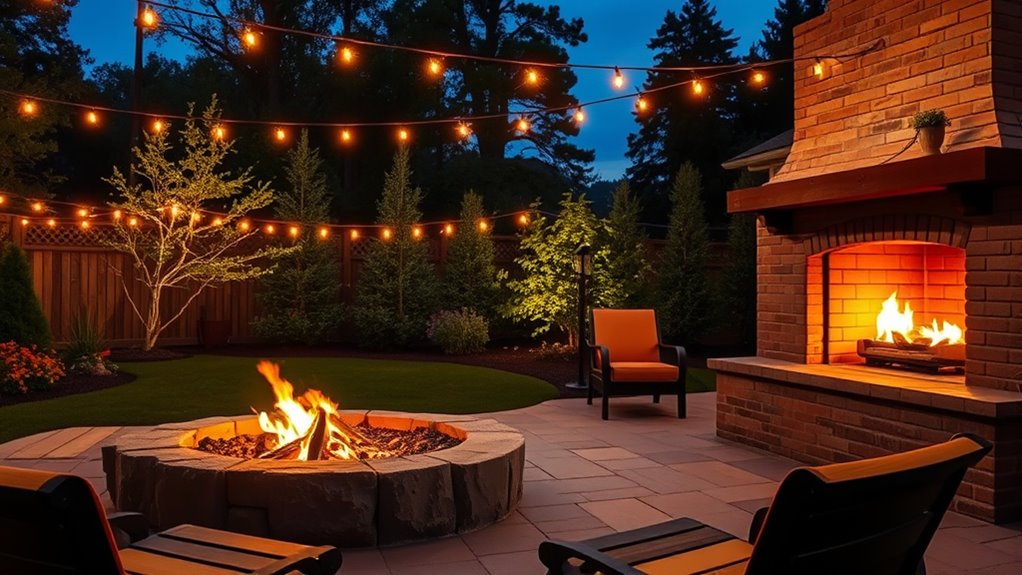

To maintain your fire pits and outdoor fireplaces, regularly clean out ash and debris, and check fuel connections for leaks or corrosion. Use seasoned, dry wood or secure gas supplies, and always follow safety procedures like keeping a fire extinguisher nearby. Cover the units when not in use to prevent weather damage and perform inspections to identify wear or rust. Staying vigilant and following these tips will guarantee your fire features stay safe, functional, and inviting for years to come.

Get garden gear delivered free — and shop member deals
- Fast, free delivery on millions of items
- Access to Prime Big Deal Days deals on October 6–7
- Prime Video, Amazon Music and more included
Key Takeaways
- Regularly clean fire pits and fireplaces to remove ash, soot, and debris for optimal performance.
- Inspect fuel connections, vents, and surrounding areas for signs of rust, cracks, or leaks.
- Cover fire features when not in use to protect against weather damage and prolong lifespan.
- Use proper, dry firewood or secure gas connections to ensure safety and consistent operation.
- Supervise fires, keep a fire extinguisher nearby, and follow safety precautions during use.
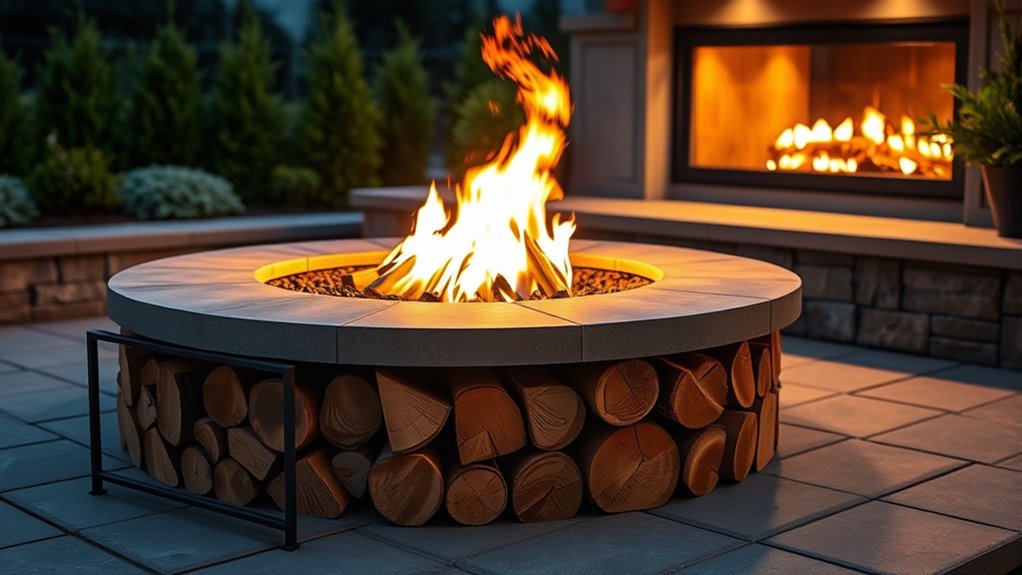
Have you ever wondered how to keep your fire features safe and attractive year-round? Maintaining your fire pit or outdoor fireplace isn’t just about aesthetics; it’s about ensuring safety and longevity. One of the most important aspects to consider is choosing the right fuel types and following essential safety precautions. Different fuels—such as wood, propane, or natural gas—each come with their own handling requirements and safety considerations. Knowing which fuel to use and how to handle it correctly can prevent accidents, ensure consistent performance, and keep your outdoor space inviting.
Proper fuel selection and safety measures ensure your outdoor fire features remain safe and beautiful year-round.
If you opt for wood, always select seasoned, dry logs to minimize smoke and creosote buildup. Never burn treated or painted wood, as it releases toxic fumes. When lighting your wood fire, use appropriate fire starters and avoid accelerants like gasoline or lighter fluid—they’re dangerous and can cause unpredictable flare-ups. Keep a fire extinguisher nearby and never leave flames unattended. It’s equally important to clear the area of flammable debris, such as leaves or paper, and maintain a safe distance between your fire feature and overhanging branches or structures. Regularly check your fire pit or fireplace for signs of wear, rust, or cracks, especially around the venting and fuel connections.
For gas-powered fire features, safety precautions are paramount. Always connect gas lines securely, and inspect hoses for leaks before igniting. Use a soapy water solution to detect leaks—bubbles indicate escaping gas, which can be hazardous. When operating propane or natural gas units, turn off the fuel supply whenever the fire feature isn’t in use. Keep the area well-ventilated to prevent gas buildup, and ensure your outdoor fire feature has a proper ignition system that’s easy to operate. Never attempt to modify gas connections or repair leaks yourself; instead, call a professional for inspections and repairs.
Beyond choosing the right fuel, maintaining proper safety precautions extends to general upkeep. Regularly clean your fire feature to remove ash, soot, or debris that could obstruct airflow or cause uneven burning. Store fire-starting materials away from the fire feature, and always supervise children and pets around an active fire. When not in use, cover your fire pit or fireplace to protect it from weather damage, which can compromise safety and appearance. By paying attention to fuel types and adhering to safety precautions, you’ll enjoy your fire feature beautifully and securely, creating a warm, inviting outdoor space all year long.
Frequently Asked Questions
How Often Should I Replace the Fire Pit or Fireplace Parts?
You should consider replacing fire pit or fireplace parts when you notice signs of wear or damage, typically every few years depending on usage and material quality. On average, fire pit lifespan varies, but regular fireplace part replacement is essential to guarantee safety and efficiency. Check for rust, cracks, or corrosion regularly, and replace parts promptly to maintain peak performance and prevent accidents. Proper maintenance extends the lifespan of your fire features.
What Safety Precautions Are Necessary During Maintenance?
During maintenance, you should always wear protective gear like gloves and safety glasses to prevent injuries. Before starting, inspect your fire extinguisher to verify it’s functional in case of emergencies. Keep a fire extinguisher nearby, and double-check that all fuel sources are safely turned off. Avoid loose clothing and work in a well-ventilated area to minimize risks. These precautions help keep you safe while maintaining your fire feature.
Can I Convert My Fire Feature to Gas or Electric?
Like turning a blank canvas into art, fire feature conversion symbolizes transformation. You can convert your fire feature to gas or electric by consulting professionals for proper electrical upgrades and gas line installations. This process guarantees safety and efficiency, allowing you to enjoy a modern touch while maintaining functionality. Be sure to follow local codes and work with experienced specialists to achieve a seamless, safe conversion that complements your outdoor space.
How Do Weather Conditions Affect Fire Feature Longevity?
Weather impact substantially affects your fire feature’s longevity. Harsh conditions like rain, snow, or extreme cold can cause corrosion, rust, or damage if you don’t perform seasonal maintenance. To protect your fire pit or outdoor fireplace, cover it during bad weather, clean it regularly, and inspect for signs of wear. Proper seasonal maintenance ensures your fire feature stays functional and safe, regardless of weather changes.
What Are Eco-Friendly Options for Fire Feature Maintenance?
You can choose eco-friendly maintenance options like using sustainable fuels such as bioethanol or propane, which produce fewer emissions. Regularly perform natural cleaning by using simple, eco-safe solutions like vinegar and baking soda to keep your fire feature clean without harsh chemicals. These practices help reduce your environmental impact, ensuring your fire feature remains sustainable and safe for your outdoor space while minimizing pollution and energy consumption.
Conclusion
Maintaining your fire features keeps them safe and beautiful for years to come. Regular cleaning and inspections can prevent costly repairs and guarantee ideal performance. Did you know that properly maintained fire pits can last up to 20 years? By following simple upkeep tips, you’ll enjoy cozy gatherings and stunning ambiance season after season. Stay proactive with maintenance, and your outdoor fireplace or fire pit will remain a mesmerizing centerpiece for your outdoor space.
Fall Picks
fall essentials
As an affiliate, we earn on qualifying purchases.