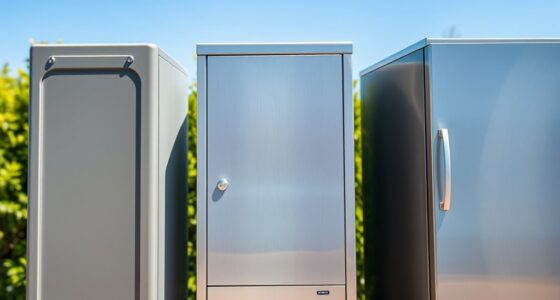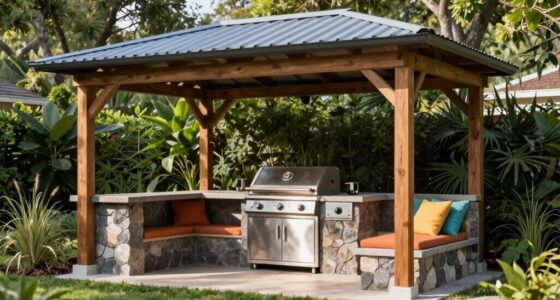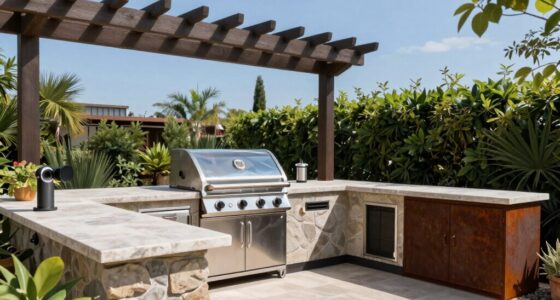
To prepare your outdoor kitchen for storms and extreme events, regularly trim trees, clear debris, and secure loose items to prevent damage. Use weather-resistant covers on appliances and install barriers to reduce wind impact. Keep emergency supplies handy and shut off utilities when storms are forecasted. Staying informed about weather alerts helps you act quickly and protect your space. Continue exploring tips to better safeguard your outdoor cooking area during severe weather.
Key Takeaways
- Regularly inspect and trim trees near the outdoor kitchen to prevent falling branches during storms.
- Use weather-resistant covers on grills and appliances to protect against water damage.
- Secure or stow outdoor furniture and equipment before severe weather events.
- Keep emergency supplies and tools ready, including flashlights, batteries, and first-aid kits.
- Stay informed with local weather alerts and promptly secure the outdoor space when storms are forecasted.
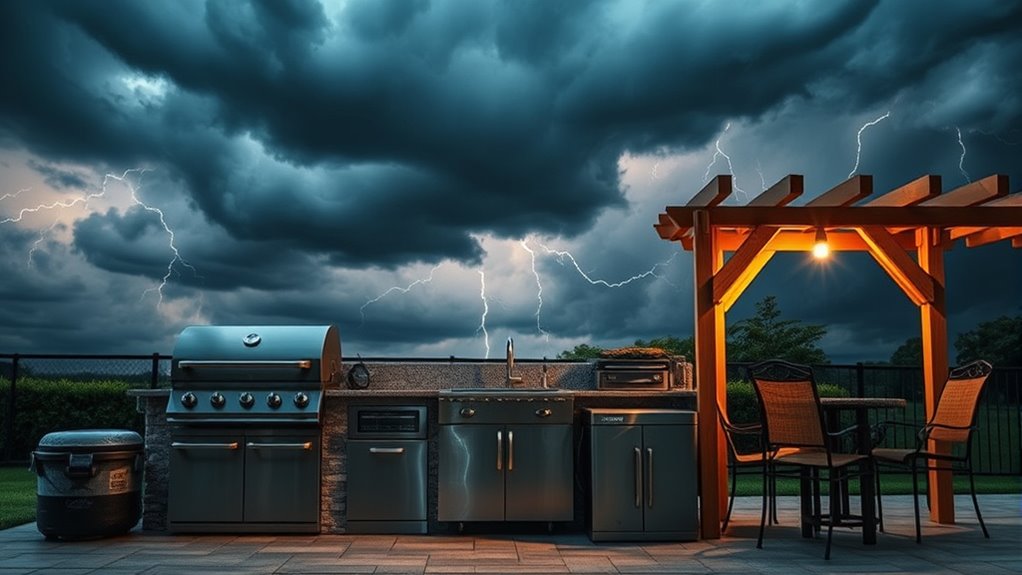
Outdoor kitchens offer a fantastic way to enjoy cooking and entertaining outside, but they also come with unique risks that require proactive planning. When storms or extreme weather events threaten, your outdoor space can quickly become vulnerable. To safeguard your outdoor kitchen, you need to think ahead about how weather conditions could impact it. Proper garden maintenance is essential. Keep trees trimmed away from the kitchen area to prevent branches from falling during strong winds. Clear debris like leaves and loose branches that might become projectiles in a storm. Regularly inspecting and maintaining your outdoor space helps identify weak spots and potential hazards before disaster strikes. Installing sturdy barriers or windbreaks can also reduce wind damage and protect your appliances and furniture.
Maintain your outdoor kitchen by trimming trees, clearing debris, and installing windbreaks to prevent storm damage.
Pest control is another critical factor. Heavy rain and storms often lead to an increase in pests like mosquitoes, ants, and rodents, which can invade your outdoor kitchen if you’re not vigilant. Ensuring that your pest control measures are up to date is necessary. Seal any gaps around cabinets, countertops, and utility lines to keep pests out. Remove standing water after storms to prevent mosquito breeding, and keep trash bins tightly sealed to avoid attracting scavengers. Proper pest control not only keeps your outdoor kitchen sanitary but also minimizes the chance of pests causing further damage during extreme weather events. When storms pass, inspect your space carefully for signs of pest intrusion or damage caused by weather.
Another essential step is to prepare an emergency plan. Have a checklist ready that includes turning off utilities, securing loose items, and covering equipment. Use weather-resistant covers for your grill and other appliances to prevent water damage. Keep emergency supplies nearby—flashlights, batteries, and a first-aid kit—so you’re ready if the power goes out or if you need to respond swiftly to any hazards. Additionally, consider installing surge protectors for electrical devices to prevent damage from power surges caused by lightning strikes or unstable electrical currents during storms.
Finally, stay informed about weather alerts and warnings in your area. Sign up for local notifications so you’re aware of incoming storms or extreme events. When a storm is forecasted, take immediate action by securing everything in your outdoor kitchen, shutting off gas supplies if necessary, and ensuring all furniture and equipment are safely stowed or covered. Being prepared and maintaining your outdoor space diligently can make all the difference in protecting your outdoor kitchen and ensuring you can enjoy it safely, no matter what weather conditions come your way. Incorporating proper maintenance practices can significantly reduce the risk of weather-related damage and prolong the lifespan of your outdoor appliances and fixtures.

MR. COVER Outdoor prep table cover 52 inch for Keter Unity XL Outdoor Rolling Table Cart, 600D Heavy Duty Waterproof for Grill Dining Kitchen Island cart Protective, Outdoor Storage Cabinet Cover
[ Special Design ] MR. COVER prep table cover is specially designed for the Keter Unity XL portable…
As an affiliate, we earn on qualifying purchases.
As an affiliate, we earn on qualifying purchases.
Frequently Asked Questions
How Often Should Outdoor Kitchen Equipment Be Inspected for Storm Readiness?
You should inspect your outdoor kitchen equipment at least once every three to six months for storm readiness. Make sure to follow a maintenance checklist that includes checking gas lines, electrical connections, and protective covers. Regular inspections help identify vulnerabilities early, ensuring your outdoor kitchen stays safe and functional during storms. Adjust the frequency based on local weather conditions, and always perform a thorough inspection before storm seasons begin.
What Materials Are Best for Storm-Resistant Outdoor Kitchen Structures?
For storm-resistant outdoor kitchen structures, you should choose materials with weatherproof coatings and reinforced framing. Use stainless steel or treated wood for durability, and apply weatherproof coatings to safeguard against moisture and corrosion. Reinforced framing, such as galvanized steel or pressure-treated lumber, ensures stability during high winds and storms. These materials help your outdoor kitchen withstand extreme weather, keeping it safe, functional, and long-lasting.
Are There Specific Insurance Policies for Storm Damage to Outdoor Kitchens?
Imagine your outdoor kitchen standing strong against fierce storms—now, yes, there are specific insurance policies for storm damage. These policies often include coverage for storm claims, protecting your investment from unpredictable weather. You should review your current insurance coverage or talk to your provider about adding or tailoring a policy that covers outdoor kitchen damage from storms. Being proactive guarantees you’re not caught off guard when extreme weather hits.
How Can I Secure Outdoor Appliances During Hurricanes or Tornados?
To secure outdoor appliances during hurricanes or tornados, you should use sturdy storm-resistant fixtures to anchor them firmly. Move lightweight items indoors or tie them down securely. Consider installing anchors or braces for heavier appliances, and use weatherproof covers to protect surfaces. Regularly inspect and reinforce your setup, ensuring everything stays in place during extreme events. This proactive approach minimizes damage and keeps your outdoor kitchen safer.
What Emergency Supplies Should Be Stored Near My Outdoor Kitchen?
In times of chaos, you need quick access to essential supplies near your outdoor kitchen. Store emergency food and a backup power source to stay prepared during storms or outages. While the thunder roars and the skies darken, these supplies provide safety and sustenance. Keep water, first aid kits, and flashlights close, so you’re ready to face any emergency, ensuring peace of mind amid the storm’s fury.

Emergency Survival Kit for Hurricane, Storm, Tornado, El Niño Preparedness
Prepare Now for the 2026 El Niño Storm Season: El Niño pushes storms closer to the U.S. coast,…
As an affiliate, we earn on qualifying purchases.
As an affiliate, we earn on qualifying purchases.
Conclusion
Think of your outdoor kitchen as a sturdy ship sailing through unpredictable seas. Just as a captain prepares for storms by checking the sails and securing the deck, you must safeguard your space with proper planning and supplies. When extreme events strike, your readiness becomes the anchor that keeps everything steady. By staying vigilant and proactive, you’ll navigate any tempest with confidence, turning potential chaos into a calm harbor where memories—and meals—continue uninterrupted.

Cartman 1" x 12 ft Lashing Straps, 6 Pack, 600 lb Break Strength, Black
Cartman 12-foot long-by-1-inch wide lashing strap in 6-pack
As an affiliate, we earn on qualifying purchases.
As an affiliate, we earn on qualifying purchases.
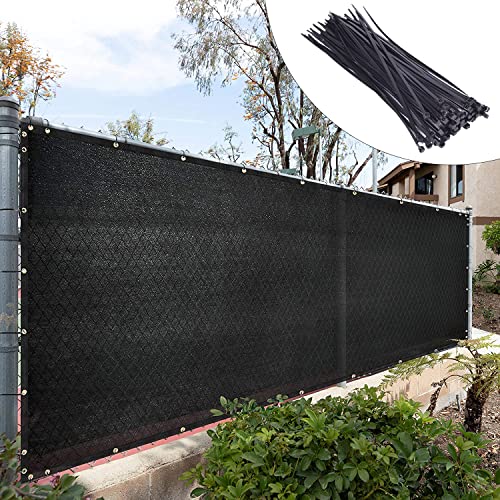
Royal Shade Custom Size 4' x 5' Black Fence Privacy Screen Windscreen Cover Netting Mesh Fabric Cloth – Cable Zip Ties Included (We Make Custom Size)
Measurement: Actual height is 3' 10" , made to fit perfectly on 4 footer fence.
As an affiliate, we earn on qualifying purchases.
As an affiliate, we earn on qualifying purchases.