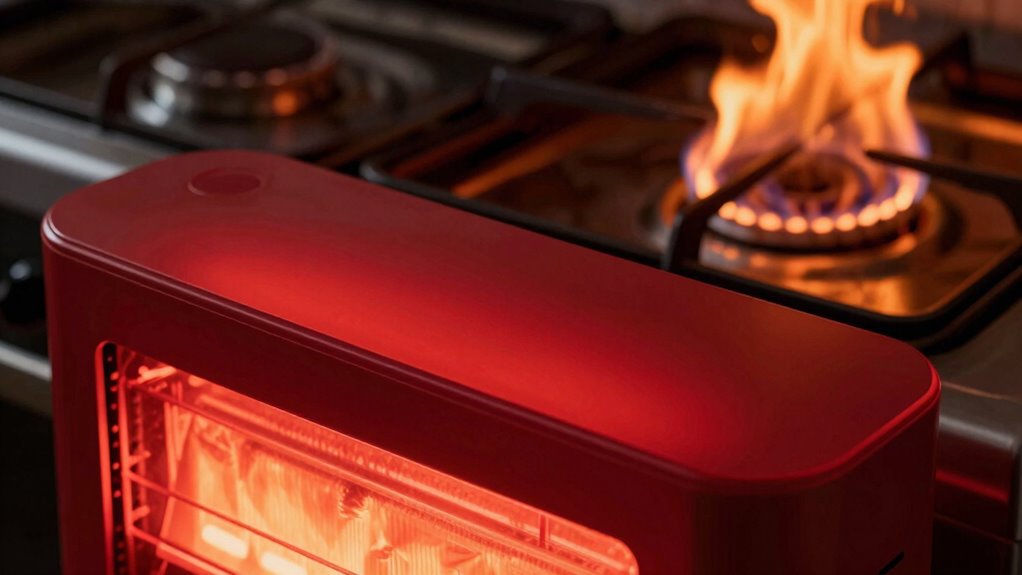

Infrared heat differs from traditional burner heat because it directly warms objects and people using electromagnetic radiation, not the surrounding air. This means you feel warmth faster and more efficiently, with less energy wasted. Unlike burners that rely on heating air through combustion or resistance, infrared systems heat up almost instantly and are safer since surfaces don’t get hot to the touch. If you keep exploring, you’ll discover even more benefits of infrared heating systems.

Get garden gear delivered free with Prime
- Fast, free delivery on millions of items
- Prime Video, Amazon Music and more included
- Member-only deals all year
Key Takeaways
- Infrared heaters emit electromagnetic radiation that directly warms objects and people, unlike traditional burners that heat the surrounding air.
- Infrared heat provides instant warmth and maintains consistent temperatures, whereas burners take longer to produce noticeable heat.
- Infrared systems are more energy-efficient, consuming less power for the same comfort level compared to traditional burners.
- Infrared heaters lack open flames and hazardous gases, making them safer than gas or combustion-based burners.
- Modern infrared units include smart controls and safety features, enhancing convenience and reducing risks associated with traditional burners.
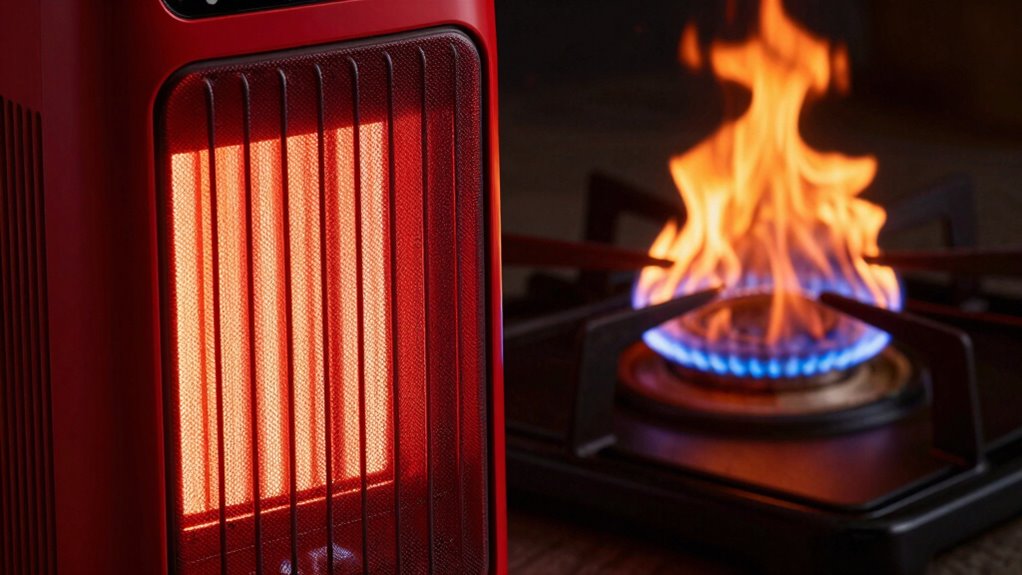
When choosing a heating method for your home or outdoor space, understanding the differences between infrared heat and traditional burners is vital. Infrared heaters work by emitting electromagnetic radiation that directly warms objects and people in their path. Instead of heating the air like traditional burners, they produce radiant heat, which is absorbed quickly and efficiently. This method often results in faster warmth with less energy wasted, making infrared systems highly energy efficient. You’ll notice that infrared heaters heat up almost instantly and maintain a consistent temperature without needing to run continuously, which can notably cut down on energy costs over time. Additionally, infrared heating is often considered more environmentally friendly because it produces fewer emissions and uses less energy overall. As advancements in infrared technology continue, newer models are becoming even more efficient and safe to operate. Modern infrared units also often incorporate smart controls, allowing for better energy management and user convenience. These technological improvements further enhance the cost-effectiveness and safety of infrared heating solutions. Traditional burners, on the other hand, heat the surrounding air through combustion or electrical resistance. As the air warms, it circulates and heats the space gradually. While effective, this method tends to consume more energy because much of the heat is lost through convection and airflow. It can take longer to feel the warmth, especially in larger or open spaces, which means you might need to keep the heater running longer, increasing your energy bills. If energy efficiency is a priority, infrared heaters generally use less power to produce the same amount of comfort, making them a more cost-effective choice in the long run. Safety considerations also play an integral role when comparing these two heating options. Infrared heaters tend to be safer because they don’t involve open flames or combustion processes. They don’t produce carbon monoxide or other hazardous gases, reducing risks associated with gas leaks or fire hazards. Many infrared units come with built-in safety features, like tip-over switches and overheating protection, which help prevent accidents. Additionally, because infrared heat doesn’t make surfaces hot to the touch, the risk of burns is lower, especially in homes with children or pets. Traditional burners, especially those fueled by gas or open flames, require careful handling and proper ventilation to prevent dangerous buildup of gases like carbon monoxide or unburned fuel. They also tend to have hot surfaces that can cause burns if touched accidentally. If safety is a concern, especially in indoor environments, infrared heating options are often preferable due to their cleaner, safer operation and built-in safety features. Furthermore, understanding the technological advancements in infrared heating can help in selecting more efficient and safer units for your specific needs.
As an affiliate, we earn on qualifying purchases.
Frequently Asked Questions
How Does Infrared Heat Affect Indoor Air Quality?
Infrared heat improves indoor air quality because it doesn’t produce combustion byproducts or blow air around, reducing pollutants. This means fewer airborne allergens and irritants, leading to better pollutant reduction. You’ll notice cleaner air and less dust circulation, making your space healthier. Unlike traditional burners, infrared heating warms objects directly without affecting the air, helping you breathe easier and maintain a fresher indoor environment.
Are Infrared Heaters More Energy-Efficient Than Traditional Burners?
Think of infrared heaters as capturing the sun’s gentle warmth, making them more energy-efficient than traditional burners. They focus heat directly on objects and people, reducing wasted energy. This means better energy savings and a lower cost comparison over time. You’ll notice lower utility bills, and your space warms faster without excess heat loss. Infrared heaters offer a smarter, more efficient way to stay cozy, saving you money and energy in the long run.
What Safety Precautions Are Necessary for Infrared Heating Devices?
You should always prioritize infrared safety by keeping the heater away from flammable materials and guaranteeing proper ventilation. Use heater precautions like avoiding direct contact with the heating element and not covering vents, which can cause overheating. Regularly inspect the device for damage, and follow the manufacturer’s instructions carefully. These steps help prevent accidents and ensure safe, efficient operation of your infrared heating device.
Can Infrared Heat Be Used for Outdoor Heating Applications?
Yes, infrared heat works well for outdoor heating, providing reliable outdoor comfort even in chilly weather. Its weather-resistant design guarantees durability against rain, wind, and temperature fluctuations. You can place infrared heaters on patios, decks, or outdoor dining areas, knowing they’ll deliver consistent warmth. Their ability to heat people and objects directly makes them energy-efficient and effective for outdoor spaces, enhancing your comfort regardless of the weather conditions.
How Does Infrared Heating Impact Humidity Levels Indoors?
You might notice that infrared heating can positively affect indoor humidity levels. It promotes humidity regulation and moisture control by warming objects and people directly, rather than the air. This targeted warmth helps reduce dry air and static, making your space feel more comfortable. Since infrared heat doesn’t dry out the air excessively, you enjoy a balanced environment with better humidity control, keeping your indoor air just right.
energy-efficient infrared heater
As an affiliate, we earn on qualifying purchases.
As an affiliate, we earn on qualifying purchases.
Conclusion
So, now that you know the key differences between infrared and traditional burner heat, the choice isn’t as simple as it seems. Infrared might offer faster, more efficient warmth, but could it hold secrets that change how you heat your space forever? The answers are just beyond the horizon, waiting to be uncovered. Are you ready to explore what’s next? The future of heating might depend on the decision you make today—don’t miss out.
As an affiliate, we earn on qualifying purchases.
As an affiliate, we earn on qualifying purchases.
Columbus Day / Indigenous Peoples' Day Picks
long weekend sales
As an affiliate, we earn on qualifying purchases.