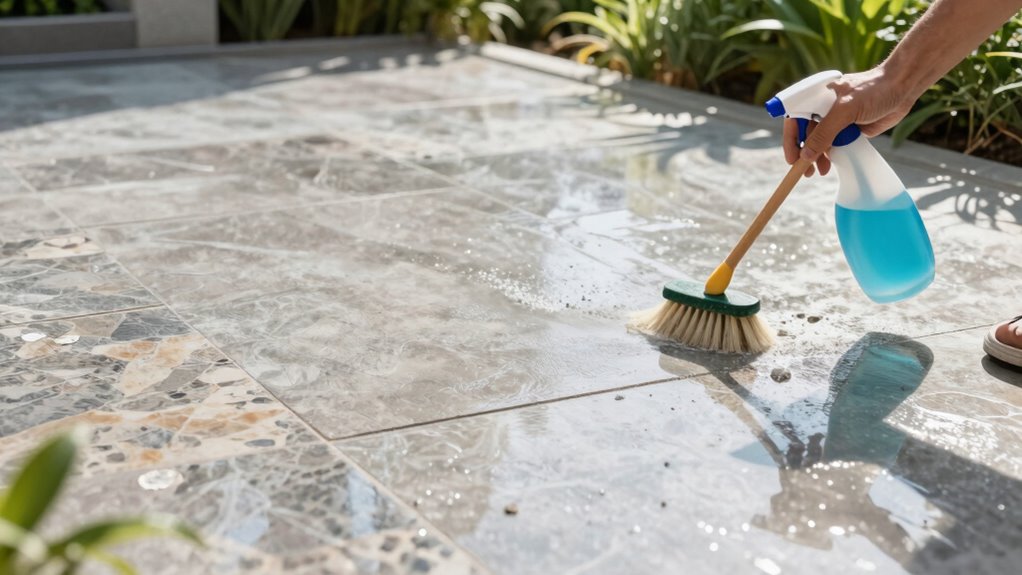

To maintain outdoor stone, concrete, and porcelain surfaces, clean them regularly with gentle cleaners and a soft brush. Seal stone and concrete surfaces every few years to protect against weather damage, but porcelain usually doesn’t need sealing. Inspect your surfaces often for cracks or chips and address issues early. Protect your surfaces from harsh weather by covering them and using mats in high-traffic areas. Keep up with these practices to guarantee your surfaces stay durable and attractive—more tips follow if you want to do it right.
Key Takeaways
- Regularly clean surfaces with gentle methods, avoiding harsh chemicals to prevent damage or discoloration.
- Seal stone and concrete surfaces every few years after cleaning and ensure they are dry before sealing.
- Inspect surfaces routinely for cracks or chips and repair promptly to prevent further damage.
- Protect surfaces from harsh weather by covering during storms or winter months.
- Use protective pads and avoid dragging heavy or sharp objects across surfaces to prevent scratches and damage.
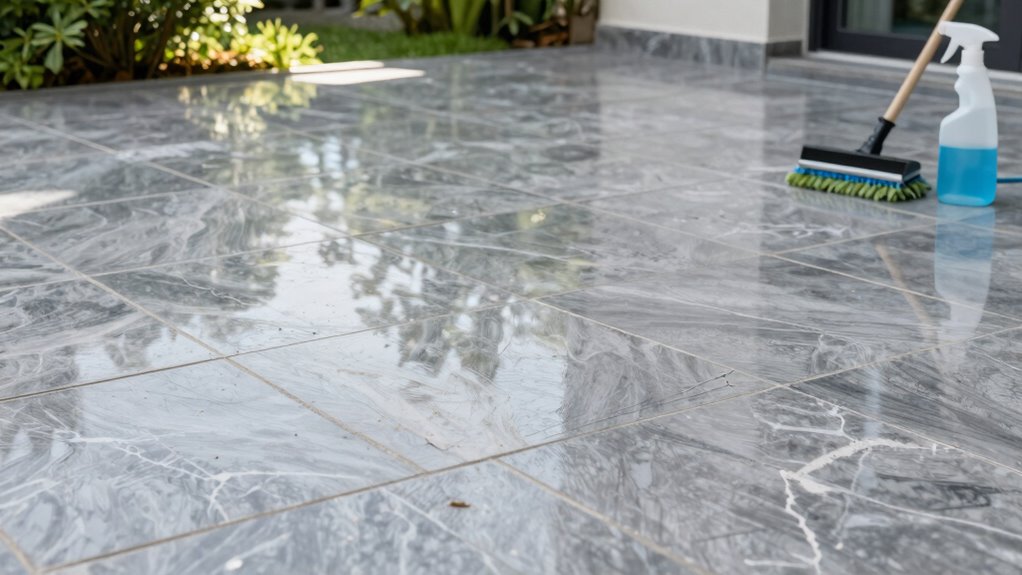
Outdoor surfaces face constant exposure to the elements, which can cause wear and deterioration over time. To keep your stone, concrete, and porcelain surfaces looking their best, you need to adopt effective maintenance practices. Regular cleaning is the first step. For stone and concrete, use a gentle scrub brush and a mixture of mild detergent and water. Avoid harsh chemicals that can etch or discolor the surface. For porcelain, a soft cloth or mop with a non-abrasive cleaner works well to remove dirt and stains without scratching. Pay close attention to stubborn spots like algae, moss, or grease, and treat them with specialized cleaning techniques such as diluted vinegar solutions or commercial outdoor cleaners. Rinsing thoroughly afterward ensures no residue remains that could attract further dirt or cause damage.
Once the surfaces are clean, consider sealing procedures to protect against future staining and degradation. Sealing creates a barrier that repels water, dirt, and other contaminants, extending the lifespan of your outdoor surfaces. For stone and concrete, apply a high-quality penetrating sealer following the manufacturer’s instructions. Typically, you’ll want to guarantee the surface is completely dry before sealing, and you might need to reapply the sealer every few years depending on foot traffic and weather exposure. Porcelain surfaces, which are less porous, generally don’t require sealing, but it’s a good idea to check with the manufacturer’s recommendations. If sealing is necessary, use a product specifically designed for porcelain to avoid any surface damage. Proper surface preparation is essential to ensure the effectiveness of the sealant and prevent issues down the line. Regularly inspecting your surfaces can also help identify the importance of material properties that influence maintenance techniques and sealing needs. Additionally, understanding how different climate conditions affect your surfaces can help tailor your maintenance schedule more effectively.
In addition to cleaning and sealing, routine inspections help identify early signs of damage such as cracks, chips, or discoloration. Address these issues promptly to prevent further deterioration. For concrete and stone, small cracks can often be filled with an appropriate repair compound, while larger damages may require professional intervention. When it comes to preventing damage, avoid dragging heavy furniture or sharp objects across your surfaces, and consider using mats or pads in high-traffic areas. Protecting your outdoor surfaces from harsh weather—like covering them during storms or winter—also prolongs their appearance and structural integrity. Using protective coatings or weatherproofing techniques can further enhance their resistance to environmental damage. Regular maintenance, combined with proper cleaning techniques and sealing procedures, ensures your stone, concrete, and porcelain surfaces remain durable, attractive, and functional for years to come.
As an affiliate, we earn on qualifying purchases.
Frequently Asked Questions
How Often Should I Reseal Outdoor Stone Surfaces?
You should reseal outdoor stone surfaces every 1 to 3 years, depending on sealing frequency and exposure to weather. Regular resealing helps maintain surface longevity by protecting against stains, moisture, and wear. Keep an eye on the surface’s appearance; if water no longer beads or it looks dull, it’s time to reseal. Proper maintenance guarantees your stone surfaces stay beautiful and durable over time.
What Are Natural Remedies for Removing Stains From Concrete?
Stains on concrete are as stubborn as a mule, but natural cleaning methods can work wonders. To remove stains, try a paste of baking soda and water, gently scrubbing the area, or apply white vinegar for organic stains. For oil or grease, sprinkle baking soda, let it sit, then scrub with a brush. These natural stain removal tips are eco-friendly and effective, keeping your concrete looking fresh without harsh chemicals.
Can I Use Pressure Washers on All Outdoor Surfaces?
Yes, you can use power washing on many outdoor surfaces, but you should be cautious to avoid damage. Use gentle pressure settings to prevent surface erosion and preserve the material’s integrity. Power washing is effective for cleaning concrete and stone but may harm delicate porcelain surfaces. Always test a small area first, and follow proper techniques to guarantee surface preservation while removing dirt, grime, and stains effectively.
How Do Weather Conditions Affect Outdoor Surface Maintenance?
Weather conditions considerably impact outdoor surface maintenance. Climate impact means that in humid areas, you’ll see quicker mold and mildew growth, requiring more frequent cleaning. Seasonal effects like freezing temperatures can cause cracks and surface damage, making repairs essential before winter. Hot, sunny weather can lead to surface fading and deterioration, so regular sealing and cleaning are necessary to preserve your outdoor surfaces. Adapting your maintenance routine to these conditions keeps surfaces in top shape.
Are There Eco-Friendly Cleaning Options for Outdoor Porcelain?
Yes, there are eco-friendly cleaning options for outdoor porcelain that you can use for porcelain maintenance. You might try a mixture of mild dish soap and warm water or use vinegar diluted with water, both gentle and environmentally safe. These solutions effectively clean without damaging the surface or harming the environment. Regular sweeping and rinsing also help maintain outdoor porcelain, keeping it looking fresh while using eco-friendly methods.
As an affiliate, we earn on qualifying purchases.
Conclusion
To keep your outdoor surfaces looking their best, stay consistent with cleaning, sealing, and inspecting. Regularly remove dirt, prevent stains, and address damage promptly. Protect your stone, concrete, and porcelain by applying appropriate sealants and avoiding harsh chemicals. Maintain their beauty by being proactive, attentive, and gentle. Because when you care for your surfaces, you preserve their durability, enhance their appearance, and enjoy your outdoor space for years to come. Consistency, care, and attention—your surfaces will thank you.
porcelain outdoor cleaning brush
As an affiliate, we earn on qualifying purchases.
As an affiliate, we earn on qualifying purchases.
weatherproof outdoor surface cover
As an affiliate, we earn on qualifying purchases.
As an affiliate, we earn on qualifying purchases.