
When smoking with wood chunks and chips, choose woods that match your food’s delicate flavors. For seafood and cheese, go for alder or fruit woods like apple or peach for mild, sweet aromas. Use maritime smoke for salty ingredients or fish, and soak your chips beforehand to produce cooler, longer-lasting smoke. Combining the right wood type with proper technique creates balanced, flavorful pairings that elevate your dishes—exploring these tips helps you craft perfect smoky flavors every time.
Key Takeaways
- Match mild woods like alder and apple with delicate foods such as seafood and cheese for subtle, balanced flavors.
- Use maritime smoke to enhance salty, briny ingredients like seafood, emphasizing oceanic notes.
- Pair fruity woods like pear or peach with fish, poultry, or aromatic cheeses to add sweet, aromatic complexity.
- Soak wood chips to produce longer, cooler smoke streams that preserve delicate textures and prevent overpowering flavors.
- Select seasoned, dry wood chunks or chips to ensure steady smoke production and optimal flavor infusion.
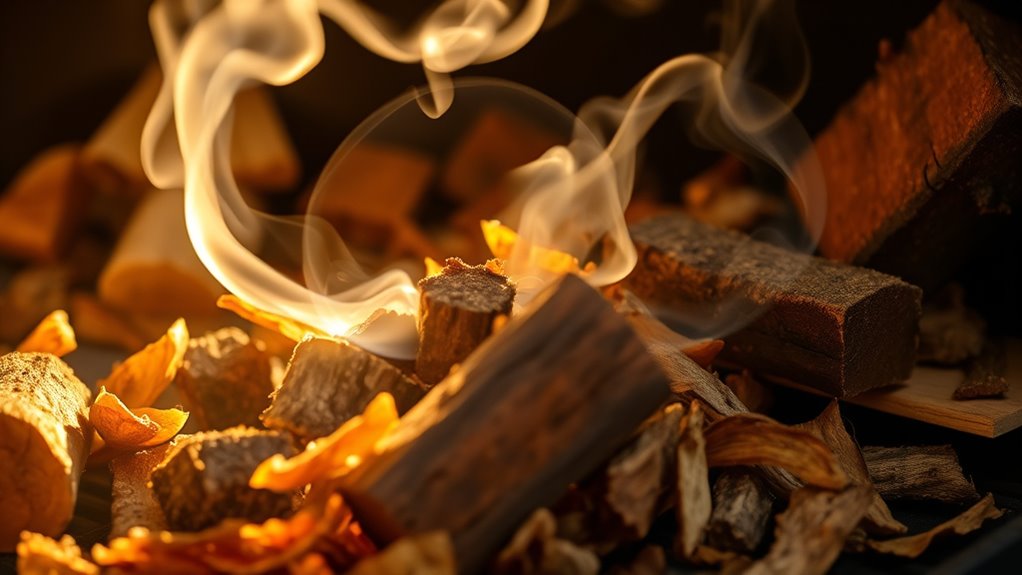
Smoking with wood chunks and chips is an excellent way to add rich, smoky flavors to your grilled or smoked foods. When you’re exploring flavor pairings, understanding the different types of smoke can elevate your culinary game. Maritime smoke, for example, evokes the essence of the sea, often imparting a slightly salty, briny note that pairs beautifully with seafood like salmon or shrimp. If you’re aiming for a subtle, refined smoky taste, cold smoking is your best approach. It involves smoking at temperatures below 90°F, allowing the smoke to infuse foods gently without cooking them, which preserves delicate textures and flavors.
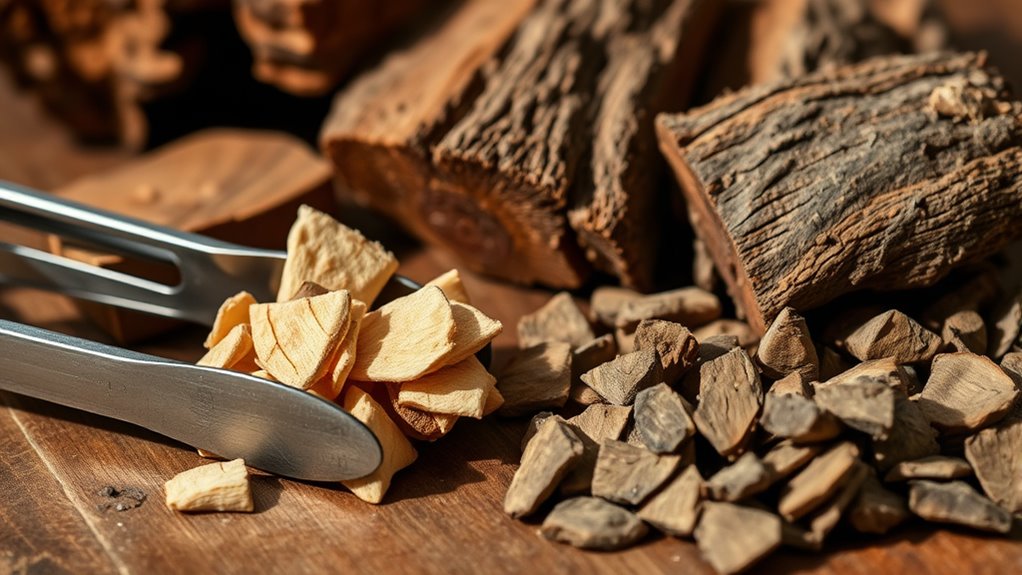
Cold smoking is especially popular with cheeses, cured meats, and fish. When you’re cold smoking, you rely on wood chips or chunks to produce a steady stream of cool, flavorful smoke. For maritime-inspired flavors, woods like alder and apple are excellent choices. Alder, in particular, has a mild, slightly sweet profile that complements seafood without overpowering it, making it a classic choice for cold smoking salmon or scallops. Apple wood, on the other hand, imparts a subtly sweet, fruity aroma that enhances the natural flavors of fish and even poultry.
Alder and apple woods are perfect for cold smoking seafood and poultry with a mild, sweet aroma.
In terms of flavor pairings, the key is matching the intensity of the smoke with the food’s delicacy. For seafood, soft woods like alder, apple, or cherry are ideal because they produce a gentle, maritime smoke that doesn’t overshadow the intrinsic taste of the seafood. If you’re experimenting with cold smoking cheese, try using fruit woods like pear or peach, which contribute a sweet, aromatic smoke that adds complexity without overwhelming the cheese’s creamy texture. Additionally, choosing seasoned, dry wood ensures steady smoke production and reduces bitterness, making your smoky creations even better.
When you’re selecting wood for cold smoking, always choose seasoned, dry wood to guarantee steady smoke production and reduce bitterness. Soaking chips beforehand can help produce a longer, cooler smoke, perfect for maritime flavors. Remember, the goal with cold smoking is to infuse the food with subtle smoky notes, so keep the smoke thin and steady, and don’t rush the process. By pairing the right woods with the appropriate foods and techniques, you’ll create flavor profiles that are both authentic and memorable. Whether you’re aiming for the salty tang of maritime smoke or the delicate touch of cold smoking, understanding these pairings allows you to craft dishes that truly delight the palate.
Top picks for "smok wood chunk"
Open Amazon search results for this keyword.
As an affiliate, we earn on qualifying purchases.
Frequently Asked Questions
How Long Do Wood Chunks and Chips Typically Last During Smoking?
Wood chunks usually last about 1 to 2 hours during smoking, depending on their size and the heat level. Chips burn faster, typically lasting 20 to 30 minutes. You should monitor your wood consumption and smoking duration to maintain consistent flavor and temperature. To extend smoking time, add new chunks or chips gradually, ensuring a steady supply of smoky flavor without over-smoking your meat.
Can I Mix Different Wood Types for Unique Flavor Profiles?
Ever thought about blending different wood types for a richer flavor? Yes, you can mix wood types to create unique wood flavor combinations that enhance your smoked dishes. Mixing wood types allows you to balance smoky intensity and develop complex flavors, like pairing hickory with apple for a sweet and smoky profile. Experimenting with wood flavor combinations gives you control over your smoker’s taste, making every smoked meal uniquely yours.
Are There Any Safety Concerns When Using Certain Woods?
Yes, you should be aware of potential safety concerns when using certain woods. Some woods have high wood toxicity, which can release harmful chemicals when burned. Always verify proper ventilation to reduce smoke inhalation risks, and avoid woods like green or treated lumber, which may contain toxins. Stick to safe, recommended woods like hickory, apple, or cherry, and always research before adding new types to your smoker.
How Do I Store Unused Wood for Future Smoking Sessions?
You should store your unused wood in a cool, dry place to keep it fresh for future smoking sessions. Use a breathable container, like a cardboard box or paper bag, to prevent moisture buildup. Proper wood storage guarantees your reusable wood stays dry and ready to ignite, maintaining good flavor. Avoid storing wood in plastic or damp areas, as these can cause mold or decay, reducing its effectiveness.
What Are Common Mistakes to Avoid When Using Wood Chunks and Chips?
When using wood chunks and chips, avoid common mistakes like overloading your smoker, which can cause dangerous flare-ups or uneven smoke. Always prioritize wood smoking safety by using the right type for your meat, ensuring wood flavor compatibility. Don’t soak chips excessively, as it can create excessive steam rather than flavorful smoke. Monitor your airflow and temperature to prevent bitterness or harsh flavors, and always stay attentive during your smoking session.
Conclusion
Just as a master painter blends colors to create a masterpiece, choosing the right wood chunks and chips lets you craft unforgettable flavors. Your smoking journey is an art, where each wood pairing adds depth and character, revealing the soul of your meat. Remember, as with life itself, it’s about harmony and patience—trust the process, and your culinary canvas will tell a story worth savoring. Let the smoke be your brush, and flavor your masterpiece.