When choosing a fire feature, consider if you want ambiance or cooking capabilities. Fire pits and fireplaces add visual appeal but aren’t meant for food prep, while built-in grills and specialized stations focus on cooking. Safety is key, so guarantee proper barriers, ventilation, and stable surfaces. Fuel types like wood or gas have different safety and air quality impacts. Keep these factors in mind to create a safe, enjoyable outdoor space—more tips can help you make the best choice.
Key Takeaways
- Determine if the primary purpose is aesthetic ambiance or cooking, as this influences design and safety considerations.
- Cooking fires require stable surfaces, access to utensils, and proper ventilation for safety and efficiency.
- Fire features for ambiance focus on visual appeal and may generate less heat, emphasizing safety barriers.
- Fuel choice impacts safety and heat control; gas is cleaner and more controllable, while wood produces more heat and smoke.
- Follow local regulations and safety practices to ensure fire features are appropriately designed and maintained for their intended function.
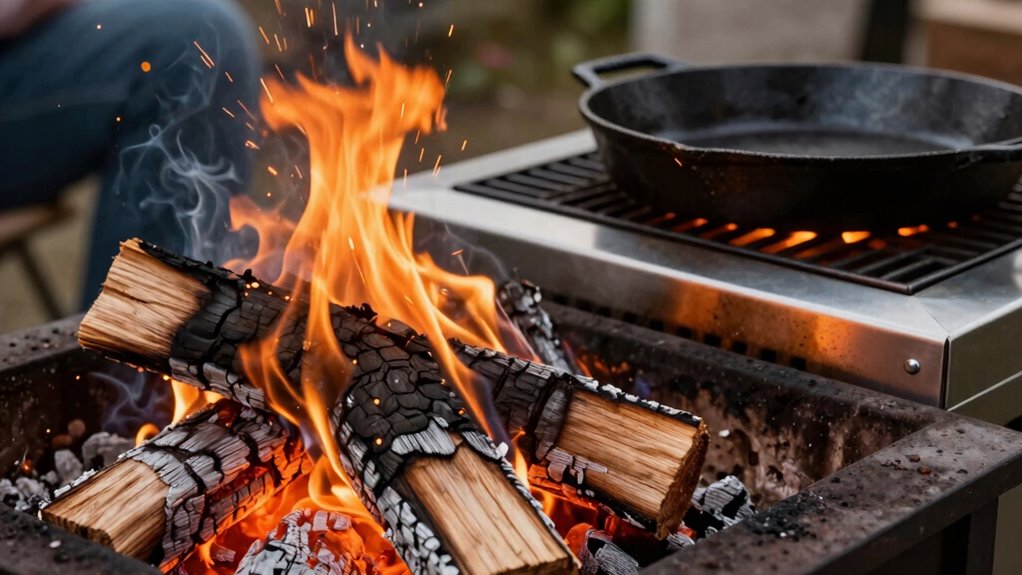
When designing or using outdoor fire features, it’s important to distinguish between their aesthetic or ambiance value and their practical role in cooking. This distinction helps you prioritize safety and functionality. Fire safety is paramount, especially when installing or operating any fire feature. You need to consider clear space around the fire, proper barriers, and materials that won’t easily catch fire. Always follow local regulations and manufacturer instructions to prevent accidents. Understanding fuel types is equally vital. Different fuels—such as wood, propane, or natural gas—affect not only how you use the fire but also its safety profile. Wood fires tend to produce more smoke and embers, which require careful management and adequate ventilation. Propane and natural gas are cleaner-burning and easier to control, but they demand appropriate connections and safety checks to prevent leaks or explosions.
When thinking about fire features versus cooking heat, ask yourself what your primary goal is. If you want a cozy ambiance or a visual centerpiece, decorative fire pits or fireplaces with intricate designs are ideal. These features often prioritize aesthetics and may not generate consistent or high heat suitable for cooking. They’re perfect for gathering and creating atmosphere but aren’t meant for preparing meals. On the other hand, if cooking is your focus, you should look into features designed explicitly for that purpose. Built-in grills, fire pits with adjustable grates, or specialized cooking stations provide better control over heat levels, making your cooking experience safer and more efficient.
Controlling fire safety becomes especially important when using fire features for cooking. You need stable surfaces, easy access to water or fire extinguishers, and proper ventilation. For aesthetic fires, safety still matters—regardless of whether you’re using wood or gas, ensure that sparks or embers aren’t likely to ignite nearby combustible materials. When choosing fuel types for cooking fires, consider how they influence fire safety. Wood fires need careful tending, and you must avoid overloading the fire with too much wood, which can cause dangerous flare-ups. Gas fuels, while cleaner and easier to ignite, require regular checks for leaks and proper shutoff valves. Additionally, understanding the air quality implications of different fuels can help you make safer choices, especially in enclosed or poorly ventilated spaces. Proper fire management techniques are also essential to prevent unintended accidents and ensure a safe outdoor environment.
Furthermore, being aware of local regulations related to fire features can help you stay compliant and avoid fines or hazards. Educating yourself on the proper fire extinguisher placement and usage can significantly reduce risks during fire-related incidents. Incorporating safety precautions such as fire-resistant mats and wind shields can further enhance overall safety during outdoor fire use.
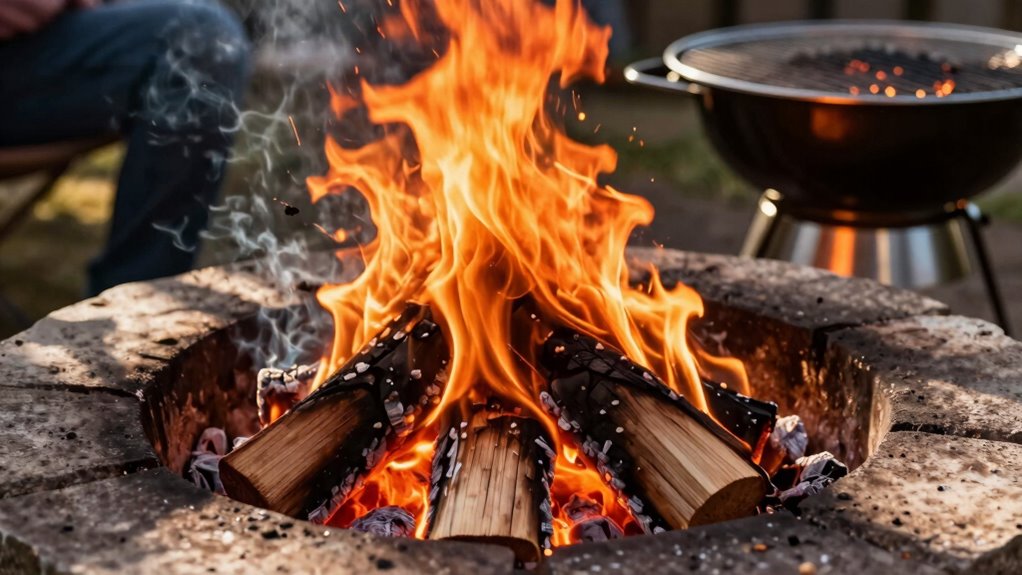
outdoor fire pit with safety barrier
As an affiliate, we earn on qualifying purchases.
As an affiliate, we earn on qualifying purchases.
Frequently Asked Questions
Can Fire Features Be Used for Cooking Purposes?
Yes, fire features can be used for cooking purposes, but you need to take into account fire feature aesthetics and cooking safety considerations. Make sure your fire feature is designed with a stable, heat-resistant surface and proper ventilation. Keep a fire extinguisher nearby, and never leave the fire unattended while cooking. By balancing beauty with safety, you can enjoy your fire feature for both ambiance and cooking, making it a versatile addition to your outdoor space.
How Does Airflow Affect Fire Feature Design?
Airflow dramatically influences fire feature design, shaping its safety and efficiency. You must consider ventilation dynamics carefully, ensuring enough oxygen reaches the fire for ideal combustion efficiency. Poor airflow can turn your fire feature into a smoke monster, constantly choking your space. Proper design maximizes airflow, creating a steady, clean burn, and avoiding dangerous backdrafts. Think of airflow as the heartbeat of your fire feature—vital for safety and performance.
Are There Safety Concerns With Combining Fire Features and Cooking?
Yes, combining fire features and cooking can pose safety concerns. You need to be aware of potential fire hazards, such as flare-ups or accidental ignition, especially if flammable materials are nearby. Additionally, maintenance challenges arise because grease, food spills, or ash can accumulate, increasing risk. Regular inspection and cleaning are essential to guarantee safe operation. Proper placement, sturdy construction, and adherence to safety standards help minimize these risks and ensure enjoyable, worry-free use.
What Materials Are Best for Fire Feature Construction?
You should choose fireproof materials like firebrick, concrete, and stone for constructing fire features. These materials offer high thermal resistance, ensuring safety and longevity. Opt for structures with good structural durability to withstand heat and weather conditions over time. Avoid flammable materials such as wood or plastics near the fire area. By selecting the right fireproof and durable materials, you create a safe, lasting, and visually appealing fire feature.
How Do Fire Features Influence Outdoor Ambiance?
Imagine a fire pit as the heart of your outdoor space, casting a warm glow that symbolizes comfort and connection. Its placement is key; position it to promote intimate conversations. The flickering flames serve as natural ambient lighting, creating a cozy, inviting atmosphere. As the fire dances, it transforms your yard into a sanctuary, encouraging relaxation and making every evening feel special.
As an affiliate, we earn on qualifying purchases.
Conclusion
Understanding the difference between fire features and cooking heat helps you create safer, more effective outdoor experiences. Did you know that outdoor fire pits can reach temperatures over 1,000°F, making them both beautiful and potentially dangerous? By properly managing your fire features and controlling cooking heat, you guarantee safety without sacrificing enjoyment. Remember, a mindful approach transforms your outdoor space into a warm, inviting, and safe haven for everyone.
As an affiliate, we earn on qualifying purchases.
As an affiliate, we earn on qualifying purchases.