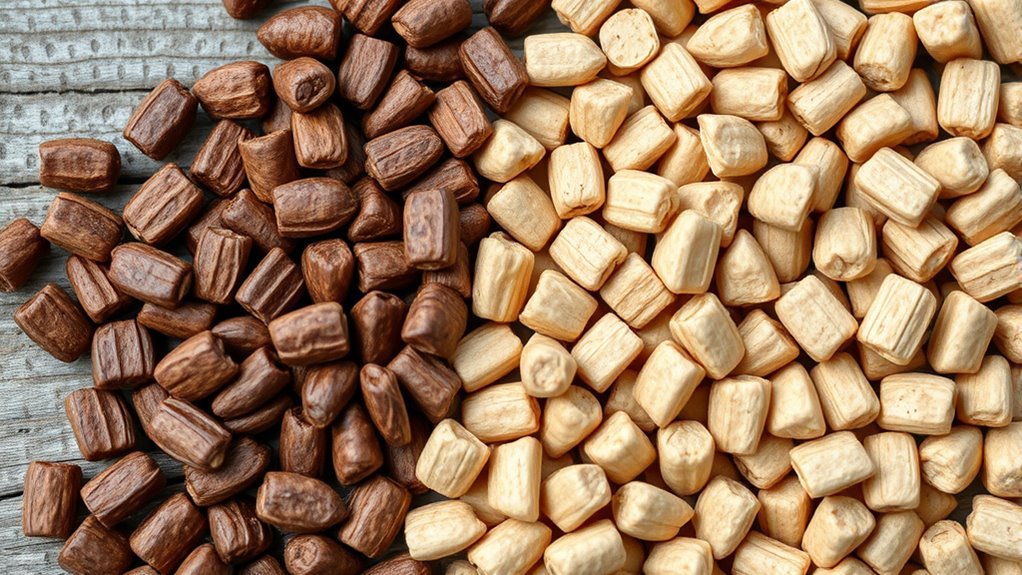

Hardwood pellets come from dense tree species like oak and maple, offering higher heat output and longer burn times, making them ideal for efficient, sustained heating. Softwood pellets, derived from faster-growing trees like pine and spruce, ignite quickly and burn faster but produce slightly less heat. Both types are environmentally friendly when sourced responsibly but differ in density and burn characteristics. To discover which pellet variety best suits your needs, explore further details below.
Key Takeaways
- Hardwood pellets are denser, produce higher heat, and burn longer than softer, less dense softwood pellets.
- Softwood pellets ignite quickly and are ideal for short-term heating, while hardwoods provide sustained, efficient heat.
- Hardwood pellets are generally more sustainable due to slower growth and responsible sourcing compared to faster-growing softwoods.
- Softwood pellets are typically less expensive and more widely available, but may have a slightly lower heat output.
- Both pellet types reduce reliance on fossil fuels and are environmentally friendly when responsibly sourced.
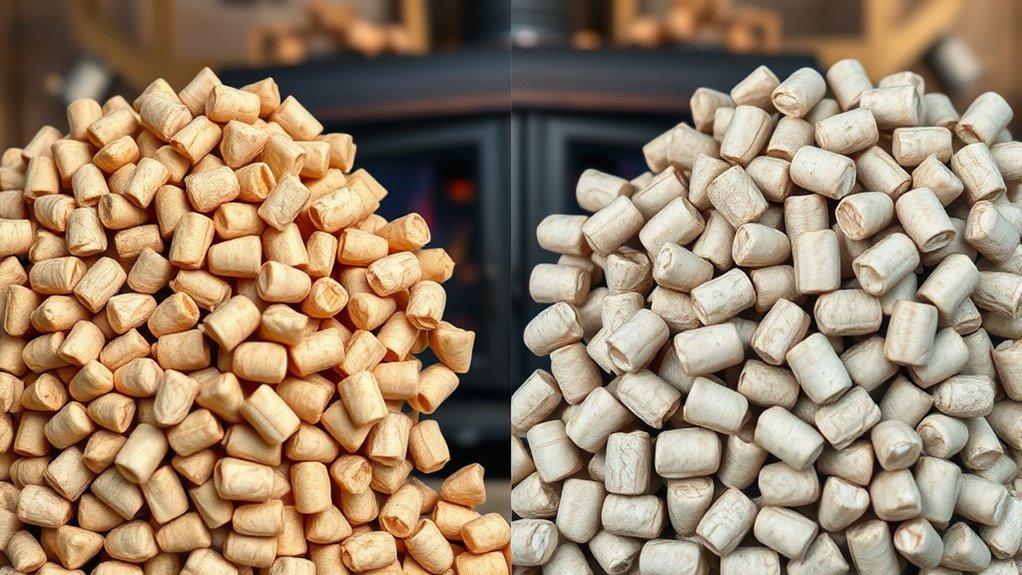
Pellet fuel offers a versatile and efficient heating option, with many varieties designed to suit different needs and preferences. When choosing between hardwood and softwood pellets, understanding their environmental impacts and manufacturing processes can help you make an informed decision. Hardwood pellets are made from denser tree species like oak, maple, or hickory. These woods tend to produce a higher heat output and longer-lasting combustion, making them a popular choice for those seeking efficient heating. The manufacturing process for hardwood pellets involves grinding the wood into fine material, then compressing it under high pressure without adding binders or adhesives. This process creates a dense, uniform pellet that burns cleanly and efficiently. Because hardwoods are generally more sustainable and grow slower than softwoods, their environmental impact can be lower, especially if sourced responsibly. Using hardwood pellets reduces the need for fossil fuels and helps decrease greenhouse gas emissions, aligning well with eco-conscious priorities.
Softwood pellets, on the other hand, come from trees such as pine, spruce, or fir. These species are typically faster-growing and more abundant, which makes softwood pellets a more accessible and often less expensive option. The manufacturing process for softwood pellets is similar to that of hardwoods—grinding and compressing without added binders—but the resulting pellets tend to be less dense, leading to a slightly lower heat output. Softwood pellets are known for their easy ignition and quick burn, making them convenient for short-term heating needs. From an environmental perspective, softwoods often have a slightly higher impact because they are harvested more rapidly, and their faster growth can sometimes lead to overharvesting if not managed sustainably. However, when sourced responsibly, softwood pellets can also be an environmentally friendly option. Both types of pellets, regardless of wood origin, generally boast low emissions compared to traditional fossil fuels, but their environmental impacts are closely tied to sustainable harvesting and manufacturing practices.

Hardwood Oak Heating Pellets
Made in the USA from 100% kiln-dried oak fiber
As an affiliate, we earn on qualifying purchases.
As an affiliate, we earn on qualifying purchases.
Frequently Asked Questions
Are Hardwood or Softwood Pellets More Environmentally Sustainable?
Hardwood pellets are more eco-friendly because they come from sustainably harvested, dense trees that promote responsible forest management. They burn longer and more efficiently, reducing waste and emissions. Softwood pellets, while also renewable, often involve less sustainable harvesting practices. By choosing hardwood, you support eco-friendly harvesting and renewable resource management, helping minimize environmental impact and make certain forests stay healthy for future generations.
How Does Pellet Fuel Cost Compare to Other Heating Options?
You’ll find pellet fuel costs beat traditional heating options like oil or electric, making your wallet breathe a sigh of relief. With better fuel efficiency, you get more warmth per dollar, and installation costs are surprisingly modest. Sure, upfront expenses might scare you, but long-term savings and consistent heat make pellets a sensible choice. Plus, you can brag about your eco-friendly, budget-savvy heating method—who knew saving money could be this fun?
Can Hardwood and Softwood Pellets Be Mixed Safely?
Yes, you can safely blend hardwood and softwood pellets, but you should consider blend safety and storage precautions. Mix only compatible pellets to avoid combustion issues, and store them in a dry, well-ventilated area to prevent moisture absorption. Always check manufacturer guidelines, as some pellet types may have different burn characteristics. Proper blending can optimize heat output and efficiency, but safety precautions are essential to prevent clogging or damage to your stove.
What Is the Shelf Life of Pellet Fuels?
Pellet fuel typically lasts about 6 to 12 months if stored properly. To maximize shelf life, you should store pellets in a cool, dry place, away from humidity and direct sunlight. Use airtight containers or sealed bags to prevent moisture absorption. Proper storage tips help extend the shelf life, ensuring your pellets stay dry and burn efficiently when you need them. Regularly check your storage area to maintain ideal conditions.
Are There Any Health Risks Associated With Pellet Fuel Emissions?
Yes, there are health risks associated with pellet fuel emissions. When you burn pellets, indoor air quality can decline due to fine particulate matter and volatile organic compounds released during combustion. These emissions can affect your respiratory health, causing irritation or long-term issues if you’re exposed regularly. To protect yourself, make certain of proper ventilation and use high-quality pellets to minimize harmful emissions and maintain a healthier indoor environment.
Hardwood Oak Heating Pellets
Made in the USA from 100% kiln-dried oak fiber
As an affiliate, we earn on qualifying purchases.
As an affiliate, we earn on qualifying purchases.
Conclusion
Choosing between hardwood and softwood pellets is like picking the right brush for a masterpiece—you want what best suits your needs. Hardwood pellets offer higher energy density and longer burn times, making them ideal for warmth and efficiency. Softwood pellets burn quickly but are great for short-term heating. Ultimately, your choice shapes the comfort of your home, so weigh your priorities carefully—like a craftsman selecting tools for a perfect finish.

Realcook Natural Fire Starter for Campfires: All Weather Firestarters – Odorless Charcoal Starters for Grill | Fire Pit | Indoor Fireplaces | BBQ | Wood Stove | Smoker – 72 Counts
Quick and Easy to Use: These fire starters for fireplaces ignite instantly, offering a hassle-free solution for your…
As an affiliate, we earn on qualifying purchases.
As an affiliate, we earn on qualifying purchases.

Pit Boss 40 lb Hickory Blend Hardwood Pellets
No artificial flavors, spray scents, glues or chemicals
As an affiliate, we earn on qualifying purchases.
As an affiliate, we earn on qualifying purchases.