TL;DR

Get garden gear delivered free with Prime
- Fast, free delivery on millions of items
- Prime Video, Amazon Music and more included
- Member-only deals all year
Propane patio heaters burn liquefied petroleum gas (LPG) to produce heat, mostly warming people and nearby surfaces through radiant heat. Their real-world comfort depends on wind, placement, burner output, and distance, so treat advertised coverage as an estimate. Use outdoor models only outdoors, follow the manual and local fire rules, and keep people and combustible materials clear of hot parts.
One cold gust can turn a comfortable patio dinner into a hunt for coats. A propane patio heater can help, but its tall flame and warm glow do not heat an outdoor space like a furnace warms a room. It sends radiant heat toward people and nearby surfaces, and the breeze can carry that comfort away.
This guide explains how propane patio heaters work, what affects their warmth and fuel use, and how freestanding, tabletop, and wall-mounted models fit different spaces. You’ll also find practical setup and maintenance advice, including the safety rules that matter around combustion gases, hot surfaces, children, and pets.
Whether you’re comparing heaters for a small balcony or a restaurant patio, the key facts and most important aspects are the same: match the model to the layout, check the instructions and local rules, and plan for the weather. A little care before you light it can make a chilly evening feel more inviting.
Propane patio heaters use LPG and mostly warm people and nearby surfaces through radiant heat.
Treat advertised coverage as approximate; wind, distance, placement, and reflector design affect comfort.
A larger cylinder can extend runtime, but it does not increase burner heat output.
Use outdoor heaters only outdoors in well-ventilated spaces, following the product manual and local fire rules.
Inspect and maintain the heater as directed, and keep children, pets, and combustible materials away from hot parts.
How Propane Patio Heaters Turn Fuel Into Warmth
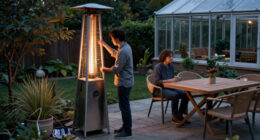
Propane patio heaters burn liquefied petroleum gas (LPG) to produce heat, which many freestanding models direct toward people with a burner and reflector. The burner creates hot combustion products, and the reflector sends radiant heat downward and outward. You feel that energy on your skin and on nearby surfaces, much like stepping into a patch of afternoon sun.
That means the heater does not warm every cubic foot of outdoor air evenly. On a calm evening, you might feel comfortable sitting several feet from a heater; in a gusty courtyard, the same seat may feel cool because moving air carries warmth away. A heater’s advertised coverage area is a guide, not a guarantee. This distinction matters when planning seating: warming a few occupied spots can be practical, while expecting one unit to raise the temperature of an entire open patio can lead to disappointment and unnecessary fuel use.
Output is usually listed in BTU per hour (BTU/h). A higher figure can mean more heat from the burner, but the reflector’s design, the wind, and the distance between the heater and your chair all shape the result. If you’re hosting dinner, place the heater where several seats can benefit while maintaining every clearance the manual specifies. More output may help a larger seating group, but it can also mean faster fuel consumption; the useful comparison is comfort at the seats you intend to warm, not the largest number on the label.
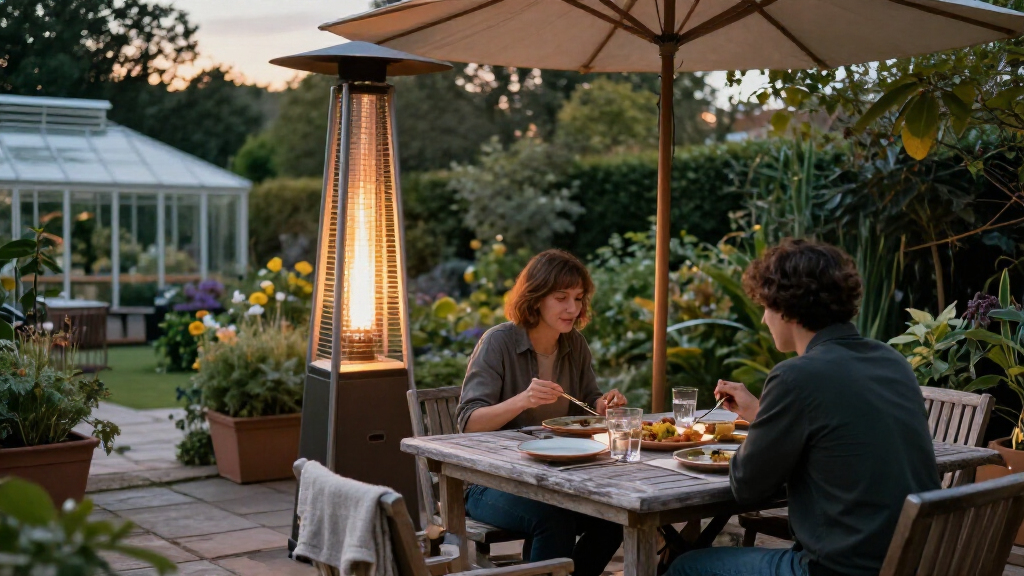
For example, one heater at the edge of a four-person table may warm the nearest diners while leaving the far side cool. A second heater could improve comfort, but only if the layout allows safe spacing and stable placement. Think of heat as a focused pool of light, not a blanket that covers the whole patio. That mental model helps you decide whether repositioning a seat or adding another approved unit would be more useful than simply choosing a higher-output burner.
Products Worth Considering

Orbit B-hyve XR 16-Zone Indoor/Outdoor Smart Sprinkler Timer

Orbit B-hyve Smart Indoor/Outdoor 12-Zone Sprinkler Controller

Solo Stove Pi Prime Portable Propane Pizza Oven
As an affiliate, we earn on qualifying purchases.
Choose a Heater Shape That Fits Your Patio
Freestanding heaters suit open patios and outdoor dining areas, while tabletop models trade output for portability and wall-mounted units save floor space. The right choice depends on where people sit, how much room you have, and whether the location can safely support the specific model. Commercial models may suit larger venues, but their intended use and installation rules still matter. The shape affects more than appearance: it determines where heat can reach, what space the equipment occupies, and how carefully it must be installed or moved.
A freestanding model can serve a seating group or outdoor table, but its footprint and height call for a stable location away from traffic. A tabletop heater is easier to move between seating spots, though you should not assume it can heat as wide an area as a larger unit. Its portability is useful when needs change, but moving it during use or placing it on an unstable surface can create hazards. Wall-mounted heaters leave the floor clear, but you must follow the maker’s mounting requirements and clearances for that exact product. A fixed installation saves walking space while limiting where you can direct the heat later.
Compare the options before buying:
| Type | Often suits | What to check |
|---|---|---|
| Freestanding | Open patios and outdoor dining | Stable base, placement, and required clearances |
| Tabletop | Small seating groups or portable use | Output, compatible fuel cylinder, and stability |
| Wall-mounted | Areas where floor space is limited | Approved mounting surface and installation instructions |
Picture a narrow balcony with a bistro table: a tall freestanding heater may crowd the walkway, while a compact option could suit the seating area if the product instructions allow that setup. In a restaurant courtyard, staff may prefer a fixed layout with several heaters rather than moving equipment between tables. Let the space and safe installation guide your choice. In either setting, weigh convenience against coverage: a portable heater can adapt to changing plans, while a fixed heater can keep a predictable area clear and warm.
Estimate Tank Runtime Without Guessing
A propane tank’s runtime depends on its size, the heater’s fuel consumption, and the burner setting; a 20-pound cylinder is common for portable models, but it may not be included with your purchase. Check the product listing and manual for fuel use at each setting. Tank size affects how long the heater can run, while the burner and heater design determine its heat output. In practice, this means runtime is a planning estimate: actual use varies if you change settings, and a larger cylinder buys more operating time rather than more warmth per hour.
Imagine using a heater on low during a calm autumn dinner, then turning it up when the wind picks up. That change can affect how quickly the cylinder empties, so a single runtime estimate may not match every evening. If you have a long event planned, use the manual’s consumption figures to estimate fuel needs rather than relying on a general claim. Planning for the higher setting you might actually use helps avoid running out mid-evening, though keeping spare fuel also requires safe, compliant storage.
Before you buy, check what comes with the heater and how you can obtain or exchange a compatible cylinder in your area. Follow the cylinder label and local requirements for refilling, transport, and storage. Keep the cylinder upright and secured as the heater’s instructions direct. Compatibility and local availability matter because an inexpensive heater can be inconvenient to operate if its cylinder is difficult to source or exchange.
Fuel is also part of the operating cost. Include propane refills and upkeep alongside the purchase price when comparing options. Burning propane produces carbon emissions, so a portable heater offers convenience at a tradeoff; where you have a suitable electrical supply, an electric infrared model may fit your needs better. Electric heat avoids on-site propane combustion and cylinder handling, but depends on an appropriate power source and may have different operating costs. The best choice depends on your site, local rules, energy costs, and how often you plan to heat the patio.
Set Up Your Heater Safely Before Lighting It
Use an outdoor propane patio heater only outdoors in a well-ventilated space, and follow both the product manual and local fire rules. Propane combustion produces gases that include carbon monoxide, so never use an outdoor model in a home, garage, tent, or enclosed or poorly ventilated area. An open door or a partly open tent flap does not make an indoor setup safe. Carbon monoxide can be dangerous because it is odorless, and a seemingly comfortable space gives no reliable indication that combustion gases are dispersing adequately.
Before lighting the heater, check the required clearances around buildings, ceilings, awnings, curtains, furniture, and other combustible materials. Requirements vary by model, especially above the heater, so do not rely on a rule of thumb. If a covered patio or gazebo is under consideration, use it only when the manual and local rules explicitly allow that installation and spell out adequate ventilation and clearances. Overhead materials can trap heat or ignite, so a roof that seems high enough by eye is not a substitute for the specified clearance.
Set the heater on a firm, level surface with its base stable. Keep children and pets at a safe distance: hot surfaces and combustion components can burn or injure them. For example, put the heater outside the path from a sliding door to the dining table, then supervise children and pets so no one brushes against it or the cylinder. A clear route also reduces the chance of someone knocking the heater over while carrying food or moving around in low light.
Never use an outdoor propane heater indoors, in a tent, or in an enclosed or poorly ventilated area. Carbon monoxide can build up where combustion gases cannot safely disperse.
Check the hose and connections as the manual directs. If you suspect a leak, never test with a flame; follow the manufacturer’s leak-test instructions, which may use soapy water. If a leak is suspected, shut off the supply if it is safe to do so, move away, and follow the cylinder label or emergency guidance. This matters because even a small leak can allow flammable gas to collect near the heater, where a spark or flame could ignite it.
Keep Heat Useful When the Weather Turns
Wind, placement, and distance often decide whether a propane patio heater feels effective. Moving air can carry radiant warmth away and may affect a heater’s operation, while chairs placed too far from the reflector receive less direct heat. Use the heater only in a spot where it remains stable and operates as designed. These factors explain why two patios with the same heater can feel very different: the layout and exposure change how much of the heater’s output reaches people.
For example, a heater placed at the windy edge of a deck may send warmth past the table instead of toward diners. A more sheltered location may feel better, but it still must meet the model’s clearances from walls, ceilings, and combustible materials. Never put a heater where wind could tip it or push heat toward something that can catch fire. A sheltered position can improve comfort, but safety clearances set the limits; do not solve a draft by crowding the heater against a wall or under an overhang.
Outdoor-rated equipment can still be affected by rain, corrosion, and repeated exposure. When the heater is off and fully cool, a suitable cover may help protect it if the manufacturer permits one. Check the instructions before covering or storing the heater, and handle the cylinder as its label and local rules require. Keeping moisture and debris away can reduce wear, but covering a warm heater or trapping moisture against it can create problems, so timing and the approved cover matter.
Each season, inspect for visible damage, corrosion, debris, and worn parts; check the burner, reflector, hose, regulator, and connections as the manual recommends. If your heater begins to behave differently or shows damage, stop using it until you can follow the manufacturer’s guidance. A quick inspection before a dinner party is easier than troubleshooting beside a cold table. Routine checks can catch deterioration before it affects ignition or operation, while repairs should follow the manufacturer’s service instructions so that fuel and combustion components remain safe.
Use This Quick Checklist Before You Buy
A good propane patio heater matches your space, fuel plan, and safe installation requirements. Start with where people will sit and how much room the heater needs, then compare output, fuel use, and product instructions. A large BTU/h number alone cannot tell you how warm every seat will feel. Thinking through these details together prevents a mismatch, such as buying a powerful unit that cannot be placed close enough to the seating area under its required clearances.
Say you’re choosing a heater for a small apartment patio. You might favor a compact design, but first confirm that its intended placement and cylinder arrangement work for your space and comply with the manual and local rules. For a larger outdoor dining area, you could compare several units and estimate ongoing propane costs before deciding. In both cases, the purchase price is only one part of the decision: fuel availability, installation limits, and the comfort of the actual seating spots affect how useful the heater will be.
- Measure the seating area and note wind exposure, walkways, and overhead structures.
- Choose a format—freestanding, tabletop, or wall-mounted—that suits the space and approved setup.
- Compare BTU/h and fuel use in the product manual; treat coverage claims as estimates.
- Check cylinder details, including whether one is included and how local refill, transport, and storage rules apply.
- Review safety instructions for ventilation, clearances, stability, maintenance, and any listed certifications.
Certification or a safety feature such as a tip-over shutoff can help you compare products, but neither replaces correct placement and operation. If an electrical outlet is available and local rules favor electric equipment, compare an electric infrared model as well. Your best heater is the one that fits the real patio, not the biggest number on a box. A useful final check is whether the heater’s expected comfort and ongoing effort justify its cost for the number of evenings you plan to use it.
Frequently Asked Questions
How much area can a propane patio heater warm?
It depends on the model, wind, seating layout, and how close people sit. Treat the maker’s coverage figure as an estimate: a chair in the heater’s direct radiant warmth may feel comfortable while a seat across an open, breezy patio stays cold.
How long does a 20-pound propane tank last?
Runtime depends on the heater’s fuel consumption and the burner setting. Use the model’s manual to estimate how long a full cylinder lasts at the setting you plan to use, and check the cylinder label and local rules for handling.
Can I use a propane patio heater under a covered patio or gazebo?
Only if the heater’s instructions and local rules explicitly allow that installation and specify adequate clearances and ventilation. A tall, open-sided cover does not automatically make the setup safe; check overhead clearance in particular.
Can I use an outdoor propane heater in a garage or tent?
No. Outdoor propane heaters produce combustion gases, including carbon monoxide, and must not be used indoors, in a tent, or in an enclosed or poorly ventilated space.
Are propane patio heaters safe around children and pets?
Hot surfaces and combustion components can injure them. Keep children and pets at a safe distance, supervise them while the heater operates, and place the heater so it does not block a walkway where someone might bump into it.
How should I check for a propane leak?
Follow the manufacturer’s leak-test procedure; it may call for applying soapy water to connections. Never use a flame to test. If you suspect a leak, shut off the supply if safe, move away, and follow the cylinder label or emergency guidance.
Conclusion
Choose a heater for the seats you want to warm, then check its fuel use, clearances, and operating instructions before buying. Place it on stable ground outdoors, follow local rules, and keep children, pets, and combustible materials clear.
On a calm evening, the right setup can turn a cold chair into the warmest spot on the patio. Let the manual, the layout, and the weather decide where that spot belongs.