
Switching to solar and biogas for outdoor cooking helps reduce your environmental footprint and offers sustainable, innovative fuel options. Solar cookers use sunlight to generate heat, being both portable and cost-effective, while biogas is produced from organic waste, providing a clean, renewable fuel source. Both solutions decrease greenhouse emissions and eliminate reliance on polluting fuels like charcoal. To discover more about how these eco-friendly options can transform your outdoor culinary experience, keep exploring these sustainable energy solutions.
Key Takeaways
- Solar cookers harness sunlight for efficient, eco-friendly outdoor cooking without fuel, reducing carbon emissions and operational costs.
- Biogas produced from organic waste offers a renewable, clean-burning fuel suitable for outdoor stoves and burners.
- Both solar and biogas solutions promote waste reduction, circular resource use, and lower environmental impact compared to traditional fuels.
- Solar energy provides portable, easy-to-use cooking options ideal for camping and outdoor gatherings.
- Biogas systems support off-grid areas, encouraging sustainable living through waste recycling and renewable fuel generation.
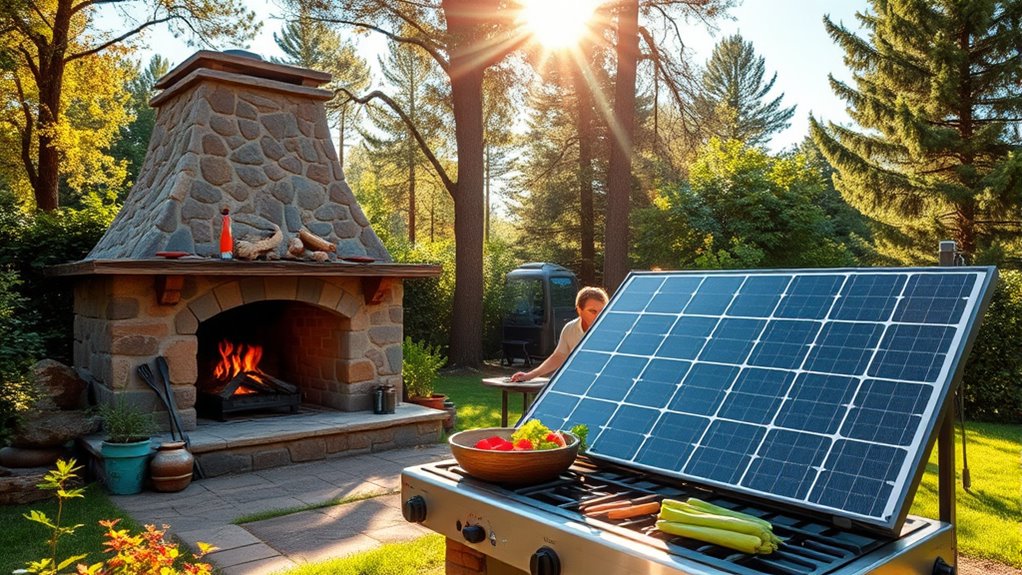
Are there viable alternatives to traditional fossil fuels that can help reduce environmental impact? Absolutely. Renewable energy sources, like solar power and biogas, are gaining traction as eco friendly alternatives for outdoor cooking. They offer sustainable solutions that cut down on greenhouse gas emissions and decrease our reliance on polluting fuels. As you look for ways to make your outdoor cooking more environmentally responsible, exploring these options can be a game-changer. Incorporating gears and mechanical elements into your cooking setup, such as solar-powered fans or mechanical biogas digesters, can enhance efficiency and add a unique steampunk-inspired aesthetic to your outdoor culinary experiences.
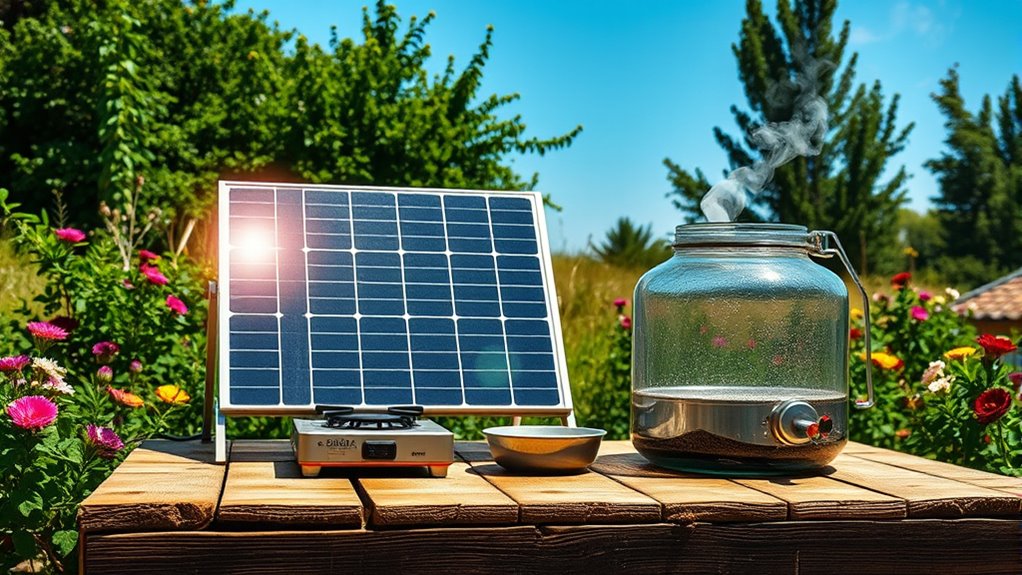
Solar energy is perhaps the most accessible renewable energy source for outdoor cooking. By harnessing sunlight with solar panels or solar cookers, you can prepare your meals without emitting any pollutants. Solar cookers are simple devices that concentrate sunlight to generate heat, allowing you to cook food efficiently and without any fuel consumption. Not only are they eco friendly alternatives, but they are also cost-effective over time, since sunlight is free and abundant. Plus, solar cookers are portable and easy to set up, making them perfect for camping, picnics, or backyard gatherings. Using solar energy minimizes your carbon footprint and helps you enjoy outdoor meals with a clear conscience.
Solar cookers are portable, cost-effective, and eco-friendly for outdoor meals.
Biogas offers another sustainable fuel option that’s gaining popularity, especially in rural or off-grid areas. Produced through the anaerobic digestion of organic waste—such as food scraps, manure, or plant material—biogas is a renewable energy source that can be used directly in gas stoves or burners. It’s a versatile and eco friendly alternative to traditional fuels like wood or charcoal, which can contribute to deforestation and air pollution. Setting up a small-scale biogas system at home allows you to convert organic waste into fuel, reducing waste disposal issues and generating clean energy for outdoor cooking. Not only does this process lower greenhouse emissions, but it also promotes a circular approach to resource use, turning waste into a valuable resource.
Both solar and biogas solutions empower you to cook outdoors more sustainably. They require some initial investment and setup but pay off in long-term environmental benefits. These eco friendly alternatives don’t just help reduce your carbon footprint—they also foster a more responsible way of living that respects the planet. As you consider your outdoor cooking options, integrating renewable energy sources like solar and biogas can markedly contribute to reducing environmental impact while still providing practical, effective ways to enjoy outdoor meals. Embracing these sustainable fuel options aligns your outdoor lifestyle with the broader goal of protecting our planet for future generations.
Top picks for "sustainable fuel option"
Open Amazon search results for this keyword.
As an affiliate, we earn on qualifying purchases.
Frequently Asked Questions
How Do Solar and Biogas Compare in Cooking Efficiency?
You’ll find that solar and biogas differ in cooking efficiency. Solar cookers often have slower cooking speeds but provide consistent heat during sunny days, making them ideal for gentle, steady cooking. Biogas, on the other hand, offers faster cooking speeds and stable heat regardless of weather, making it more reliable for quick meals. Your choice depends on your needs for heat consistency and how quickly you want to cook.
Are Solar and Biogas Fuels Affordable for Average Households?
You can see solar and biogas fuels as treasure chests waiting to be opened, offering affordable options if you consider long-term savings. While initial cost considerations might seem high, they pay off by reducing your environmental impact and energy bills over time. Solar panels and biogas systems are becoming more accessible, making sustainable outdoor cooking not just eco-friendly but financially feasible for your household’s future.
What Safety Precautions Are Needed for Biogas Systems?
To guarantee biogas safety, you should always follow system precautions like checking for leaks regularly and ensuring proper ventilation. Keep the biogas system away from open flames and heat sources, and use appropriate materials for fittings and pipes. Never tamper with the system if you’re unsure, and always have safety gear on hand. Proper maintenance and awareness of biogas safety can prevent accidents and make outdoor cooking safer.
Can Solar and Biogas Fuel Outdoor Cooking in All Climates?
You can certainly enjoy solar and biogas outdoor cooking across many climates, though their effectiveness depends on climate adaptability and proper fuel storage. In sunnier regions, solar cooking shines brightly, while biogas thrives where organic waste is plentiful. In colder or cloudier environments, you might need to optimize fuel storage and insulation to keep your cooking plans on track. With some adjustments, these eco-friendly options can serve you well almost anywhere.
How Do Maintenance Requirements Differ Between Solar and Biogas Setups?
You’ll find that maintenance requirements differ markedly between solar and biogas setups. Solar systems generally need minimal upkeep, mainly periodic cleaning of panels to maintain efficiency, which contributes to their long system longevity. Biogas systems, however, require more active maintenance, including monitoring the digesters and managing feedstock, making installation complexity higher. Overall, solar setups are easier to maintain, but biogas offers more self-sustaining options with proper upkeep.
Conclusion
Switching to solar or biogas for outdoor cooking isn’t just eco-friendly; it’s practical and safe. Some worry about upfront costs or limited sunlight, but consider the long-term savings and environmental benefits. With solar panels or biogas systems, you’ll reduce your carbon footprint and enjoy hassle-free, clean cooking. Embracing these sustainable options helps protect the planet and makes your outdoor culinary experiences more enjoyable and responsible. Why not start today and cook greener tomorrow?