
TL;DR

Get garden gear delivered free with Prime
- Fast, free delivery on millions of items
- Prime Video, Amazon Music and more included
- Member-only deals all year
Turning off an in-ground sprinkler system stops new water from entering, but water may remain in pipes, valves and sprinkler heads. Gardening Know How advises winterizing before the first hard freeze; some systems need a controlled blowout, while others may be designed for draining exposed parts. The correct method depends on the system and local climate.
Turning off an in-ground sprinkler system may not protect it from freeze damage, according to a Gardening Know How report, because water can remain in pipes, valves and sprinkler heads after the supply is shut off. The report advises homeowners to remove that water before a hard freeze, using a system-appropriate method and taking care with compressed air.
Water left in irrigation equipment can expand as it freezes, putting pressure on plastic pipes, fittings, valves and sprinkler casings. A shutoff valve prevents more water from entering but does not necessarily empty the system. Manual drain valves can help, but the report says they may leave water behind where buried pipes have low spots or have shifted over time. Electric valves can also retain water above an internal diaphragm.
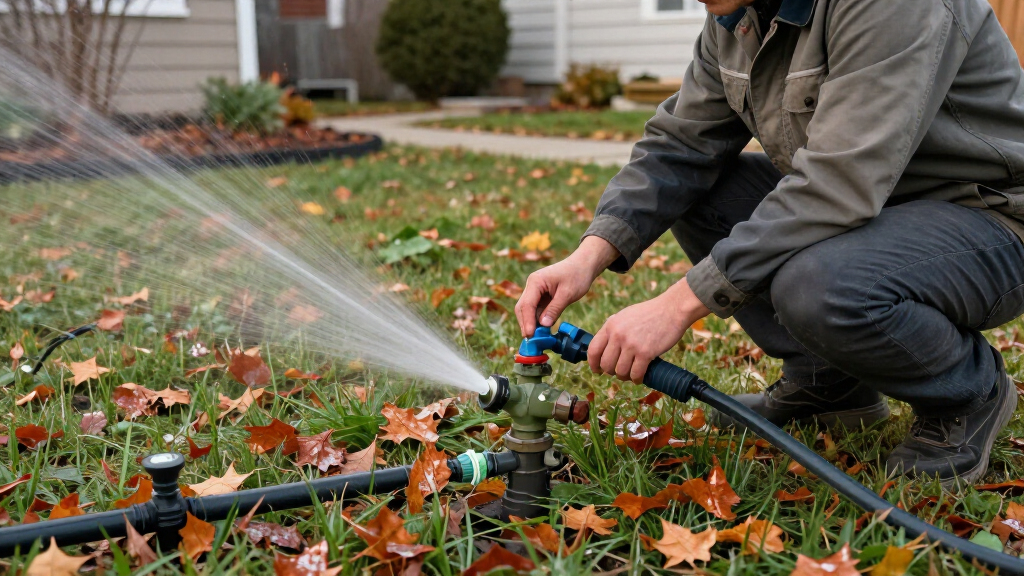
For systems designed for a compressed-air blowout, the report recommends closing the water supply, connecting an air compressor to the system’s blowout fitting and clearing one irrigation zone at a time. The air should be introduced gradually until the sprinkler heads release only a fine mist and air. The report says to turn the compressor off before changing zones and to make two passes through each zone, rather than continuing to blow through pipes after they are clear.
The report stresses that blowouts carry risks: compressed air can propel water and debris, while excessive pressure or prolonged blowing can damage sprinkler components. It advises wearing safety glasses, keeping people and pets away from the equipment, and not forcing air through the backflow preventer. It also says to leave the backflow preventer’s ball valves and test cocks half-open after the procedure to reduce the chance that trapped water will cause damage.
Preventing Freeze Damage to Irrigation
Winterizing matters because repairs may be needed when the system is started again in spring. According to the report, freezing water can crack pipes, fittings, valves and sprinkler casings; damage may not become apparent until the next irrigation season. Shutting off the supply is not the same as draining the system, so homeowners who rely on the shutoff alone may leave water in vulnerable parts.
The practical risk varies by system. A blowout performed incorrectly can itself cause damage, while a system built for manual drainage in a mild-winter area may not require one. The relevant takeaway is to identify the irrigation system’s design and follow its instructions rather than assume that every property needs the same procedure.
As an affiliate, we earn on qualifying purchases.
Timing and System Differences
The report recommends winterizing before the area’s first hard freeze. In colder regions, that often means early to mid-fall. It says established lawns generally tolerate irrigation being shut off somewhat early and can green up again when watering resumes in spring.
Exposed backflow preventers and above-ground pipework face freezing air first. Buried lines become vulnerable when prolonged cold pushes frost deeper into the ground. Some mild-winter regions have systems without a blowout port; the report says that shutting off the water, turning off the controller and draining exposed components may be sufficient in those locations. It does not provide a location-by-location schedule or instructions for every system configuration.
As an affiliate, we earn on qualifying purchases.
The Right Method Depends on the System
The source report does not establish a single winterization method for all irrigation systems. Whether a blowout is appropriate depends on system design, local winter conditions and available drainage features. It also does not provide guidance for every compressor or equipment setup. Homeowners who cannot identify the correct connection, pressure limits or drainage procedure should consult the system’s manufacturer or a qualified irrigation professional.
The report gives about 5 CFM as sufficient for many residential systems when clearing one zone at a time, but that figure is not a universal specification. It emphasizes airflow as well as pressure and warns that too much pressure can damage equipment. The supplied material does not give a complete pressure limit for every pipe material and system.
manual drain valve for sprinkler system
As an affiliate, we earn on qualifying purchases.
As an affiliate, we earn on qualifying purchases.
Prepare Before Temperatures Drop
Homeowners should check their system’s instructions and local freeze outlook, then arrange drainage or a professional service before a hard freeze. If the system has a blowout port and the homeowner is equipped to use it safely, the source advises clearing zones individually and stopping once water has been expelled. Protective eyewear is needed, and people and pets should stay clear while compressed air is in use.
After winter, inspect the system for leaks or cracked components before resuming normal watering. The report does not specify a spring start-up date; that will depend on local temperatures and the condition of the irrigation system.
As an affiliate, we earn on qualifying purchases.
Key Questions
Is turning off the sprinkler water enough for winter?
Not necessarily. The shutoff stops new water from entering, but water may remain in pipes, valves and sprinkler heads and freeze.
When should I winterize my sprinkler system?
The report recommends doing it before the first hard freeze. In colder regions, that often means early to mid-fall.
Does every system need a compressed-air blowout?
No. Some systems in mild-winter regions may be designed for shutting off the supply and draining exposed components. The appropriate method depends on the system and local conditions.
What safety steps are needed for a blowout?
Wear safety glasses, keep people and pets away, open one zone before introducing air, and do not force air through the backflow preventer. Stop once the zone is clear; excessive or prolonged blowing can damage equipment.
Source: rss
Columbus Day / Indigenous Peoples' Day Picks
long weekend sales
As an affiliate, we earn on qualifying purchases.