When selecting outdoor rugs and mats, focus on durable, weather-resistant materials like polypropylene, nylon, or treated natural fibers that can withstand sun, rain, and dirt. Look for features such as water-resistant backing, quick-drying design, and slip resistance to guarantee safety and longevity. Easy-to-maintain options that resist fading and mold help keep your space looking great for years. Keep exploring to discover which materials best suit your climate and style needs.
Key Takeaways
- Choose durable materials like polypropylene, nylon, or treated natural fibers for weather resistance and longevity.
- Opt for water-resistant backing and quick-drying designs to prevent water damage and mold growth.
- Consider UV-resistant and fade-resistant options to maintain color and appearance over time.
- Select low-maintenance, stain-resistant materials for easier cleaning and reduced upkeep.
- Match material choice to your climate conditions to ensure the rug withstands sun, rain, and outdoor elements effectively.
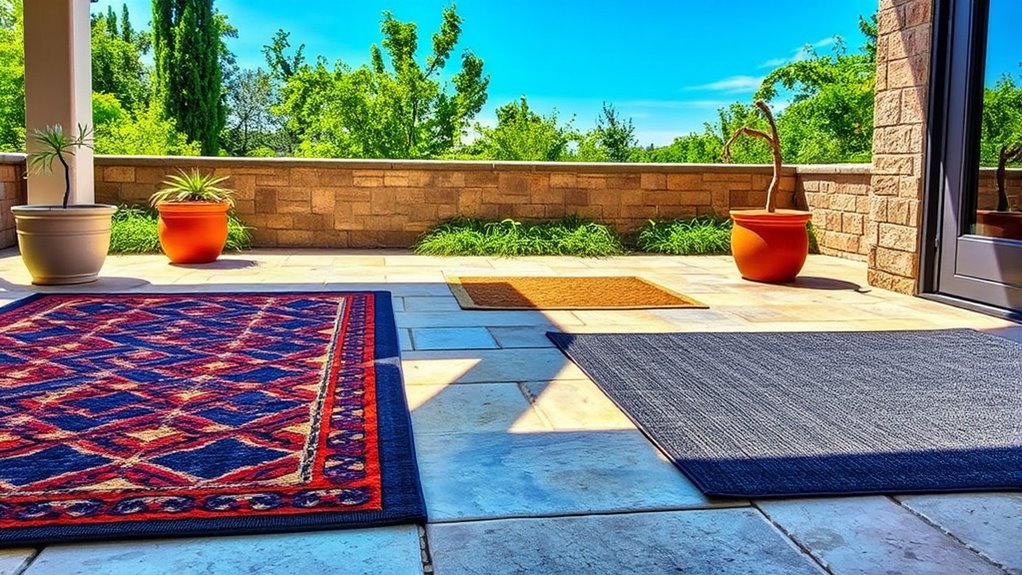
Choosing outdoor rugs and mats can substantially enhance your outdoor spaces, making them more inviting and functional. When selecting these elements, one of the most important factors to contemplate is their durability. Outdoor rugs and mats are exposed to a variety of weather conditions—sun, rain, wind, and dirt—so you need materials that can withstand these elements without quickly deteriorating. Durability considerations should guide your choice, ensuring that your investment remains attractive and functional over time. Look for materials specifically designed for outdoor use, such as polypropylene, nylon, or treated natural fibers. These materials tend to resist fading, mold, and moisture, which are common issues with less hardy options. If you want your outdoor spaces to stay lively and vibrant, choose a rug or mat that’s built to endure the elements.
Material maintenance is another vital aspect to think about. You want a rug or mat that’s easy to clean and doesn’t require constant upkeep. Some materials, like polypropylene, are stain-resistant and can be hosed off easily, making maintenance straightforward. Others, such as natural fiber rugs, might need more frequent cleaning or special treatments to prevent mold and mildew. Think about how much effort you’re willing to put into upkeep—if you prefer low maintenance, synthetic options are generally a better choice. Additionally, consider whether the material is resistant to fading from sun exposure; UV-resistant fabrics will keep your outdoor rug looking fresh longer, reducing the need for frequent replacements.
Weather resistance is closely tied to material choices and maintenance needs. For instance, if your outdoor space faces heavy rainfall, you’ll want a rug that dries quickly and resists water damage. Some rugs are made with water-resistant backing or are designed specifically to shed water efficiently, so they won’t stay soaked or develop mold. Mats with slip-resistant backing provide safety, especially in wet conditions, preventing accidents. When selecting your outdoor rugs and mats, check product descriptions for weather resistance features—these details can save you from frequent replacements or costly repairs later on.
In addition, exploring weather-resistant materials can help you select options that are designed specifically to endure challenging outdoor conditions, ensuring longevity and reducing replacement costs.
In the end, choosing outdoor rugs and mats that balance durability, ease of maintenance, and weather resistance will give you a beautiful, functional outdoor area that stands up to the elements. Invest wisely by prioritizing materials that suit your climate and your lifestyle, and you’ll enjoy your outdoor spaces for years to come.
Frequently Asked Questions
How Do Outdoor Rugs Prevent Slips on Wet Surfaces?
Outdoor rugs prevent slips on wet surfaces by providing slip prevention and enhancing wet surface traction. You should look for rugs with textured or non-slip backings, such as rubber or latex, which grip the ground firmly. These materials help keep the rug in place, even when wet, reducing the risk of slips. Regularly cleaning and ensuring your outdoor rug remains dry underneath also boosts slip prevention and maintains good traction.
Are There Eco-Friendly Outdoor Rug Options Available?
Yes, eco-friendly outdoor rug options are available. You can choose rugs made from eco-friendly materials like recycled plastic, natural fibers, or sustainably sourced jute. These rugs are created through sustainable manufacturing processes, reducing environmental impact. By selecting such options, you support eco-conscious practices while enhancing your outdoor space. Look for products labeled as environmentally friendly or made from recycled content to guarantee you’re making a sustainable choice.
How Often Should Outdoor Mats Be Cleaned and Maintained?
You should clean your outdoor mats at least once a month to keep them looking fresh and prevent dirt buildup. Follow a regular cleaning schedule, especially after heavy rain or muddy conditions. Maintenance tips include shaking out loose debris, vacuuming, or hosing them down with water. For stubborn stains, use mild soap. Consistent care extends your mat’s lifespan and maintains its appearance, ensuring it remains functional and inviting.
Can Outdoor Rugs Be Used on Uneven or Textured Surfaces?
Imagine placing a textured area rug on a slightly uneven patio; you can do it successfully if you choose the right outdoor rug. Outdoor rugs with rubber or non-slip backings offer better uneven surface compatibility, preventing slipping and bunching. For textured area rug placement, confirm the rug is designed for outdoor use and has a sturdy, non-slip backing. Regular maintenance keeps it secure and looking great in all conditions.
What Are the Best Storage Practices for Outdoor Rugs During Winter?
To make certain your outdoor rug stays in good condition during winter, follow these storage tips for winter protection. Clean the rug thoroughly and let it dry completely before storing. Roll it up tightly, avoiding folds, and place it in a cool, dry area away from direct sunlight and moisture. Using a breathable cover or storage bin helps prevent mold and damage, keeping your outdoor rug ready for spring.
Conclusion
Choosing the right outdoor rug or mat enhances both your space’s style and durability. Remember, 80% of outdoor fabrics are designed to withstand weather, but selecting materials like polypropylene or polypropylene blends guarantees longevity. By considering weather resistance and material quality, you protect your investment and enjoy your outdoor area year-round. With the right choices, your outdoor space becomes a welcoming retreat that endures seasons of use and changing weather conditions.