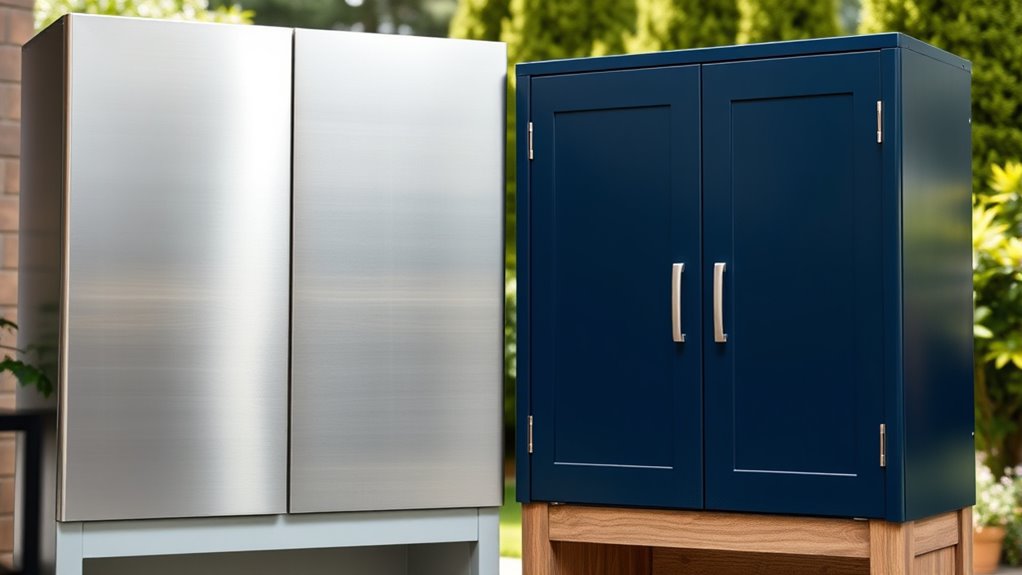

When choosing outdoor cabinets, stainless steel offers stronger resistance to corrosion and lasts longer because it forms a protective oxide layer that prevents rust, even in harsh conditions. Powder-coated steel relies on paint that can chip or wear, exposing the metal and leading to rust over time. While stainless steel may cost more upfront, its durability reduces maintenance needs. Keep exploring to understand how each material impacts your long-term investment and outdoor environment.

Get garden gear delivered free with Prime
- Fast, free delivery on millions of items
- Prime Video, Amazon Music and more included
- Member-only deals all year
Key Takeaways
- Stainless steel offers superior corrosion resistance due to its chromium oxide layer, ideal for harsh outdoor environments.
- Powder-coated steel is more affordable initially but may require frequent maintenance and touch-ups as coating wears.
- Stainless steel is low-maintenance, easy to clean, and resists staining, reducing long-term upkeep costs.
- Powder-coated steel’s durability depends on coating integrity; chips or scratches can lead to rust and higher repair costs.
- For longevity and minimal maintenance in challenging conditions, stainless steel is generally the more cost-effective choice.

When choosing between stainless steel and powder-coated steel, understanding their key differences can help you make the right decision for your project. Both materials are popular options for outdoor cabinets, but they have distinct qualities that influence their performance and longevity. One of the most critical factors to consider is corrosion resistance. Stainless steel naturally contains chromium, which forms a thin, protective oxide layer on its surface. This layer prevents moisture and other environmental elements from causing rust or deterioration, making stainless steel highly resistant to corrosion. If your outdoor environment is humid, rainy, or exposed to salty air, stainless steel offers superior protection, ensuring your cabinets stay in good condition over time.
Stainless steel’s chromium content creates a protective oxide layer, making it highly resistant to corrosion in harsh outdoor conditions.
On the other hand, powder-coated steel relies on a layer of durable paint or coating applied to a steel base. While this coating can provide decent resistance to moisture and environmental damage, it’s generally more vulnerable to chips, scratches, and wear. Once the coating is compromised, the underlying steel becomes exposed and can rust, especially if the coating isn’t maintained properly. This means powder-coated steel may require more vigilant maintenance to keep corrosion at bay, particularly in harsher climates. Regular inspections, touch-ups, and sometimes re-coating are necessary to ensure the surface remains protected. If you prefer a low-maintenance option that requires minimal upkeep, stainless steel’s resistance to corrosion can save you time and effort in the long run.
Maintenance requirements also differ markedly between the two materials. Stainless steel typically demands less regular care. A simple cleaning with soap and water usually keeps it looking good, and it resists staining and fingerprints better than many coated surfaces. Powder-coated steel, however, may need periodic cleaning to remove dirt and prevent buildup that can degrade the coating. Over time, if the coating gets scratched or chipped, you might need to touch-up or reapply the coating to prevent rust formation. This added maintenance can become a consideration if you’re managing multiple outdoor cabinets or looking for a hassle-free solution. Additionally, advancements in automated maintenance systems are making upkeep even easier for stainless steel surfaces, further enhancing their appeal.
While stainless steel’s higher initial cost might seem like a drawback, its durability and minimal maintenance needs often justify the investment, especially in environments prone to corrosion. Powder-coated steel offers a more affordable entry point but can incur additional costs over time due to maintenance and potential repairs. Ultimately, your choice should balance the environmental conditions, your willingness to perform upkeep, and your budget constraints. Knowing these differences allows you to select the material that best aligns with your specific outdoor storage needs, ensuring your cabinets remain functional and attractive for years to come.
stainless steel outdoor storage cabinets
As an affiliate, we earn on qualifying purchases.
As an affiliate, we earn on qualifying purchases.
Frequently Asked Questions
How Eco-Friendly Are Stainless Steel and Powder-Coated Steel?
Both stainless steel and powder-coated steel are eco-friendly options, but stainless steel has a lower environmental impact because it’s highly durable and recyclable. You can easily recycle stainless steel at the end of its life, reducing waste. Powder-coated steel also offers good recycling potential, but the coatings may complicate the process slightly. Overall, choosing either material supports sustainability, but stainless steel’s longevity and recyclability make it a more eco-conscious choice.
Can These Materials Be Recycled After Their Lifespan?
Did you know that both stainless steel and powder-coated steel are highly recyclable? After their lifespan, you can recycle these materials through proper recycling processes, markedly reducing environmental impact. Stainless steel is almost 100% recyclable without quality loss, while powder-coated steel can be reclaimed by removing the coating first. Recycling extends their life cycle, helps conserve resources, and minimizes waste, making both options environmentally friendly choices for outdoor cabinets.
Which Material Offers Better Insulation Properties?
You’ll find that powder-coated steel offers better thermal insulation than stainless steel, helping you improve energy efficiency. Its layered coating provides a buffer against temperature fluctuations, keeping contents cooler in summer and warmer in winter. Stainless steel, while durable, conducts heat more easily, so it doesn’t insulate as well. If insulation is your priority, powder-coated steel helps you save energy and maintain a more consistent internal environment.
How Do Maintenance Costs Compare Over Time?
You’ll find that maintenance costs for stainless steel are generally higher over time due to its premium price and need for special cleaning to prevent rust. Powder-coated steel, on the other hand, offers lower initial costs and easier upkeep, but might require repainting or touch-ups as the coating wears. Conducting a thorough cost analysis and durability comparison helps you decide which material suits your budget and long-term maintenance needs better.
Are There Specific Climate Conditions That Favor One Material?
If you’re in a climate with relentless rain, salty air, or intense sun, stainless steel is your superhero, offering unmatched corrosion resistance and weather durability that can withstand even the fiercest elements. Powder-coated steel, while sturdy, tends to falter in salty or humid environments, risking rust and damage over time. So, for harsh climates, stainless steel’s resilience makes it the clear champion, saving you headaches and costs down the line.
powder-coated steel outdoor cabinets
As an affiliate, we earn on qualifying purchases.
As an affiliate, we earn on qualifying purchases.
Conclusion
In the end, choosing between stainless steel and powder-coated steel depends on your needs. Stainless steel offers timeless durability, like a trusty knight ready for any challenge, perfect if you want long-lasting resilience. Powder-coated steel provides vibrant colors and budget-friendly options, great for a splash of modern flair. Think of it as your own personal Robin Hood, balancing quality and style. Whichever you pick, just remember—the right choice today can be your cabinet’s legacy tomorrow.
corrosion resistant outdoor cabinets
As an affiliate, we earn on qualifying purchases.
As an affiliate, we earn on qualifying purchases.
weatherproof outdoor storage solutions
As an affiliate, we earn on qualifying purchases.
As an affiliate, we earn on qualifying purchases.
Fall yard work Picks
leaf blowers
As an affiliate, we earn on qualifying purchases.