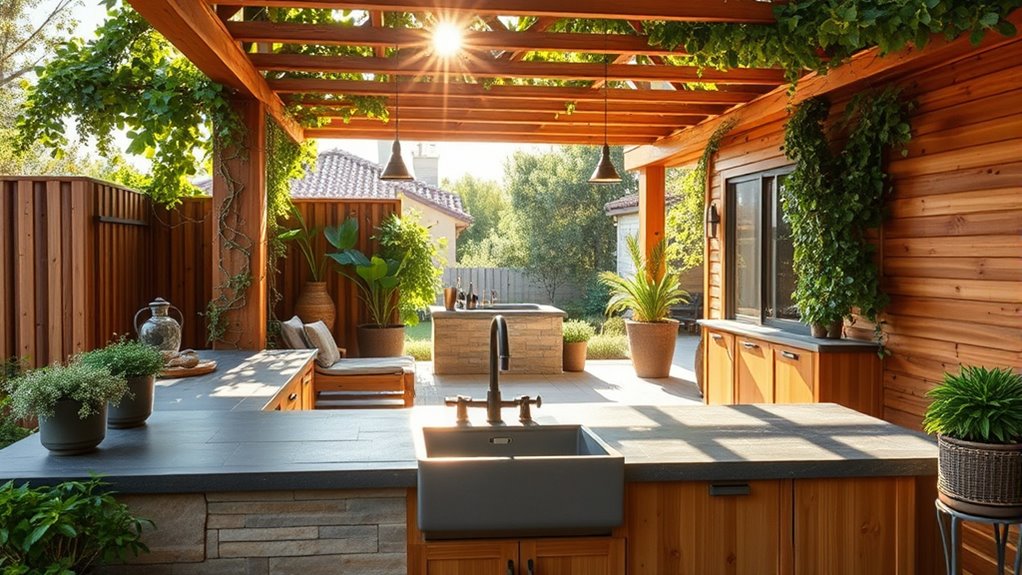

When selecting sustainable materials for outdoor kitchens, focus on eco-friendly finishes like water-based sealants and natural oils, which reduce indoor and outdoor pollution. Opt for renewable resources such as bamboo and reclaimed wood that grow quickly or are repurposed, minimizing environmental impact. Choose durable, eco-treated options that resist weather and pests to extend lifespan and cut waste. To create a stylish, environmentally conscious space, consider your options carefully; exploring further will uncover even more eco-friendly solutions.
Key Takeaways
- Prioritize renewable resources like bamboo and reclaimed wood for eco-friendly, sustainable outdoor kitchen materials.
- Choose non-toxic, low-VOC finishes such as natural oils or water-based sealants to reduce environmental impact.
- Select durable materials that withstand weather and wear, minimizing replacements and waste over time.
- Research and verify suppliers’ sustainability practices to ensure responsible sourcing and eco-conscious production.
- Plan for long-term maintenance and eco-friendly treatments to extend material lifespan and support environmental health.
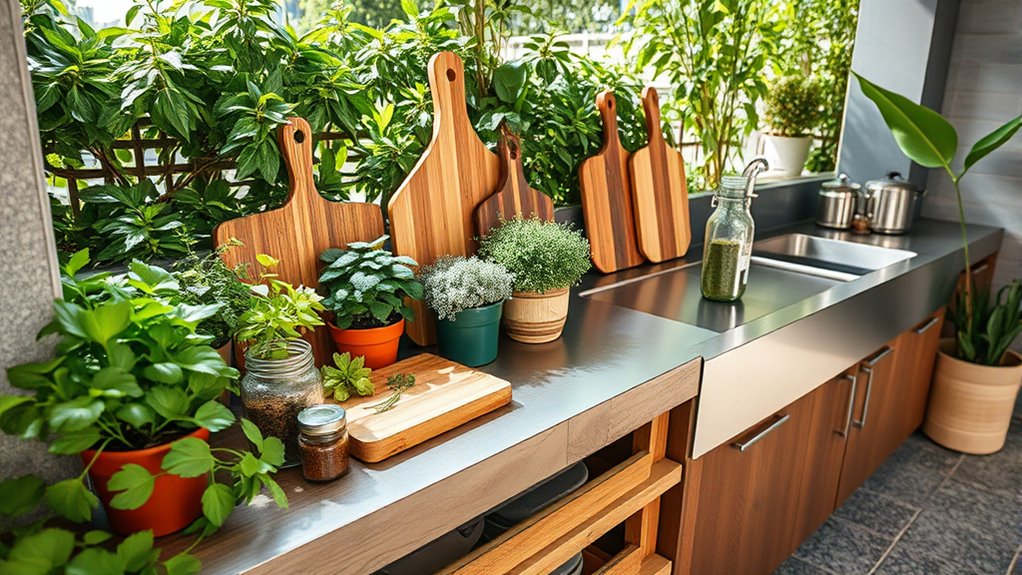
Creating an outdoor kitchen is an exciting way to enhance your living space, but choosing sustainable materials is key to ensuring it’s environmentally friendly and durable. One of the best ways to achieve this is by selecting eco-friendly finishes that not only look great but also minimize environmental impact. These finishes are typically made from non-toxic, low-VOC (volatile organic compounds) materials that reduce indoor and outdoor pollution. When you opt for eco-friendly finishes, you’re making a conscious choice to decrease your carbon footprint while also providing a healthier environment for yourself and your guests. For example, natural oils, water-based sealants, and plant-based stains are popular options that maintain the beauty of your materials without releasing harmful chemicals.
In addition to finishes, you should consider renewable resource options for your outdoor kitchen’s core materials. Renewable resources are those that can be replenished naturally over a relatively short period, making them a sustainable alternative to traditional materials. Bamboo is an excellent example, known for its rapid growth and strength, making it an ideal choice for cabinetry, furniture, or decorative elements. Reclaimed wood is another fantastic renewable resource option; by repurposing wood from old structures or fallen trees, you reduce waste and avoid harvesting new timber. When you choose these materials, you’re supporting sustainable forestry practices and reducing deforestation, which benefits the environment in the long run.
Another advantage of using renewable resource options in your outdoor kitchen is durability. Many of these materials, such as bamboo and reclaimed wood, are highly resilient when properly treated, standing up to weather conditions and wear over time. This means you won’t have to replace them frequently, saving you money and reducing waste. *furthermore*, many renewable resources are naturally resistant to pests and decay, especially when finished with eco-friendly treatments, making them practical choices for outdoor environments. Additionally, incorporating durable eco-friendly materials can further extend the lifespan of your outdoor kitchen components.
Ultimately, selecting eco-friendly finishes and renewable resource options allows you to build an outdoor kitchen that’s both stylish and sustainable. You get the satisfaction of knowing you’re making environmentally conscious decisions without sacrificing quality or aesthetics. As you plan your project, take the time to research and choose materials that align with your eco-friendly values. This approach not only benefits the planet but also creates a healthier, more inviting space for you, your family, and your friends to enjoy for years to come.
Frequently Asked Questions
How Do Sustainable Materials Perform Under Extreme Weather Conditions?
You’ll find that sustainable materials like composite decking and weather-resistant stone perform well under extreme weather conditions. They offer excellent weather resilience, resisting moisture, UV rays, and temperature fluctuations. This means they maintain their appearance and functionality longer, enhancing material longevity. By choosing these durable, eco-friendly options, you guarantee your outdoor kitchen withstands harsh weather, reduces upkeep costs, and remains a beautiful, sustainable space for years to come.
Are Eco-Friendly Materials More Cost-Effective Long-Term?
Eco-friendly materials often prove more cost-effective long-term because they reduce ongoing maintenance costs and energy consumption, leading to significant cost savings. Plus, their lower environmental impact means you’re helping to preserve natural resources and reduce waste. While initial costs might be higher, the durability and efficiency of eco-friendly choices can save you money over time, making them a smart investment for both your wallet and the planet.
What Maintenance Is Required for Sustainable Outdoor Kitchen Materials?
You’ll find that sustainable outdoor kitchen materials need minimal maintenance—about 30% less upkeep than traditional options. Regular cleaning routines with eco-friendly cleaners keep surfaces pristine, while pest control measures prevent insects from damaging wood or organic materials. By staying consistent with these simple tasks, you preserve the longevity of your eco-friendly setup, ensuring it remains beautiful and functional for years to come.
Can Sustainable Materials Be Customized to Match Existing Outdoor Aesthetics?
Yes, sustainable materials can be customized to match your outdoor aesthetics. Their material versatility allows you to choose finishes, colors, and textures that blend seamlessly with your existing design. You can work with suppliers or artisans to incorporate aesthetic integration, ensuring your outdoor kitchen looks cohesive and stylish. This customization makes sustainable options both practical and visually appealing, so you don’t have to compromise on your design vision.
How Do Sustainable Options Compare in Durability to Traditional Materials?
Sustainable options often match traditional materials in durability, but it varies. Durability comparisons show that high-quality recycled composites and responsibly sourced stone can withstand weather better than some conventional options. Material longevity depends on proper maintenance and installation, but many eco-friendly materials are designed to resist wear and tear over time. With proper care, sustainable choices can provide a long-lasting, resilient outdoor kitchen surface that stands up to the elements.
Conclusion
Choosing sustainable materials for your outdoor kitchen is like planting a sturdy tree—it’s an investment that grows stronger and more beautiful over time. By prioritizing eco-friendly options, you create a space that not only serves your needs but also nurtures the environment. Remember, every mindful choice you make is a branch reaching toward a greener future. So, build with purpose, and watch your outdoor kitchen flourish as a demonstration of sustainable living.