Elevated and multi-level outdoor kitchen layouts help you make the most of your space by creating distinct zones for cooking, lounging, and dining. By layering levels and using materials like stone or tile, you can improve flow, accessibility, and visual appeal. Position your grill at a comfortable height on dedicated platforms and arrange seating to encourage social interactions. Keep exploring to discover how these design elements can transform your outdoor entertaining areas.
Key Takeaways
- Use varied levels to define distinct zones for cooking, lounging, and dining, enhancing space utilization and functionality.
- Position the grill on a dedicated, elevated platform for easy access, safety, and visual prominence.
- Incorporate multi-tiered seating with steps or different flooring materials to promote interaction and separation.
- Select materials like stone or tile for steps and pathways to create visual interest and ensure durability.
- Ensure proper water drainage and flow to maintain safety and practicality in multi-level outdoor kitchen designs.
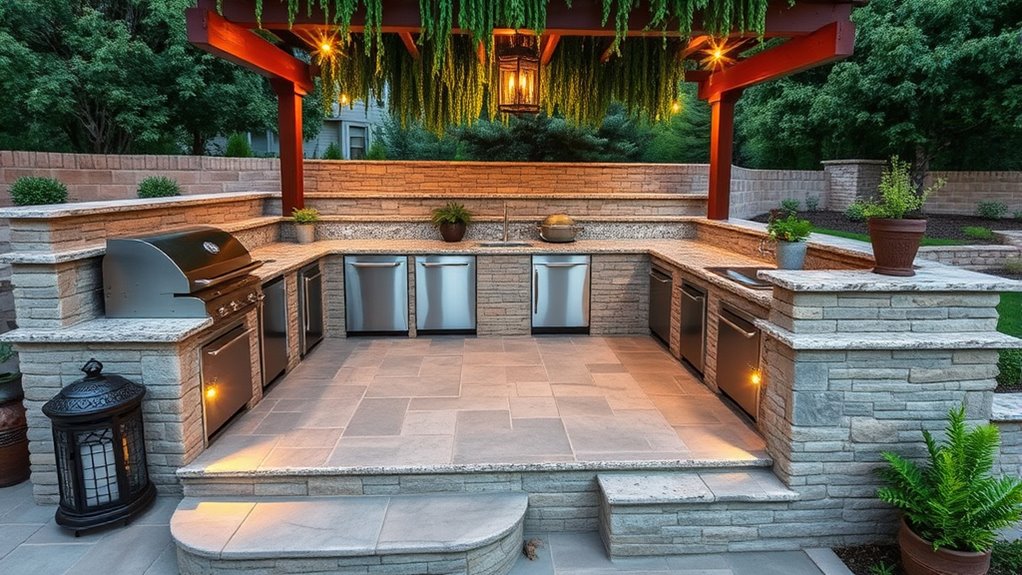
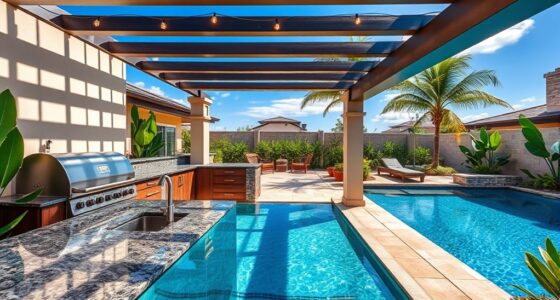
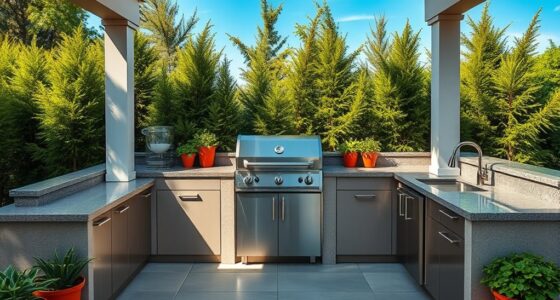
Designing an outdoor kitchen begins with choosing the right layout to suit your space and cooking style. Elevated and multi-level outdoor kitchen layouts offer a unique way to optimize your area, creating functional zones that enhance both aesthetics and usability. When contemplating these designs, think about how you’ll incorporate grill placement and seating arrangements to make the most of your space. Elevated layouts often feature a raised cooking zone, which not only provides a commanding view of your backyard but also helps define the cooking area from the lounging or dining zones. This setup allows you to position your grill at a level that’s comfortable for cooking, reducing strain and improving airflow around the cooking station. When planning your grill placement in an elevated layout, guarantee it’s accessible yet out of the way of foot traffic to prevent accidents. You might elevate your grill on a dedicated platform, giving it prominence without crowding other features.
Proper water drainage is essential in multi-level outdoor kitchens to prevent pooling and ensure safety on different tiers. Seating arrangements in elevated and multi-level layouts are just as vital. You can create a multi-tiered design where the dining or lounge area sits at a lower level, separated by steps or a change in flooring material. This separation helps define spaces and fosters a sense of intimacy, making your outdoor kitchen feel like an extension of your home. Incorporate built-in seating or movable chairs to enhance flexibility. When designing these arrangements, think about how guests will interact with the cooking zone. Position seating to face the grill or cooking area, allowing for easy conversation and supervision while food is being prepared. Elevated levels often lend themselves to bar-style seating along a raised counter or bar, giving your outdoor kitchen a stylish, social vibe.
Another benefit of multi-level layouts is the ability to incorporate different materials and textures to delineate zones. For example, a stone or tile step can lead from a grilling station to a lounging area with cushioned seats, visually and physically separating these spaces. This layered approach makes your outdoor kitchen more dynamic and functional, especially if you host gatherings frequently. Remember, the key is to keep the flow natural and guarantee pathways are clear. Properly planned grill placement and seating arrangements will make your elevated or multi-level outdoor kitchen not just beautiful but also incredibly practical. When you take the time to think about these elements, you’ll create a space that’s inviting, efficient, and perfect for outdoor living.
Frequently Asked Questions
How Do I Choose the Best Materials for Elevated Outdoor Kitchens?
You choose the best materials for elevated outdoor kitchens by focusing on material durability and aesthetic appeal. Opt for weather-resistant options like stainless steel, natural stone, or concrete that withstand the elements. Consider how the materials look to match your style and how easy they are to maintain. Balance durability with visual appeal, ensuring your kitchen stays functional and attractive over time, even with frequent outdoor use.
What Safety Considerations Are Important for Multi-Level Outdoor Kitchens?
You should prioritize child safety by installing secure barriers or railings around elevated areas to prevent falls. Guarantee structural stability by using high-quality, durable materials and proper supports to handle weather and weight loads. Regularly inspect the multi-level setup for any damage or wobbling. Keep sharp objects and hot appliances out of children’s reach, and consider adding non-slip surfaces to reduce the risk of slips and falls.
How Can I Maximize Space in a Multi-Level Outdoor Kitchen?
You can maximize space in your outdoor kitchen by carefully planning seating arrangements to prevent clutter and maximize usability. Use vertical storage solutions like wall-mounted shelves or cabinets to free up countertop space. Incorporate multi-functional furniture, such as storage benches, to serve as seating and storage, and group appliances efficiently to create smooth workflow zones. This approach guarantees your multi-level outdoor kitchen feels spacious, organized, and functional.
What Are the Maintenance Needs for Elevated Outdoor Kitchen Structures?
You should regularly inspect your elevated outdoor kitchen for signs of wear or damage, especially in seating comfort and storage solutions. Clean surfaces, check for rust or corrosion, and guarantee structural stability. Keep storage compartments organized and dry to prevent moisture buildup. By performing routine maintenance, you’ll prolong the life of your structure, maintain functionality, and keep your outdoor space inviting and safe for all your cooking and entertaining needs.
How Do I Incorporate Lighting Effectively in Multi-Level Outdoor Layouts?
You should incorporate ambient lighting to create a warm, inviting atmosphere across your multi-level outdoor kitchen. Use string lights or recessed lighting to softly illuminate different areas. For task illumination, install focused lights under cabinets, over countertops, and near cooking stations to guarantee safety and visibility. Mixing these lighting types enhances both functionality and ambiance, making your outdoor cooking space more enjoyable and practical during evening hours.
Conclusion
Now that you’ve explored elevated and multi-level outdoor kitchen layouts, imagine transforming your backyard into a culinary oasis, where every level tells a story and every corner invites gathering. These designs aren’t just structures—they’re the canvas for unforgettable moments under the open sky. So, embrace the possibilities, craft your perfect space, and let your outdoor kitchen become the heart of your backyard adventures, shining brighter than the stars above.