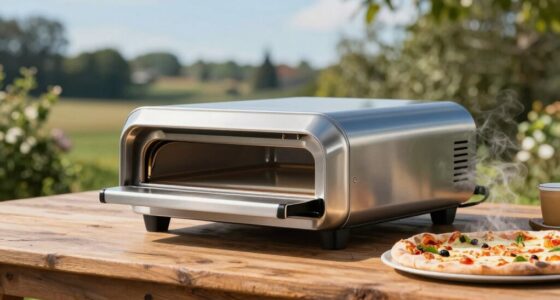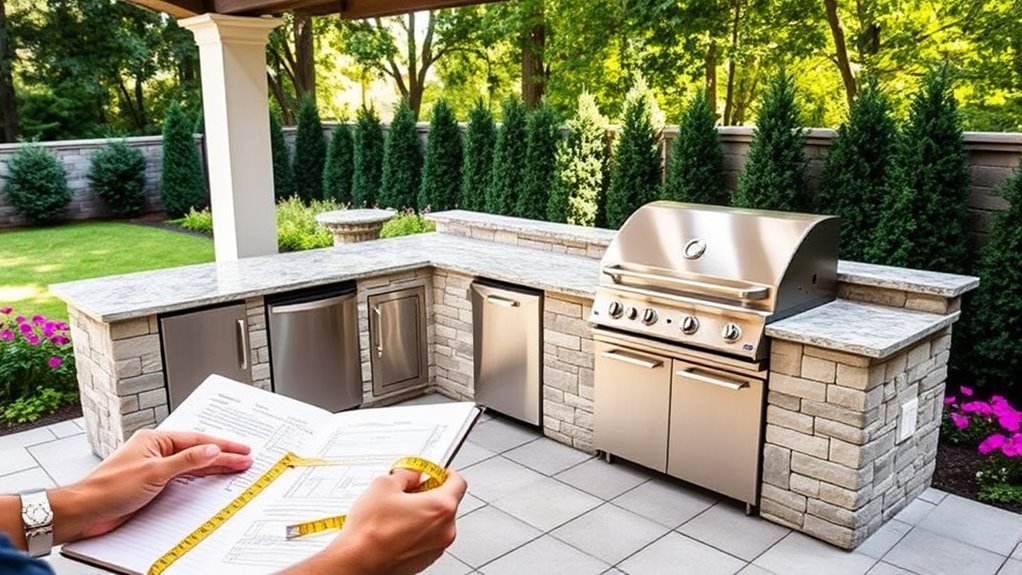

To set a realistic budget for your outdoor kitchen, consider the size, materials, appliances, and design complexity involved. Research current prices and get multiple quotes to stay within your financial limits. Include a contingency fund for unexpected costs and prioritize essential features. Simplifying your design or choosing budget-friendly materials can help control expenses. For detailed tips on planning and managing costs effectively, explore further guidance to make your project both beautiful and affordable.

Get garden gear delivered free — and shop member deals
- Fast, free delivery on millions of items
- Access to Prime Big Deal Days deals on October 6–7
- Prime Video, Amazon Music and more included
Key Takeaways
- Determine your overall outdoor kitchen budget based on scope, desired features, and materials.
- Prioritize essential features and plan for future upgrades to stay within financial limits.
- Obtain multiple quotes for materials, appliances, and labor to compare costs effectively.
- Incorporate a contingency fund (10-15%) to cover unexpected expenses during construction.
- Use detailed plans or professional guidance to accurately estimate costs and avoid surprises.
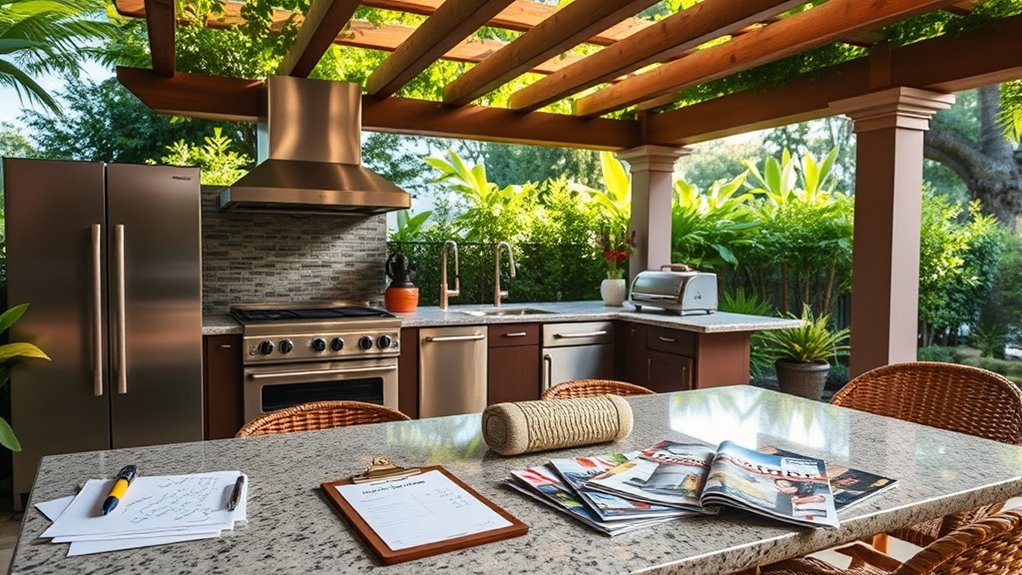
Planning an outdoor kitchen can be exciting, but establishing a clear budget is essential to keep your project on track. When you start, the first step is to focus on cost estimation. This involves figuring out how much you’re willing to spend and understanding the different factors that influence overall costs. You’ll need to consider the size of your outdoor space, the appliances you want, and the materials you prefer. Creating a detailed list of components—like grills, countertops, cabinets, lighting, and plumbing—helps you estimate expenses more accurately. Be realistic about your budget and include a contingency fund, typically around 10-15%, to cover unexpected costs that may arise during construction.
Design planning plays a vital role in setting your budget because it directly impacts the cost estimation process. The more elaborate your design, the higher the expenses will be. For example, choosing high-end countertops or custom cabinets can substantially increase your project’s total. Conversely, opting for simpler, budget-friendly materials can help keep costs down. When planning your design, think about how you’ll use the space, what features are essential, and what can be added later. This approach allows you to prioritize elements and avoid overspending on non-essential features. Drafting detailed plans or working with a professional designer can give you a clearer picture of how your vision translates into costs, helping you make informed decisions early on. Additionally, understanding cost estimation techniques can improve your budgeting accuracy and help you identify areas where you can save.
As you move forward, it’s wise to research current prices for materials and appliances, as costs fluctuate based on location and supply. Getting multiple quotes from contractors and suppliers ensures you’re not overpaying and helps you compare options within your budget. Remember, the overall cost isn’t just about the initial build; you should also factor in ongoing expenses like maintenance, utilities, and potential upgrades. By balancing your desired features with your financial limits, you can create a functional, attractive outdoor kitchen without stretching your finances too thin.
Ultimately, setting a realistic budget involves thorough planning and honest assessment of what you want and can afford. Proper cost estimation and detailed design planning enable you to avoid surprises and make smarter choices throughout the project. With a clear financial framework in place, you’ll find it easier to stay focused and enjoy the process of transforming your outdoor space into a perfect cooking and entertaining area.
outdoor kitchen appliances package
As an affiliate, we earn on qualifying purchases.
As an affiliate, we earn on qualifying purchases.
Frequently Asked Questions
How Long Does It Typically Take to Build an Outdoor Kitchen?
Building your outdoor kitchen typically takes about 4 to 8 weeks, depending on your construction timeline and material selection. You’ll first plan and get permits, which can add time, then move to site prep and installation. Choosing durable materials like stone or concrete might extend the process, but it guarantees longevity. Keep in mind that delays can happen, so stay flexible and communicate regularly with your contractor for smooth progress.
Are There Cost Differences Between DIY and Professional Installation?
You’ll find that DIY installation can save you a ton of money—sometimes enough to buy a spaceship! However, DIY considerations include potential mistakes and longer build times. Professional benefits, on the other hand, often mean faster, higher-quality results and warranties. While professional installation costs more upfront, it offers peace of mind, expertise, and a polished look that DIY might struggle to match.
What Are the Ongoing Maintenance Costs for Outdoor Kitchens?
Your ongoing maintenance costs for an outdoor kitchen include landscaping upgrades to keep the area looking fresh and functional, as well as occasional appliance replacements due to wear and tear. You’ll need to budget for regular cleaning, sealing surfaces, and checking appliances for safety and efficiency. By staying on top of these tasks, you can prevent costly repairs and make certain your outdoor kitchen remains a beautiful, functional space for years to come.
How Can I Finance My Outdoor Kitchen Project?
You can finance your outdoor kitchen through various options like home equity loans, personal loans, or credit cards, which are popular choices for 65% of homeowners. To get started, focus on solid budget planning to determine what you can afford. Exploring these financing options allows you to spread out costs, making your dream outdoor space more attainable without overextending your finances.
What Permits or Regulations Are Required for Outdoor Kitchens?
You need to check local zoning restrictions and building codes before starting your outdoor kitchen. Contact your city or county building department to find out if permits are required, especially if you’re installing gas lines or electrical components. Make certain your design complies with setback requirements, height restrictions, and safety standards. Failing to obtain the necessary permits can lead to fines or having to remove your outdoor kitchen later.
budget-friendly outdoor countertops
As an affiliate, we earn on qualifying purchases.
As an affiliate, we earn on qualifying purchases.
Conclusion
Now that you know the key costs and considerations, it’s time to start planning your outdoor kitchen. But remember, unexpected expenses can pop up just when you think you’re all set. Will you stick to your budget or make some exciting upgrades along the way? The journey to your perfect outdoor space is full of surprises—are you ready to see where it takes you? The next step might just be more thrilling than you imagined.
outdoor kitchen cabinets and storage
As an affiliate, we earn on qualifying purchases.
As an affiliate, we earn on qualifying purchases.
outdoor lighting and plumbing fixtures
As an affiliate, we earn on qualifying purchases.
As an affiliate, we earn on qualifying purchases.
Fall Picks
fall essentials
As an affiliate, we earn on qualifying purchases.