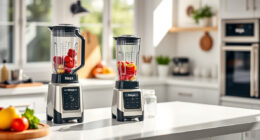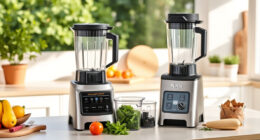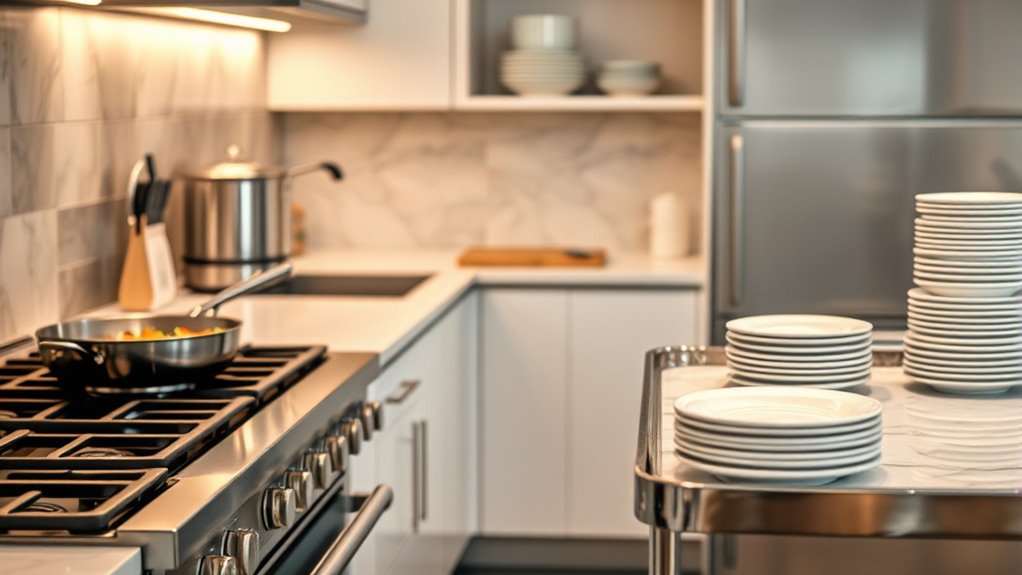

To effectively define your cooking, prep, and serving zones, arrange your kitchen so each area has designated storage and tools nearby. Keep frequently used items within arm’s reach, like knives and ingredients near prep stations, and place cookware by the stove. Make sure smooth flow between stations to minimize crossing paths and maximize safety. A well-organized layout enhances efficiency and comfort—continue exploring ways to set up your kitchen for peak workflow.
Key Takeaways
- Designate separate areas for cooking, prep, and serving to streamline workflow and reduce clutter.
- Position frequently used tools and ingredients within arm’s reach in each zone for efficiency.
- Place the stove and pots near prep stations, and keep plates and serving dishes close to the dining area.
- Arrange pathways to allow smooth movement between zones, minimizing crossing and unnecessary steps.
- Incorporate vertical storage and organized containers to maximize space and accessibility in each zone.
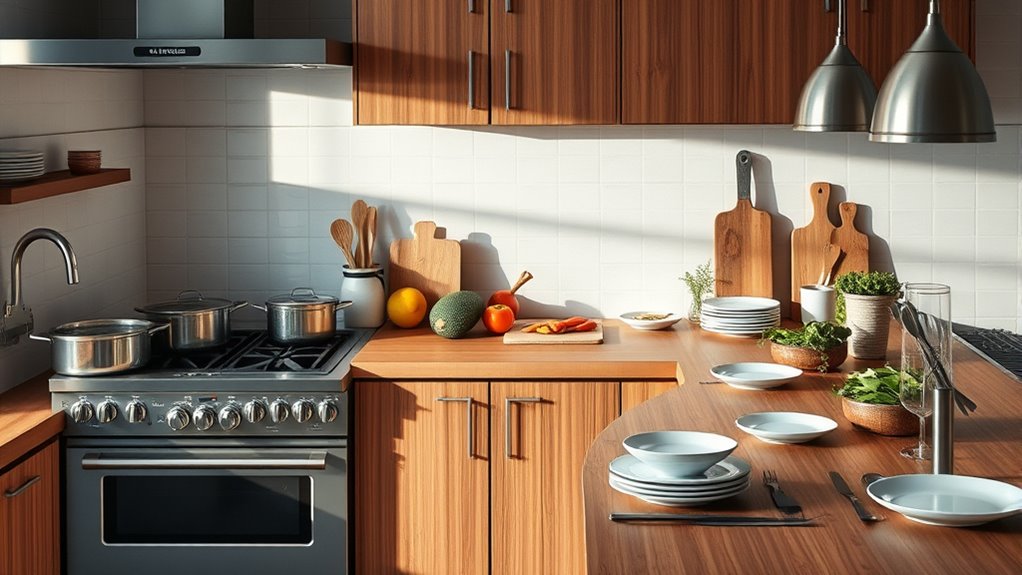
Organizing your kitchen by defining specific zones can considerably improve your cooking efficiency and reduce clutter. When you create dedicated areas for cooking, prepping, and serving, everything becomes more streamlined. You’ll find it easier to locate tools and ingredients, which saves you time and frustration. To do this effectively, focus on storage solutions that keep essentials within arm’s reach for each zone, minimizing unnecessary movement. For instance, store pots and pans near the stove, utensils close to prep stations, and plates or glasses near the serving area. Ergonomic design plays a critical role here, so arrange your zones in a way that minimizes bending, stretching, or crossing back and forth. This setup not only boosts your comfort but also enhances safety and efficiency in your kitchen.
As you establish your cooking zone, prioritize accessibility and safety. Keep frequently used cookware and ingredients nearby, so you don’t waste time searching or walking across the kitchen. Incorporate storage solutions like pull-out shelves, drawer organizers, or wall-mounted racks to keep everything tidy and within reach. An ergonomic layout ensures your workspace isn’t cramped; you want enough clearance for your movements, especially when handling hot items or sharp tools. When planning your prep area, position knives, cutting boards, and mixing bowls close to your main storage, but also ensure there’s enough space to work comfortably. Use vertical storage options to maximize space, placing items like spices, oils, and utensils in easy-to-reach cabinets or wall-mounted racks. This way, your prep zone remains functional without cluttering your workspace. Additionally, vertical storage solutions can help you make the most of limited space while keeping your environment organized.
For your serving area, choose a spot that’s convenient for both you and your guests. Keep plates, napkins, and utensils nearby, but in a way that doesn’t interfere with your cooking or prep zones. Using a dedicated cart or sideboard can streamline serving and help manage cleanup afterward. When designing this zone, consider ergonomic principles—place items at waist level for easy access, and keep frequently used serving pieces within arm’s reach. Proper storage solutions such as stackable trays or labeled containers can also help keep your serving area organized and clutter-free. By defining these zones thoughtfully, you create a logical flow that makes your entire cooking process more enjoyable and less stressful. Your kitchen becomes a place where efficiency meets comfort, making every meal preparation a smoother, more satisfying experience.
As an affiliate, we earn on qualifying purchases.
Frequently Asked Questions
How Do I Determine the Optimal Size for Each Zone?
To determine the ideal size for each zone, consider your workflow and ergonomic height, ensuring each area supports smooth movement. You should allocate enough space for efficient prep, cooking, and serving, avoiding congestion. Incorporate smart storage solutions within each zone to keep tools handy without clutter. Adjust sizes based on your kitchen’s layout and your specific needs, making sure each zone promotes safety, comfort, and productivity.
What Materials Are Best for Zone Flooring and Countertops?
Ever wondered what surfaces withstand the busiest kitchen? Opt for durable materials like quartz or granite for countertops, offering both strength and stylish finishes. For flooring, choose materials such as tile, vinyl, or sealed concrete that resist spills, stains, and heavy foot traffic. These options guarantee your zones stay functional and attractive, even during the chaos of meal prep and serving. Wouldn’t you want surfaces that last and look great?
How Can I Improve Workflow Between Different Kitchen Zones?
To improve workflow between kitchen zones, focus on zone integration by arranging your layout strategically. Place frequently used tools and ingredients near their corresponding zones to minimize movement. Use clear pathways and guarantee smooth transitions between cooking, prep, and serving areas. Incorporate workflow optimization principles like logical sequencing and ergonomic design. Regularly evaluate and adjust your setup to streamline operations, making your kitchen more efficient and reducing unnecessary steps.
Are There Specific Lighting Considerations for Each Zone?
Think of your kitchen like a stage—each zone needs the right lighting to shine. You should use task lighting, especially in prep and cooking areas, to guarantee safety and precision. Ambient lighting provides overall brightness, creating a welcoming atmosphere. For serving zones, softer lighting can highlight presentation. Properly layered lighting helps you work efficiently and enhances the space’s ambiance, just like a well-lit scene in a play.
How Can I Incorporate Ergonomic Design in Zone Placement?
You can incorporate ergonomic design by aligning your zones according to ergonomic principles, reducing unnecessary movement. Position your work triangle—connecting the stove, sink, and fridge—efficiently to minimize strain. Keep frequently used items within easy reach, and guarantee counter heights support comfortable posture. By thoughtfully placing your cooking, prep, and serving areas, you create a more efficient, safe, and comfortable workspace that enhances your overall kitchen experience.
As an affiliate, we earn on qualifying purchases.
Conclusion
By understanding and properly defining your cooking, prep, and serving zones, you create a more efficient kitchen. This setup minimizes movement and boosts productivity, supporting the theory that organized spaces enhance performance. When each area has a clear purpose, you streamline your workflow and reduce clutter. Embracing this concept isn’t just about convenience—it’s backed by research showing that well-designed environments improve focus and output. So, invest time in zoning; your culinary success depends on it.
As an affiliate, we earn on qualifying purchases.
As an affiliate, we earn on qualifying purchases.