TL;DR

Get garden gear delivered free with Prime
- Fast, free delivery on millions of items
- Prime Video, Amazon Music and more included
- Member-only deals all year
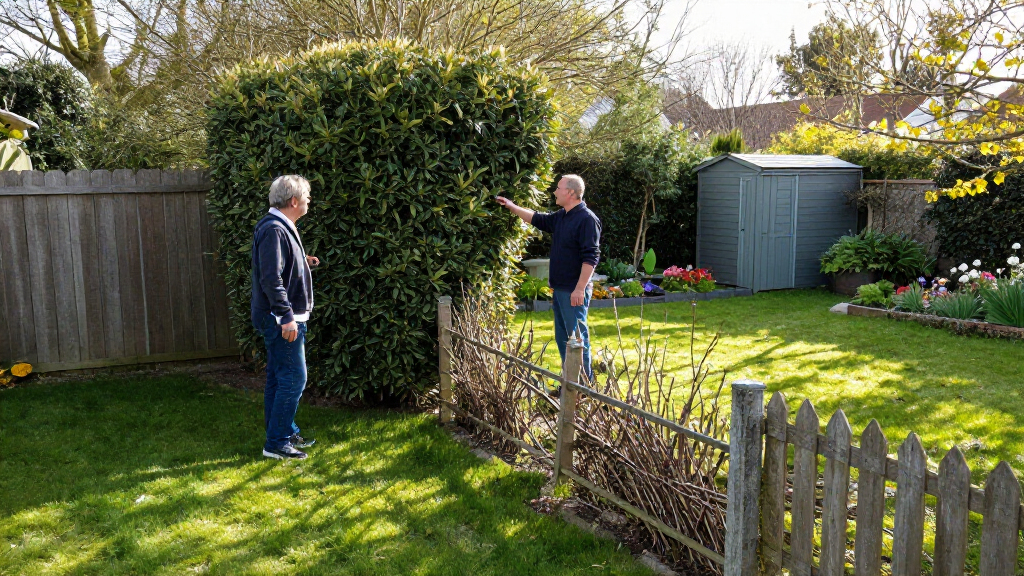
Ownership of a tree or hedge near a property boundary depends on the legal boundary and where the trunk or main stems stand—not simply on which side a fence appears to be. Ideal Home’s report advises checking property deeds and speaking with a neighbour before major work; protected-tree and wildlife rules may also restrict pruning.
Ideal Home’s report sets out how homeowners can investigate who owns a tree or hedge near a shared boundary, advising them to check property deeds and the position of the trunk before arranging work. The distinction matters because ownership can affect responsibility for maintenance, while boundary-pruning rights do not remove restrictions on protected trees or work on a neighbour’s land.
The report recommends starting with the property deeds, which can be reviewed through HM Land Registry. Gardening and greenhouse expert Lucie Bradley, of Harvst Automatic Watering, says boundary plans may show the general extent of a property in a thick red line. She cautions that the line is not precise to the millimetre. Deeds may also include “T” marks: Bradley says a mark pointing to one owner’s side can indicate responsibility for that boundary feature, while paired marks resembling an “H” can indicate shared responsibility.
Deeds are a starting point, not a guarantee that every boundary question will be settled. The report says a fence’s current position does not necessarily establish the legal boundary, since fences can move over time. Home insurance expert Kara Gammall, of MoneySuperMarket, says a tree generally belongs to the owner of the land where its trunk stands, even if its branches or roots extend into a neighbour’s garden. If the trunk crosses the boundary, ownership may be harder to establish.
For branches or roots crossing onto a neighbour’s land, Gammall says a property owner generally has the right to prune encroaching growth back to the boundary on their side. That does not mean they may enter the neighbour’s property or cut beyond the boundary without permission. The report advises discussing substantial work with the neighbour, particularly if pruning could affect a tree’s health or stability. Where a tree or hedge appears to straddle the boundary, it recommends agreeing on care or removal before making irreversible changes.
Ownership Shapes Pruning Rights
A mistaken assumption about who owns a tree can turn routine garden work into a dispute over property boundaries, damage and responsibility. The report’s guidance gives homeowners a practical order of checks: review deeds, assess where the trunk or main stems sit, and talk with the neighbour before significant work. That can help distinguish a tree that belongs to one property owner from a feature that may be shared.
Permission to trim growth on one’s own side is not the same as permission to remove or heavily cut a tree. Bradley recommends agreement where a feature appears to sit across the boundary. Gammall also cautions that people should not assume a healthy tree must be cut down simply because a neighbour dislikes its appearance. Legal protection and wildlife rules can limit what work is allowed regardless of a neighbourly agreement.
bypass pruning shears for garden branches
As an affiliate, we earn on qualifying purchases.
As an affiliate, we earn on qualifying purchases.
Deeds, Fences and Tree Position
The report addresses a common uncertainty around boundary features and rejects reliance on the so-called “left-hand rule” as a dependable way to decide ownership. It says homeowners should instead consult their own deeds and any historical documents, because a fence’s position may have changed and does not by itself prove where the legal boundary lies.
Trunk position is another clue, but it may not settle every case. A trunk wholly on one property is generally associated with that landowner, according to Gammall. A trunk on the boundary can create a more complicated question, and the supplied guidance does not provide a formal legal test for resolving every disputed boundary. In those cases, checking records and reaching an agreement with the neighbour are presented as practical first steps.
Tree protections are a separate issue from ownership. The report says homeowners can check with their local council whether a tree is subject to a Tree Preservation Order (TPO) or lies in a conservation area. Ian Wilson, managing director and home insurance expert at Tiger.co.uk, warns that unauthorised work on a protected tree can carry legal consequences. The report also flags the Wildlife and Countryside Act 1981 and says nesting birds must not be disturbed or harmed.
“The place to start when trying to find out who owns a tree or hedge is to check your house deeds.”
— Lucie Bradley, gardening and greenhouse expert at Harvst Automatic Watering
telescopic tree lopper for pruning branches
As an affiliate, we earn on qualifying purchases.
As an affiliate, we earn on qualifying purchases.
When Boundary Records Conflict
The supplied report does not identify a specific property dispute or describe a new law or official ruling. It is an expert guidance article, and its general explanations may not resolve a particular case. Deed plans are not millimetre-precise, fences may have moved, and the exact boundary or ownership can remain contested—especially where the trunk or hedge straddles the line.
The report does not set out a formal process for settling disagreements or explain how every type of hedge is treated in law. It also does not establish whether a particular tree has a TPO or whether birds are nesting. Those details need to be checked for the specific property; the article advises contacting the local council for tree-protection information.
garden boundary survey measuring tape
As an affiliate, we earn on qualifying purchases.
As an affiliate, we earn on qualifying purchases.
Check Records Before Cutting
Homeowners considering work can first review their deeds through HM Land Registry and compare the plan with the tree’s trunk or hedge’s main stems. If records or the boundary’s position are unclear, the report’s practical advice is to avoid irreversible work and discuss the issue with the neighbour. For a disputed boundary, the supplied material does not recommend a specific legal route, so owners may need further property-specific advice.
Before pruning, check with the local council whether a TPO or conservation-area restriction applies, and take care not to disturb nesting birds. The next step depends on what those checks show: a clear boundary and no relevant restriction may allow limited pruning on the owner’s side, while shared ownership, uncertainty, or a protected tree calls for agreement or further confirmation before work begins.
tree pruning saw with safety sheath
As an affiliate, we earn on qualifying purchases.
As an affiliate, we earn on qualifying purchases.
Key Questions
How can I find out who owns a tree near my boundary?
Start by checking your property deeds through HM Land Registry and noting where the trunk stands in relation to the boundary. Deed plans give a general indication, not a measurement precise to the millimetre, and a fence alone may not show the legal line.
Does a tree belong to the person whose garden its branches hang over?
Not necessarily. MoneySuperMarket’s Kara Gammall says a tree generally belongs to the owner of the land where its trunk stands, even when branches or roots extend into a neighbour’s garden.
Can I cut branches that extend into my garden?
The report says you can generally prune encroaching growth back to the boundary on your side. Do not enter the neighbour’s land or cut beyond the boundary without permission, and speak with them before substantial work that could affect the tree’s health or stability.
What if the tree trunk sits on the boundary?
Ownership may be harder to determine if the trunk straddles the boundary. Check the deeds and discuss care or removal with the neighbour; the report recommends agreement before irreversible changes.
How do I check whether a tree is protected?
Contact your local council and check its information on Tree Preservation Orders and conservation areas. The report also warns that nesting birds must not be disturbed or harmed.
Source: rss
Halloween Picks
halloween
As an affiliate, we earn on qualifying purchases.