To make certain your outdoor lighting and wiring meet code, use weatherproof fixtures rated for outdoor use and install GFCI outlets in accessible, protected locations. Bury underground cables at least 18 inches deep, secured with approved conduits and fasteners. Properly ground and bond all fixtures, and regularly test your system for safety. Following these guidelines keeps your setup safe and durable—continue to explore more tips for compliant outdoor electrical installations.

Get garden gear delivered free with Prime
- Fast, free delivery on millions of items
- Prime Video, Amazon Music and more included
- Member-only deals all year
Key Takeaways
- Use fixtures rated for outdoor use and install them in proper locations to ensure safety and durability.
- Install GFCI-protected outlets with weatherproof covers in accessible, protected areas per electrical codes.
- Bury underground wiring at least 18 inches deep and protect it with conduit or approved cables.
- Properly ground and bond all outdoor fixtures and electrical components to prevent shocks and faults.
- Regularly inspect and test outdoor wiring and fixtures to maintain compliance and ensure ongoing safety.

Installing outdoor lighting and electrical wiring requires strict adherence to electrical codes to guarantee safety and reliability. When you’re setting up features like solar pathways or installing outdoor outlets, following proper guidelines is essential to protect both your property and your loved ones. Solar pathways are a popular choice for landscape lighting because they’re energy-efficient and easy to install, but you still need to ensure they meet code requirements. Proper placement of solar lights, avoiding areas where they could be damaged or obstructed, helps prevent potential hazards. Additionally, using fixtures rated for outdoor use ensures they can withstand weather conditions, maintaining safety and longevity.
Proper placement and rated fixtures ensure safe, reliable outdoor lighting and solar pathways.
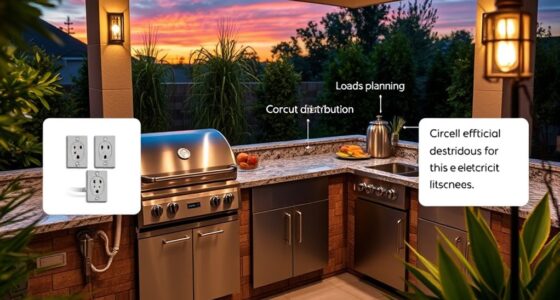
Outdoor outlet safety is another critical element. When adding outlets outside, you must comply with electrical codes that specify the correct type of outlets, usually Ground Fault Circuit Interrupters (GFCIs). These outlets are designed to prevent electrical shock by shutting off power when a ground fault is detected. Always position outdoor outlets in locations that are easily accessible yet protected from the elements, such as under a covered porch or using weatherproof covers. This not only keeps the outlets safe from moisture but also prevents accidental contact, reducing the risk of electrical shock.
Proper wiring methods are essential for outdoor electrical systems. Use underground-rated cables or conduits to protect wiring from moisture, physical damage, and temperature extremes. When running wiring for solar pathways or outdoor outlets, make sure to bury cables at the correct depth—usually at least 18 inches—to comply with local codes and prevent accidental damage. Securing wiring using approved fasteners and conduits keeps everything neat and reduces the risk of wear over time.
You also need to pay attention to grounding and bonding, which are critical for safety. Proper grounding helps prevent electrical shocks and equipment damage, especially in outdoor environments where moisture is prevalent. Always connect your outdoor wiring to the grounding system, and ensure fixtures and outlets are properly bonded. This minimizes the risk of electrical faults and ensures your system remains safe over the long term.
Finally, before turning on your outdoor lighting or outlets, double-check all connections, fixtures, and protective devices. Testing your system not only confirms everything is installed correctly but also helps you identify potential issues early. Remember, adhering to electrical codes isn’t just about compliance; it’s about creating a safe, functional outdoor space where you can enjoy lighting and power without worry. Regularly inspecting your outdoor electrical connections and using approved protection devices ensures ongoing safety and reliability. By following these guidelines, you guarantee your solar pathways and outdoor outlets are both effective and safe for years to come.
outdoor weatherproof lighting fixtures
As an affiliate, we earn on qualifying purchases.
As an affiliate, we earn on qualifying purchases.
Frequently Asked Questions
How Do I Choose the Right Outdoor Lighting Fixtures for My Climate?
To choose the right outdoor lighting fixtures for your climate, consider climate considerations like humidity, temperature fluctuations, and exposure to rain or snow. Opt for fixtures with durable materials such as stainless steel, aluminum, or weatherproof plastics to guarantee fixture durability. Look for fixtures rated for your specific climate to prevent corrosion or damage over time. This way, your outdoor lighting stays functional and safe regardless of weather conditions.
What Are the Common Mistakes to Avoid With Outdoor Electrical Wiring?
Think of outdoor wiring as a delicate dance with nature—mistakes can trip you up. Avoid common pitfalls like neglecting proper grounding issues, which can lead to electrical shock hazards. Always use weatherproofing techniques to safeguard your connections from moisture and corrosion. Don’t underestimate the importance of secure, insulated wiring, and make sure all fixtures are rated for outdoor use. Staying vigilant helps keep your outdoor space safe and illuminated.
How Often Should Outdoor Electrical Systems Be Inspected or Maintained?
You should schedule seasonal inspections for your outdoor electrical systems at least twice a year, ideally in spring and fall. During these inspections, check for moisture buildup and make certain moisture prevention measures are intact, as moisture can cause corrosion and shorts. Regular maintenance helps identify potential issues early, keeps your system safe, and prolongs its lifespan, ensuring your outdoor wiring remains functional and compliant with safety standards.
Are There Specific Permits Required for Outdoor Lighting Installations?
Did you know that over 60% of outdoor electrical accidents involve improper wiring? You’ll likely need specific permits for outdoor lighting installations, especially if they involve new circuits or significant upgrades. Check local codes, as permit requirements vary by area. Typically, inspectors review your plans and perform inspection procedures to guarantee safety and compliance before you turn on the lights, so always secure the necessary permits beforehand.
What Safety Precautions Should I Take When Working With Outdoor Electrical Wiring?
When working with outdoor electrical wiring, you should always prioritize safety. Use proper grounding techniques to prevent electrical shock, and guarantee all connections are secure. Weatherproof connectors are essential to protect wiring from moisture and damage. Always turn off power at the breaker before starting, wear insulated gloves, and double-check your work. Follow local codes and manufacturer instructions to ensure your setup is safe, reliable, and compliant.
As an affiliate, we earn on qualifying purchases.
Conclusion
By following these code-compliant outdoor lighting and wiring tips, you’re not just installing fixtures — you’re building an impenetrable fortress of safety and brilliance. Imagine transforming your outdoor space into a dazzling, worry-free paradise where accidents never strike and electrical disasters stay far away. Don’t settle for anything less than perfection; with proper wiring, you’re not just lighting up your yard — you’re creating a legendary safe haven that will stand the test of time and storms!
outdoor underground wiring conduit
As an affiliate, we earn on qualifying purchases.
As an affiliate, we earn on qualifying purchases.
As an affiliate, we earn on qualifying purchases.
Fall Picks
fall essentials
As an affiliate, we earn on qualifying purchases.