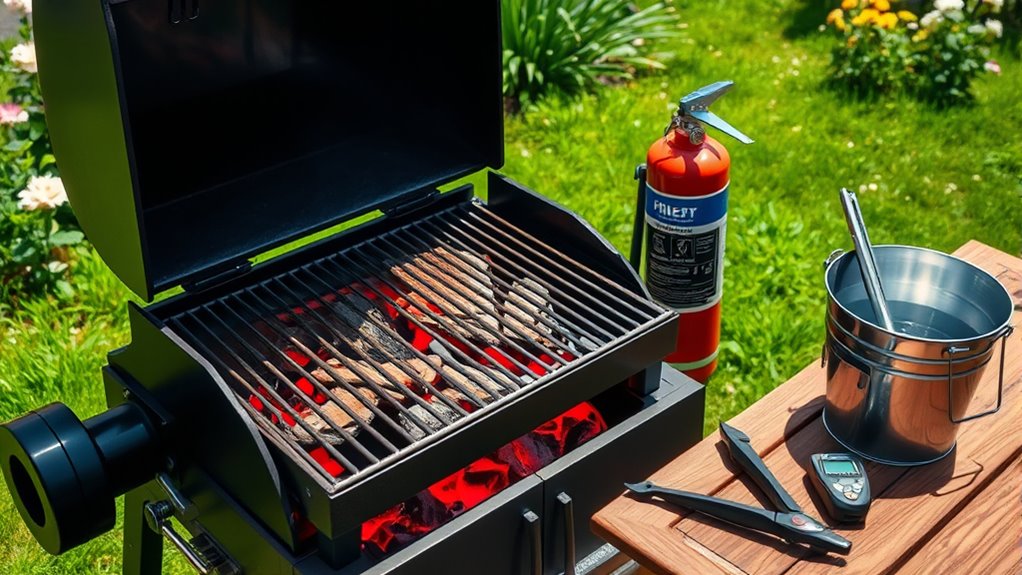

To stay safe while grilling and outdoor cooking, always inspect your grill for leaks, rust, and damage before use. Keep it in an open, ventilated area away from structures and overhanging branches. Never leave the grill unattended, and have a Class K fire extinguisher nearby. After cooking, turn off the gas and clean the grill thoroughly. Following these safety tips helps protect you and your property—keep going to discover more essential precautions.
Key Takeaways
- Regularly inspect and maintain your grill, checking for leaks, rust, and cleaning burners to prevent flare-ups.
- Set up the grill in open, well-ventilated areas away from structures and overhanging branches.
- Keep a Class K fire extinguisher nearby and never leave the grill unattended during use.
- Turn off the gas supply after cooking, wait for the grill to cool, then clean and store it safely.
- Wear appropriate clothing, use long-handled tools, and keep children and pets at a safe distance during grilling.
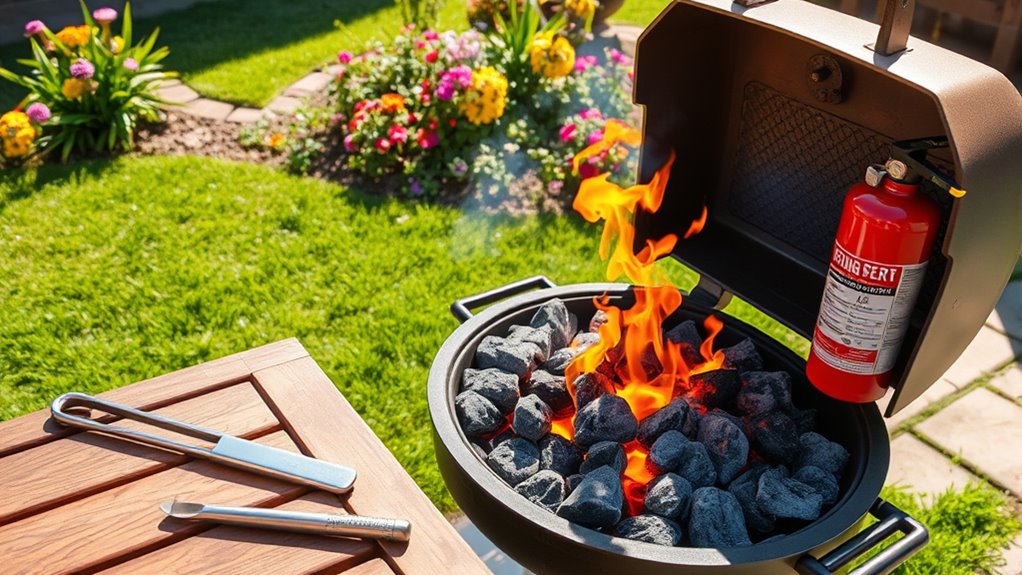
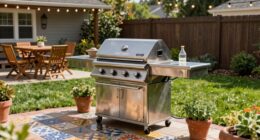
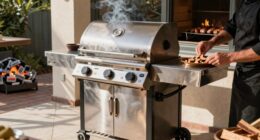
Grilling and outdoor cooking are popular ways to enjoy good food with friends and family, but they also come with fire safety risks that shouldn’t be overlooked. One key aspect of ensuring safety is proper gas grill maintenance. Regularly inspecting your grill helps catch leaks, rust, or damaged hoses that could lead to dangerous flare-ups. Before every use, check the gas lines for cracks or leaks by applying a soap and water solution; bubbles indicate a leak that needs fixing. Keeping the burners clean and free of grease buildup not only improves performance but also reduces the risk of unexpected fires. A well-maintained grill is safer and more efficient, giving you peace of mind while you cook.
Regularly inspect and clean your gas grill to prevent leaks, rust, and grease fires for safer outdoor cooking.
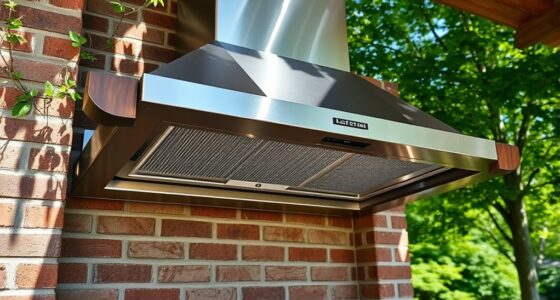
Outdoor cooking safety also involves proper setup and handling. Always position your grill in an open, well-ventilated area away from structures, overhanging branches, and combustible materials. Never operate the grill indoors or in a garage — even with the door open — because carbon monoxide buildup can be deadly. When lighting the grill, follow the manufacturer’s instructions closely, and keep the lid open to prevent gas buildup. If the flame goes out unexpectedly, turn off the gas supply and wait a few minutes before relighting to allow any accumulated gas to dissipate safely.
Keep a fire extinguisher nearby, specifically one rated for grease fires (Class K), and know how to use it properly. Never leave the grill unattended while in use, especially when cooking with high heat or flare-ups. Keep children and pets at a safe distance to prevent accidental burns or tipping over the grill. Wearing appropriate clothing, such as close-fitting sleeves and using long-handled tools, minimizes the risk of catching fire or burning yourself. Proper grill maintenance is essential to prevent potential fire hazards and ensure a safe outdoor cooking experience.
After cooking, ensure you shut off the gas supply and give the grill time to cool down before cleaning or storing it. Regularly cleaning the grill grates and removing ash or grease buildup minimizes fire hazards and helps keep your outdoor cooking safe. Remember, outdoor cooking safety is an ongoing responsibility. Making safety a priority — from gas grill maintenance to proper setup and attentive cooking practices — ensures that your outdoor gatherings remain enjoyable and incident-free. Taking these precautions not only protects you and your loved ones but also preserves the fun and flavor of grilling season.
Top picks for "fire safety tips"
Open Amazon search results for this keyword.
As an affiliate, we earn on qualifying purchases.
Frequently Asked Questions
How Do I Handle Flare-Ups Safely During Grilling?
When a flare-up occurs during grilling, stay calm and act quickly. To handle it safely, close the grill lid to cut off oxygen, which suppresses the flames. Use a spray bottle of water for small flare-ups, but avoid pouring water on grease fires. To prevent flare-ups, keep excess fat trimmed, avoid overly greasy foods, and manage your heat levels. Practicing flare-up prevention helps you enjoy a safer grilling experience.
What Are the Best Fire Extinguisher Types for Outdoor Cooking?
Like a knight’s shield at a medieval fair, a multi-purpose ABC fire extinguisher is your best bet for outdoor cooking. It handles all types of fires, including grease and electrical. Regular fire extinguisher maintenance guarantees it’s ready when needed. For portable fire safety, keep it nearby, and practice using it. Having the right extinguisher on hand lets you tackle flare-ups swiftly, keeping your cookout safe and enjoyable.
How Should I Store Propane Tanks Securely?
You should store propane tanks in a well-ventilated, cool, and dry area outside your home. Follow proper storage guidelines by placing tanks upright on a stable surface, away from heat sources, open flames, and direct sunlight. Keep them away from living spaces and ensure they’re secure to prevent tipping. Regularly check for leaks or damage, and never store tanks indoors or in enclosed spaces.
Can I Use Water to Extinguish a Grease Fire?
You shouldn’t use water to extinguish a grease fire because it can make the flames worse, spreading hot oil and causing burns. Instead, focus on fire safety by using a fire extinguisher rated for kitchen hazards or covering the fire with a metal lid to cut off oxygen. Always keep a fire extinguisher nearby when cooking outdoors, and never leave grills unattended to prevent kitchen hazards from turning dangerous.
What Are Fire Safety Tips for Grilling in Windy Conditions?
Imagine your grill as a tiny fortress facing a gusty windstorm. In windy conditions, you need extra vigilance for fire safety. Keep your grill sheltered from strong breezes, position it away from trees and structures, and never leave it unattended. Use a windbreak if necessary, and make sure the lid is close to control flare-ups. Stay alert and ready to act, so your outdoor cooking remains safe and enjoyable.
Conclusion
By following these fire safety tips, you can enjoy grilling and outdoor cooking just like a seasoned pro—confident and carefree. Think of safety as the foundation of a perfect barbecue, holding everything together just like the sturdy frame of a well-built grill. Remember, a little caution goes a long way in preventing accidents. So, stay alert, keep a fire extinguisher handy, and savor your outdoor feast knowing you’ve done everything to keep it safe and fun.