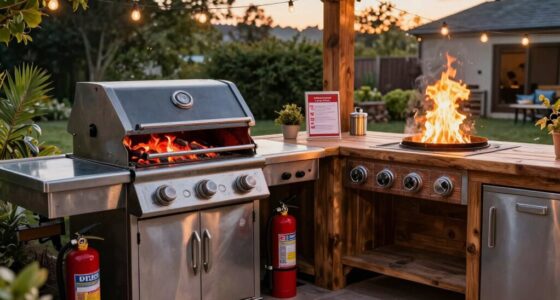
To safely use fire pits and fire tables in your outdoor kitchen, always follow local regulations and keep a safe distance from structures, trees, and flammable materials. Use proper placement on non-combustible surfaces, keep fire under control, and never leave it unattended. Regularly inspect equipment, store fuels safely, and have safety gear nearby. Staying aware of safety features and procedures helps prevent accidents. Continue exploring best practices for secure, enjoyable outdoor fires.

Get garden gear delivered free with Prime
- Fast, free delivery on millions of items
- Prime Video, Amazon Music and more included
- Member-only deals all year
Key Takeaways
- Ensure fire pits and tables are installed on non-combustible, level surfaces away from structures, trees, and overhangs.
- Follow local regulations for setback distances and permit requirements before installation and use.
- Use proper igniters, avoid leaning over the fire, and never leave fires unattended, especially around children and pets.
- Regularly inspect and maintain fuels, connections, and safety features like auto shut-off mechanisms.
- Keep fire extinguishers, water sources, or hoses nearby and follow manufacturer instructions for safe operation.
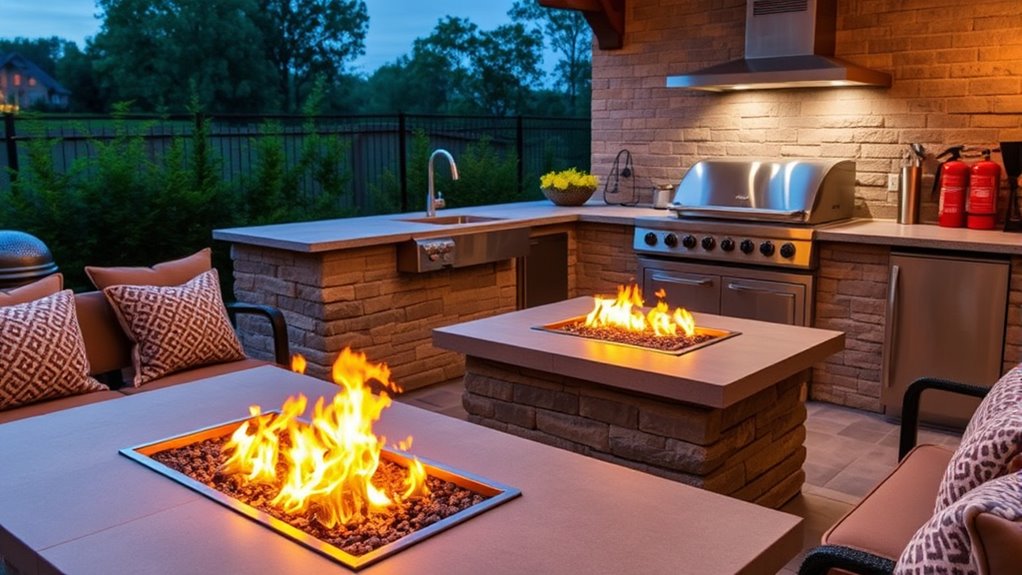
Installing a fire pit or fire table in your outdoor kitchen can add warmth and ambiance, but safety should always come first. When you’re considering adding this feature, it’s vital to prioritize fire pit safety to prevent accidents and ensure everyone stays safe. Start by familiarizing yourself with local outdoor fire regulations, which vary by city and county. These rules often specify how far your fire pit must be from structures, trees, and other flammable materials. Ignoring these regulations can lead to fines or dangerous situations. Always check with your local authorities or fire department before installation to make sure you’re compliant.
Once you’ve understood the legal requirements, focus on proper placement. Position your fire pit or fire table on a flat, non-combustible surface like stone, concrete, or brick. Keep it at least 10 to 20 feet away from your home, fences, and overhanging branches. This distance helps prevent stray sparks from igniting nearby objects. Avoid placing it under overhangs or near combustible patio furniture, umbrellas, or plants. Clear the area of leaves, paper, and other debris that could catch fire easily.
Safety isn’t just about placement; it’s also about operation. Always use a long match or a safety lighter to ignite the fire, keeping your hands at a safe distance. Never lean over the fire when lighting or tending it. When you’re finished, let the fire burn out completely before leaving the area. Never leave a fire unattended, especially if children or pets are around. Keep a fire extinguisher, garden hose, or a bucket of water nearby in case of emergencies.
Using the right fuel is vital for fire pit safety. For wood-burning models, use seasoned, dry hardwood and avoid accelerants like lighter fluid or gasoline. For gas fire tables, check all connections regularly for leaks, and ensure the propane tank is stored upright and away from high traffic areas. Regular maintenance and inspection help prevent leaks, cracks, or other hazards that could cause unsafe operation. Additionally, understanding the safety features of your fire pit, such as auto shut-off mechanisms, can provide extra protection during use.
Products Worth Considering

Solo Stove Bonfire 2.0 Smokeless Wood-Burning Fire Pit with Stand, Silver

Solo Stove Ranger 2.0 15-Inch Smokeless Fire Pit with Stand

Orbit B-hyve XR 8-Zone Indoor/Outdoor Smart Sprinkler Controller
As an affiliate, we earn on qualifying purchases.
Frequently Asked Questions
Can Children Safely Be Around Outdoor Fire Pits?
Children can be around outdoor fire pits safely if you supervise them closely and keep a safe distance. Always guarantee constant child supervision and install fire pit barriers to prevent accidental contact. Teach kids about fire safety and never leave them unattended near the fire. By taking these precautions, you reduce risks and help ensure a safe outdoor environment for everyone.
How Do I Extinguish a Fire Safely in a Fire Table?
To extinguish a fire in a fire table safely, first use a fire extinguisher designed for grease or electrical fires, aiming at the base of the flames with controlled, sweeping motions. If you don’t have an extinguisher, cover the fire with a metal lid or fire-resistant blanket to cut off oxygen. Always practice safe fire disposal afterward by ensuring the ashes are completely cooled before cleaning or discarding.
Are There Specific Weather Conditions to Avoid Using Fire Pits?
You should avoid using fire pits during strong wind conditions, as wind hazards can cause the flames to spread or flicker unpredictably, increasing the risk of accidents. Check weather considerations like wind speed and gusts before lighting your fire pit. If the forecast predicts high winds or stormy weather, it’s safest to postpone use until conditions improve. Always prioritize safety to prevent potential fire hazards or injuries.
What Safety Gear Should I Use When Operating a Fire Table?
When operating a fire table, you should wear fire-resistant gloves to safeguard your hands from heat and flames. Keep a fire extinguisher nearby in case of emergencies, and make certain you know how to use it. Always check for any leaks or damage before igniting, and stay attentive while the fire is active. These safety measures help prevent accidents and keep you safe during use.
How Often Should I Inspect My Fire Pit for Safety?
Think of checking your fire pit like tuning a vintage radio—regular, essential, and keeps everything clear. You should inspect your fire pit weekly for safety, looking for rust, cracks, or debris. Incorporate fire pit maintenance into your safety inspection routines to prevent hazards. Regular inspections guarantee safe operation, prolong the life of your fire pit, and give you peace of mind during cozy outdoor gatherings.
Conclusion
By following these safety tips, you can enjoy your outdoor kitchen fire features without worry. Always keep a fire extinguisher nearby, never leave flames unattended, and guarantee proper clearance around your fire pit or table. Remember, safety should never be an afterthought—after all, isn’t it worth preventing a little inconvenience to protect your loved ones and your home? With careful use, your outdoor fires can bring warmth and ambiance without risks.