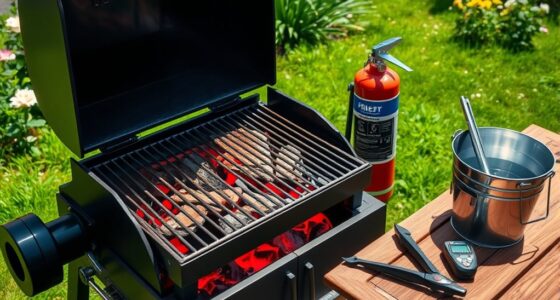

To keep your outdoor kitchen safe, always place fire extinguishers within easy reach, away from heat sources. Regularly check and maintain your grill, cleaning grease buildup and inspecting gas lines for leaks. Know how to operate your fire extinguisher and practice fire safety routines, like having an escape plan. Keep the area clear of combustible materials and use gap-sealing products to prevent sparks from escaping. Continue exploring these tips to make certain your outdoor cooking stays accident-free.
Listen free for 30 days with Audible
Thousands of audiobooks and originals — cancel anytime.
As an affiliate, we earn on qualifying purchases.
Key Takeaways
- Place fire extinguishers within easy reach and regularly check their charge and condition.
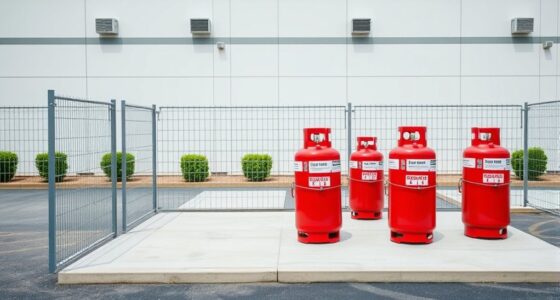
- Keep grills clean, inspect gas lines for leaks, and store away from heat sources.
- Open the grill lid before lighting to prevent gas buildup and potential explosions.
- Maintain clear, open space around the outdoor kitchen, removing overhanging branches and combustible materials.
- Practice fire safety routines and ensure all safety equipment is accessible and properly used.
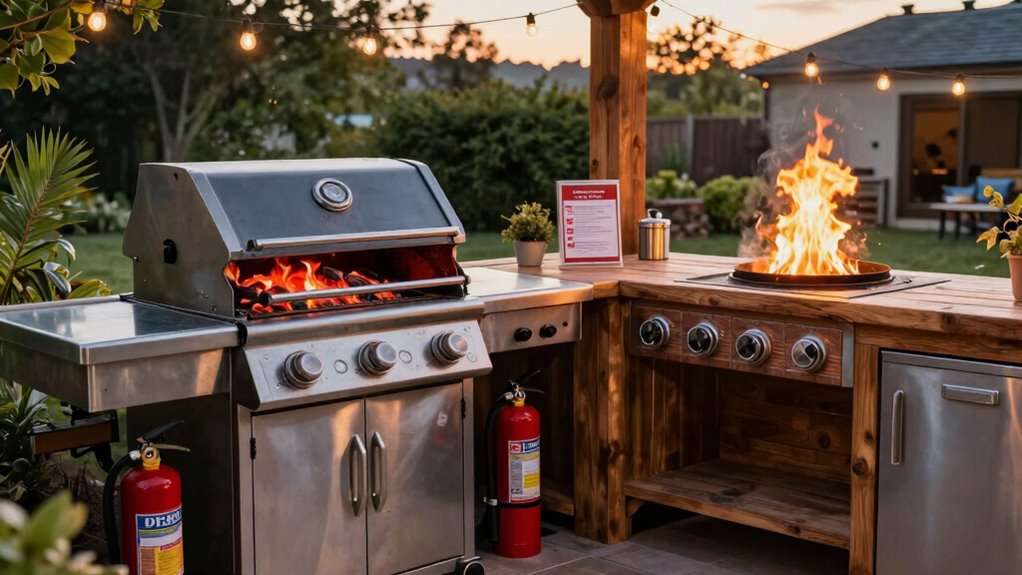
An outdoor kitchen can be a fantastic addition to your home, but it also comes with unique fire safety risks that you can’t ignore. To keep your space safe, you need to be strategic about fire extinguisher placement. Place a fire extinguisher within easy reach but away from the grill or heat sources to prevent accidental ignition. It should be mounted on a wall or stored in a readily accessible cabinet, guaranteeing you can grab it quickly in an emergency. Regularly check that the extinguisher is fully charged and in good working order, replacing or servicing it as needed. Remember, the right placement can make all the difference between a quick response and a delayed one during a fire.
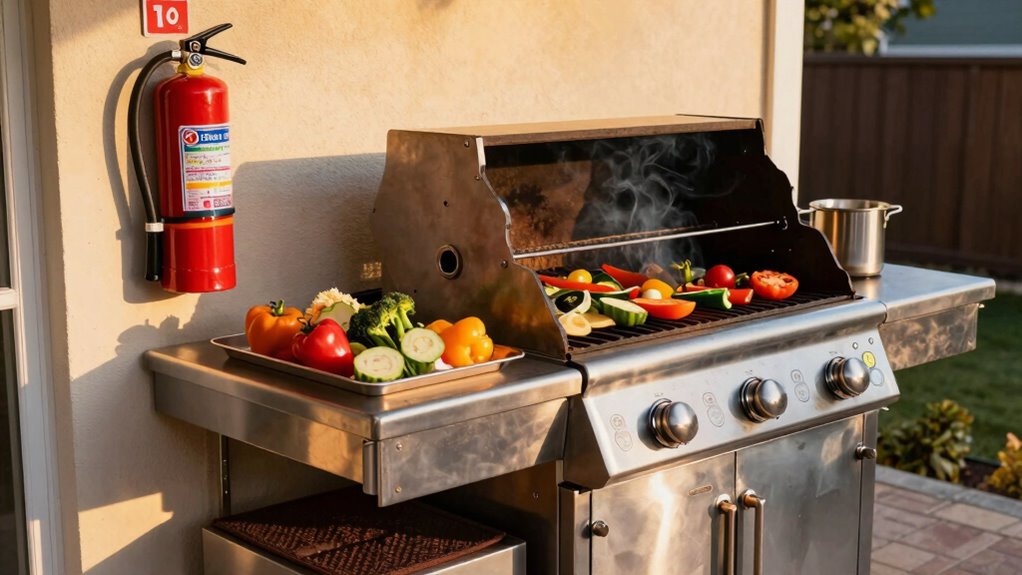
Next, focusing on grill maintenance tips is vital for preventing fires. A well-maintained grill not only lasts longer but also reduces the risk of flare-ups. Clean grease and food debris from the grates and drip pans after each use, as buildup can ignite unexpectedly. Regularly inspect gas lines for leaks or cracks—use a soap and water solution to check for bubbles indicating leaks. If you notice any damage, replace the faulty parts immediately. Keep the grill in a clear, open space, away from overhanging branches or combustible materials, and never leave it unattended when in use. Also, ensure the grill lid is open when lighting to prevent gas buildup and potential explosions. Proper grill maintenance and regular inspections are essential to prevent accidental fires and ensure your outdoor cooking remains safe. Additionally, maintaining a safe environment around your outdoor kitchen is crucial, as both require vigilance and proper management. Consider the use of gap-sealing products around your grill area to prevent sparks or embers from escaping and igniting nearby combustibles. Regularly practicing fire safety routines, such as having an escape plan and knowing how to use your fire extinguisher, further enhances safety.
As an affiliate, we earn on qualifying purchases.
Frequently Asked Questions
How Often Should I Inspect My Outdoor Kitchen for Fire Hazards?
You should inspect your outdoor kitchen for fire hazards at least once a month. Use a thorough inspection checklist to identify potential risks like gas leaks, grease buildup, or faulty wiring. Regular inspections help with fire hazard prevention, ensuring everything is in proper condition. Keep an eye on your grill, propane tanks, and electrical connections, and address any issues immediately to keep your outdoor space safe and fire-ready.
Are There Specific Fire Safety Laws for Outdoor Kitchens in My Area?
Like steering through a maze, understanding local regulations can be tricky. You should check your area’s specific fire safety laws for outdoor kitchens, as they vary widely. These laws often include safety compliance measures like proper ventilation, fire extinguisher placement, and clearance distances. To stay safe and legal, contact your local fire department or code enforcement office to confirm your outdoor kitchen meets all fire safety requirements.
What Fire Extinguisher Type Is Best for Outdoor Cooking Fires?
You should choose a Class B or multipurpose ABC fire extinguisher for outdoor cooking fires, as they effectively handle grease and flammable liquids. Place it within easy reach near your outdoor kitchen, making certain quick access in emergencies. Regularly check fire extinguisher placement and perform fire extinguisher maintenance by inspecting for damage, pressure, and proper function. This ensures your extinguisher is prepared to protect you during a fire incident.
How Can I Prevent Grease Fires in My Outdoor Kitchen?
Like a general preparing for battle, you need to stay vigilant. Regularly clean grease buildup from your grill and surrounding surfaces to prevent fires. Use fire-resistant surfaces around your cooking area to contain any flare-ups. Keep a fire extinguisher nearby, and never leave flames unattended. These simple steps help you avoid grease fires, ensuring your outdoor kitchen remains a safe haven for delicious meals and good times.
What Should I Do if a Fire Starts in My Outdoor Kitchen?
If a fire starts in your outdoor kitchen, stay calm and act quickly. Use a fire extinguisher, ensuring it’s maintained and suitable for grease fires, to put it out. If the fire is uncontrollable, follow your emergency evacuation plan and call emergency services immediately. Afterward, review fire safety measures and make sure your fire extinguisher is in good condition for future use. Prioritize safety above all.
As an affiliate, we earn on qualifying purchases.
Conclusion
Remember, safety is no accident—especially when it comes to your outdoor kitchen. By understanding fire safety basics, maintaining your equipment, and staying vigilant, you can enjoy your cooking adventures without worry. Keep a fire extinguisher nearby, never leave flames unattended, and regularly check your appliances. As the saying goes, “A stitch in time saves nine.” Taking these simple precautions now guarantees many enjoyable and safe outdoor cookouts ahead.
As an affiliate, we earn on qualifying purchases.
fire safety kit for outdoor kitchen
As an affiliate, we earn on qualifying purchases.
As an affiliate, we earn on qualifying purchases.
NFL season / tailgating Picks
team gear
As an affiliate, we earn on qualifying purchases.