To prevent flooding around your outdoor kitchen, make certain proper drainage by grading the ground to slope away from structures and installing effective gutters and downspouts that direct water away. Incorporate rainwater harvesting systems to manage excess runoff and reduce stormwater overload. Regularly maintain and clear your drains, gutters, and pipes to prevent blockages. Properly designed and maintained drainage keeps your outdoor cooking area safe and functional—discover easy strategies to optimize your outdoor space.
Key Takeaways
- Grade the landscape to slope away from the outdoor kitchen, directing water toward designated drainage areas.
- Install proper gutters and downspouts to channel rainwater away from outdoor cooking spaces.
- Incorporate permeable surfaces like gravel or permeable pavers to enhance surface drainage.
- Use rainwater harvesting systems to manage runoff and reduce excess water around the area.
- Regularly inspect and clear drainage components to prevent blockages and ensure effective water flow.
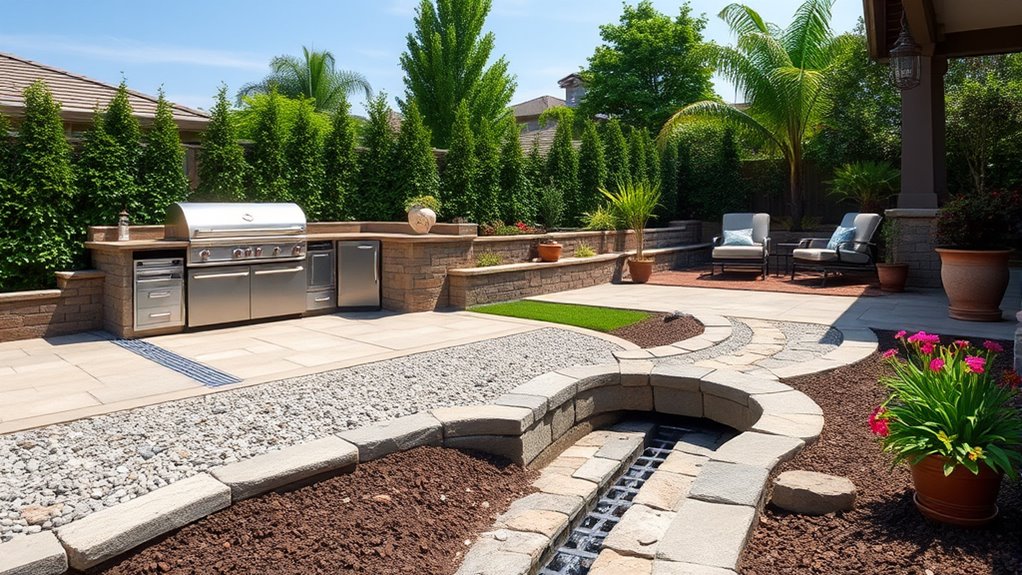
Proper drainage around your outdoor kitchen is essential to prevent water pooling, protect your appliances, and maintain a safe, functional space. When water isn’t directed away effectively, it can cause damage to your structures, create muddy or slippery surfaces, and even lead to flooding during heavy rains. One effective way to manage water flow is by incorporating rainwater harvesting systems, which not only help control excess water but also provide a sustainable water source for your landscaping or cleaning needs. Installing rain barrels or underground cisterns connected to your drainage system allows you to capture runoff, reducing the risk of overwhelming your yard’s drainage capacity during storms.
Maintaining your drainage system is equally important. Over time, debris like leaves, dirt, and sediment can clog drains, gutters, and underground pipes, impairing their ability to direct water away from your outdoor kitchen area. Regular drainage system maintenance involves inspecting these components frequently, clearing out blockages, and ensuring that downspouts are securely attached and directing water away from your foundation. You should also check for signs of erosion or pooling around your outdoor space, which can indicate underlying drainage issues that need addressing before they worsen.
In addition to routine maintenance, designing your drainage system with proper slope and grading is vital. You want the ground to slope away from your outdoor kitchen and any nearby structures, guiding rainwater and runoff toward designated drainage points or rainwater harvesting features. This prevents water from seeping into your foundation or pooling on your patio, which could damage surfaces or create hazardous conditions. Installing gravel or permeable pavers can further improve drainage, allowing water to seep into the ground rather than collect on surface levels.
Integrating rainwater harvesting into your drainage strategy offers multiple benefits. It reduces the volume of runoff that needs to be managed and provides a renewable water source that can be used for watering plants or cleaning your outdoor kitchen. When designing your system, ensure that the harvesting components are positioned to collect maximum runoff from your roof and surrounding surfaces, and that they drain into safe, well-maintained storage tanks.
Frequently Asked Questions
How Often Should Drainage Systems Be Inspected and Maintained?
You should examine your drainage systems at least twice a year, preferably in spring and fall. Regular inspections help you spot clogs, leaks, or damage early. Follow maintenance tips like clearing debris, checking for standing water, and ensuring proper slope for effective drainage. If you notice any issues during inspections, address them promptly to prevent flooding and keep your outdoor kitchen functioning smoothly. Consistent upkeep ensures long-term drainage efficiency.
What Are the Best Materials for Outdoor Drainage Solutions?
You should choose durable, permeable paving and French drains for outdoor drainage. Permeable paving allows water to seep through, preventing puddles, while French drains channel excess water away efficiently. Some worry about maintenance, but these materials are low-maintenance and long-lasting. Using these solutions helps you avoid flooding, keeps your outdoor kitchen dry, and enhances overall drainage. Invest in quality materials for a reliable, effective drainage system that stands the test of time.
Can Landscaping Alone Prevent Flooding Around Outdoor Kitchens?
Landscaping alone might help improve landscape aesthetics and aid drainage, but it usually isn’t enough to prevent flooding around outdoor kitchens. You should combine strategic plant selection and proper grading with other drainage solutions like permeable materials and drainage systems. This approach guarantees water flows away efficiently, protecting your outdoor space from flooding while maintaining an attractive landscape. Relying solely on landscaping leaves your area vulnerable during heavy rains.
How Do I Handle Existing Water Drainage Problems?
You should start by evaluating your current drainage issues and then implement stormwater management solutions, like installing a proper gutter system to direct water away from your outdoor kitchen. Consider adding drainage channels or French drains to prevent pooling. Regularly clean gutters and downspouts to guarantee they work effectively. These steps help control water flow, reduce flooding risks, and protect your outdoor space from water damage.
Are There Eco-Friendly Drainage Options Suitable for Outdoor Kitchens?
Yes, eco-friendly drainage options like rain gardens and permeable pavements suit outdoor kitchens perfectly. You can plant rain gardens to absorb runoff, reducing puddles and flooding. Permeable pavements allow water to seep through, preventing pooling around your cooking area. These solutions work together to create a sustainable, attractive outdoor space. You’ll enjoy a functional kitchen that stays dry, supports the environment, and enhances your landscape’s beauty.
Conclusion
By properly managing drainage around your outdoor kitchen, you can prevent flooding and protect your space. Some might think installing extra drainage is complicated or costly, but it’s a worthwhile investment that saves you headaches later. With simple solutions like grading, gutters, and drainage channels, you’ll enjoy your outdoor cooking area rain or shine. Don’t let drainage issues ruin your outdoor experience—take action now and keep your space dry and functional all year round.