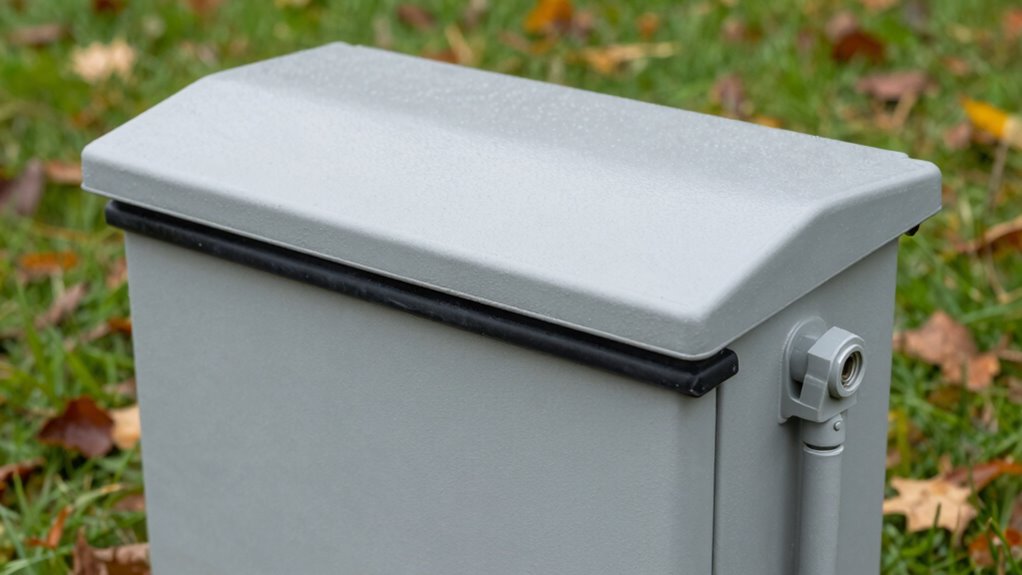
To protect outdoor electrical components, install weatherproof enclosures with high IP ratings, ensuring they’re tightly sealed and securely mounted. Use protective accessories like rain shields and flexible conduits to prevent moisture and physical damage. Schedule regular inspections to catch signs of wear or corrosion early, and maintain proper ventilation for moisture control. Ground all components and add surge protection to guard against voltage spikes and lightning. Keep these tips in mind, and you’ll discover even more ways to keep your system safe.

Get garden gear delivered free with Prime
- Fast, free delivery on millions of items
- Prime Video, Amazon Music and more included
- Member-only deals all year
Key Takeaways
- Use weatherproof enclosures with high IP ratings to shield electrical components from moisture and dust.
- Install protective accessories like rain shields, covers, and conduit to minimize environmental exposure.
- Schedule regular inspections for corrosion, damage, and loose connections to ensure ongoing protection.
- Ensure proper ventilation and accessibility to prevent moisture buildup and facilitate maintenance.
- Implement grounding and surge protection devices to safeguard against electrical surges and lightning.
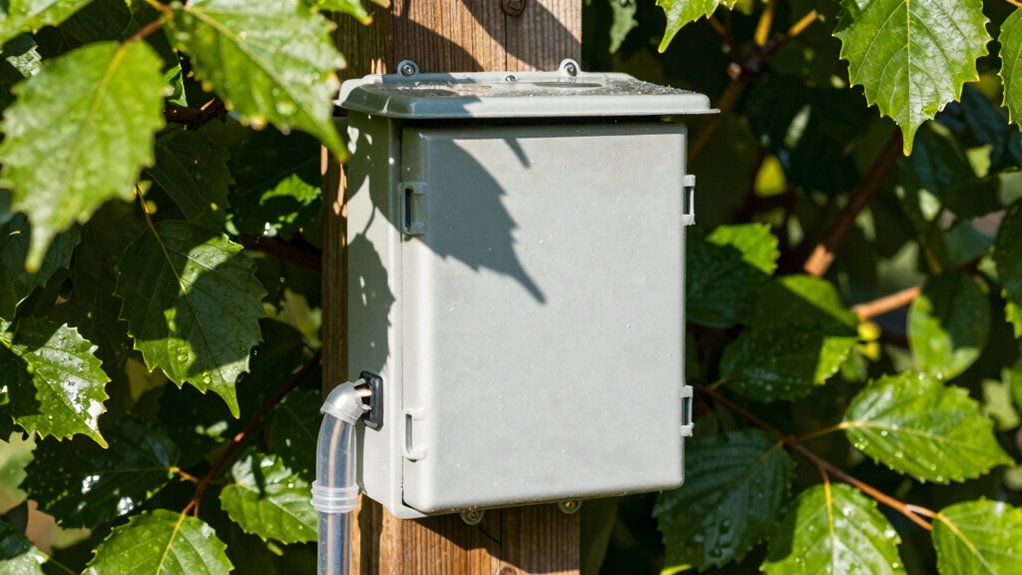
Outdoor electrical components are exposed to weather elements that can cause damage and safety hazards if not properly safeguarded. Rain, snow, wind, and even direct sunlight can deteriorate wiring, connectors, and other crucial parts, leading to malfunctions or dangerous situations. As someone responsible for maintaining these systems, you need to prioritize protection to guarantee both safety and reliability. Keeping these components safe from the elements not only prevents costly repairs but also supports indoor safety by reducing the risk of electrical faults that could lead to fires or shocks inside your property.
One of the most effective ways to protect outdoor electrical components is by installing weatherproof enclosures. These enclosures are designed to resist moisture, dust, and other environmental contaminants. Look for units with high IP (Ingress Protection) ratings, which indicate their suitability for outdoor use. When installing these enclosures, ensure they are sealed tightly and mounted securely to prevent water ingress during storms or heavy rains. This simple step shields sensitive parts from exposure, reducing the need for frequent electrical maintenance and lowering the risk of failure. Proper weatherproofing techniques can significantly enhance the durability of these systems over time. Additionally, understanding the role of contrast ratio in visual quality underscores the importance of choosing protective solutions that prevent moisture buildup, which can impair performance. Regular inspections help identify potential issues early, such as corrosion or damage, before they develop into major problems.
Installing weatherproof enclosures with high IP ratings protects outdoor electrical components from moisture and contaminants.
Another critical aspect is regular inspection and maintenance. You should schedule routine checks to identify early signs of wear, corrosion, or damage. Look for rust, cracked seals, or loose connections. Maintaining clean, dry, and secure connections helps prevent shorts and electrical faults that could compromise indoor safety. Additionally, understanding the importance of protective accessories like rain shields, covers, or protective tubing can further minimize exposure. For example, placing junction boxes under rain shields prevents moisture buildup, and flexible conduit can shield wiring from physical damage and environmental stressors. Keep in mind that any protective measure you apply should not hinder proper ventilation or accessibility for ongoing electrical maintenance. Proper ventilation and accessibility are crucial for efficient troubleshooting and repairs, especially in outdoor environments.
Lastly, invest in grounding and surge protection systems. Proper grounding minimizes the risk of electrical shocks, and surge protectors defend against voltage spikes caused by lightning or power surges. These measures are essential for safeguarding both outdoor components and the indoor safety of your property. By combining weatherproofing, routine inspections, protective accessories, and surge protection, you create an all-encompassing approach that keeps your outdoor electrical system resilient against the elements, reduces maintenance costs, and ensures safety inside your home or business.
outdoor weatherproof electrical enclosure
As an affiliate, we earn on qualifying purchases.
As an affiliate, we earn on qualifying purchases.
Frequently Asked Questions
What Materials Are Best for Outdoor Electrical Enclosures?
You should choose enclosures made from durable materials like polycarbonate, fiberglass, or stainless steel, as they resist corrosion and withstand harsh weather. These materials offer excellent durability, ensuring your components stay protected. Also, look for enclosures with proper ventilation to prevent moisture buildup and overheating. By selecting the right material and ensuring good ventilation, you keep your outdoor electrical components safe, functional, and long-lasting in all weather conditions.
How Often Should Outdoor Electrical Components Be Inspected?
You should inspect outdoor electrical components at least twice a year, especially after severe weather. During inspections, check cable insulation for cracks or wear and guarantee surge protection devices are functioning properly. Regularly examining these elements helps prevent damage from moisture or electrical surges, maintaining safety and reliability. Don’t forget to also verify enclosures remain sealed and free of debris, ensuring continuous protection against the elements.
Can Outdoor Electrical Components Be Buried Underground?
Like hidden treasures beneath the earth, outdoor electrical components can be buried, but you must consider burial depth and soil corrosion resistance. Dig deep enough—typically 18 to 24 inches—and use corrosion-resistant conduit and fittings. This shields them from moisture, dirt, and temperature swings. Proper burial guarantees safety and longevity, preventing accidental contact and damage from soil conditions, much like safeguarding a secret buried deep in the ground.
Are There Specific Maintenance Routines for Outdoor Electrical Safety?
Yes, you should follow specific maintenance routines for outdoor electrical safety. Regularly inspect your electrical components for signs of electrical corrosion, which can weaken connections and cause hazards. Use weatherproofing techniques like sealing enclosures and applying protective coatings to prevent damage from moisture and dirt. Keep all connections tight, clean, and dry, and schedule routine checks to guarantee safety and longevity of your outdoor electrical systems.
What Are Common Signs of Outdoor Electrical Component Failure?
You’ll notice signs of outdoor electrical component failure like corrosion buildup around connections and visible rust, which indicate corrosion prevention issues. Moisture intrusion can cause flickering lights or power outages, revealing that seals or enclosures aren’t effective. Keep an eye out for discoloration or condensation inside junction boxes. Regular inspections help identify these signs early, allowing you to address moisture intrusion and corrosion prevention before costly repairs become necessary.
IP rated electrical junction box
As an affiliate, we earn on qualifying purchases.
As an affiliate, we earn on qualifying purchases.
Conclusion
Protecting outdoor electrical components might seem like a hassle, but neglecting it can turn a small problem into a costly disaster. Think of your equipment as a delicate plant—without proper care, it withers in harsh weather. By taking simple steps like sealing, covering, and insulating, you shield your investment from the elements. In the end, a little effort now prevents big headaches later, proving that proactive protection is your best defense against nature’s unpredictable mood swings.
outdoor electrical surge protector
As an affiliate, we earn on qualifying purchases.
As an affiliate, we earn on qualifying purchases.
As an affiliate, we earn on qualifying purchases.
Fall yard work Picks
leaf blowers
As an affiliate, we earn on qualifying purchases.